









Poland argues over where Dar Młodzieży should retire, while its successor still does not exist
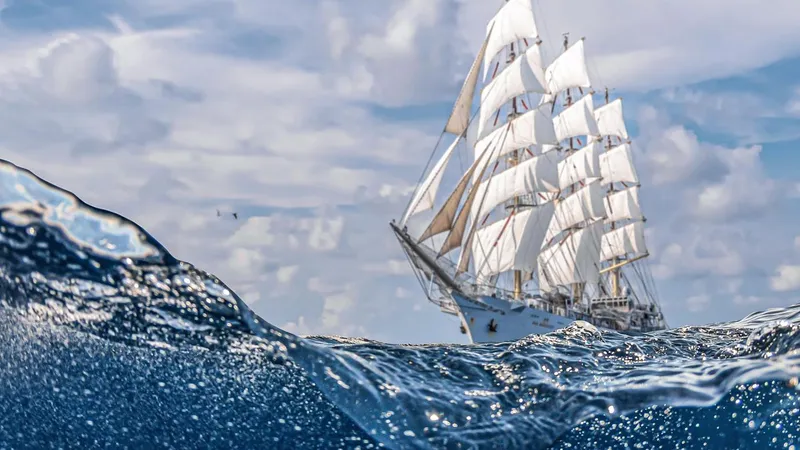
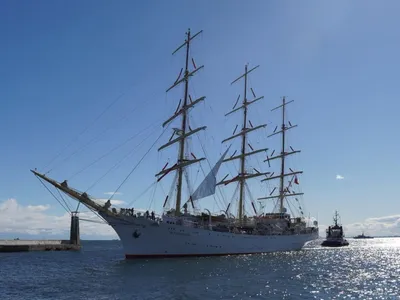
Dar Młodzieży returned to Gdynia on 23 September after more than five months and two Atlantic crossings. Before the frigate had even reached her berth, a dispute was under way over where she should spend her retirement: in Gdynia or in Szczecin. The more important question is a different one. Is there anything to replace her with. The first tender for the design and construction of a successor closed without a single bid. A second is running, with offers due by 30 October.
In brief
Gdynia Maritime University is running a second tender for the design and construction of a successor to the frigate Dar Młodzieży, estimated at about PLN 350 million, with bids due on 30 October. The first tender, announced on 23 April, closed on 1 July without a single bid and was cancelled. Gdynia City Hall estimated converting Dar Młodzieży into a museum at between PLN 25 million and about PLN 50 million, with upkeep of PLN 2.5 to 4 million a year. Szczecin is seeking Dar Młodzieży as a museum ship at the Łasztownia quay.
Szczecin wants her, Gdynia is counting the cost
The initiative to bring the frigate to Szczecin came from the city's maritime community. Captain Włodzimierz Grycner, head of the Master Mariners' Club in Szczecin, together with the Maritime City Szczecin association, signed a letter to city and regional authorities, and the mayor of Szczecin declared he would seek to secure the ship. There is a specific berth in play, at the Łasztownia waterfront, and a plan for a museum ship.
Gdynia Maritime University, the frigate's owner and operator, has denied holding talks with the Szczecin city hall. Its spokesperson, Dr Zuzanna Szwedek-Kwiecińska, told the regional daily Dziennik Bałtycki that the ship has been tied to Gdynia from the beginning, that the city remains her home port and the seat of the university, and that no decision on her future has been taken.
What a museum ship costs
The figures were published by Dziennik Bałtycki. In an article by Andrzej Kowalski on 17 September, the paper set out estimates provided at its request by Gdynia city hall and prepared by the municipality's culture department.
Adapting the ship for museum use was estimated at between 25 million zloty in a minimum variant and around 50 million in a moderate one. On top of that come at least 800,000 zloty a year for conservation and at least 3 million every five years for major overhauls. The total cost of maintaining her as a museum vessel was put at 2.5 to 4 million zloty a year, and that assuming she were folded into an existing cultural institution rather than becoming a separate body.
The city stresses that the decision is not its to take. "Gdynia is not the owner or the operator of the ship," said Łukasz Kamasz of the Gdynia city hall press office, quoted by Dziennik Bałtycki.
The same statement contained two arguments that weaken Gdynia's position, raised by the city itself. The first is the risk of duplication, as the city already has several museum vessels, including the sail training ship Dar Pomorza, and too many similar attractions can dilute visitor interest. The second is more serious: the berth Dar Młodzieży currently occupies is earmarked for the new sail training ship, so her permanent location in Gdynia is not settled.
The arguments on both sides
The two cities' cases were set out in a column by Dariusz Olejniczak in the same paper. For Gdynia he lists the status quo since the ensign was first raised in 1982, the owner and the university based in the city, historical continuity from the Lwów and Dar Pomorza, and a plan for a berth near the South Pier and the planned Olympic Sailing Centre. For Szczecin: a ready berth at the regenerated Łasztownia district, a sense of a region stripped of its maritime heritage, links between local crews and students and the ship, and the argument for spreading national maritime symbols between Gdynia, Gdańsk and Szczecin.
Dariusz Olejniczak also recalls what happened to other Polish sail training ships, from Kapitan Głowacki, which sank at her berth and returned to sea only after a private owner rebuilt her, to Generał Zaruski, bought by the city of Gdańsk for 150,000 zloty and refitted over four years. His conclusion is that Poland looks after its maritime heritage in fits and starts, and that individual decisions and money decide the outcome.
"I do not want Dar Młodzieży reduced to the role of a gadget," he wrote, recalling that the frigate was built with money raised from the public.
A tender nobody entered
All of this matters only if the frigate actually leaves service, and that depends on something other than sentiment in Gdynia and Szczecin.
The university announced the first tender for the design and delivery of a successor on 23 April. The deadline was extended at the request of interested yards, ultimately to 1 July. Not a single bid was submitted and the procedure was annulled.
Between 24 and 31 July the university held market consultations with the shipbuilding industry, which resulted in longer construction periods in the new documentation. The second procedure was announced on 24 August, in a design and build formula under an open EU tender. Bids may be submitted until 09:00 on 30 October, with opening the same day, and both Polish and foreign contractors may compete.
The cost is estimated at around 350 million zloty, financed under the multi-year programme for building ships for maritime universities for 2025 to 2029. The original plan was to sign a contract in 2026 and take delivery in 2028. After the failure of the first tender those dates no longer apply, and the new ship is to be built within three years of work starting.
What the new ship is to be
The successor will be slightly larger than the present frigate. Length overall including the bowsprit is to be around 112 metres against 108.8, beam around 15 metres against roughly 14, and basic sail area at least 3,300 square metres against 3,015. Masts are to reach 58.4 metres, where the tallest on Dar Młodzieży stands at about 49.5. The ship will have hybrid propulsion of around 1,300 kW and retain a speed of about 12 knots under power.
The School under Sail, or how it was done before
Polish sail training has its own proven model for combining schooling with the sea.
The School under Sail was created by Captain Krzysztof Baranowski, with the first edition in the 1983/1984 school year aboard the barquentine Pogoria, sailing to India and Sri Lanka and rounding Africa on both sides. Participants combined crew duties, night watches included, with the full secondary school curriculum, without concessions. They were selected from several thousand applicants through multi-stage qualification and a preparatory camp.
Later editions ran on Pogoria and, from 1992, on Fryderyk Chopin, built for the International School under Sail foundation. In 2016 an educational voyage with 34 pupils, commanded by Captain Krzysztof Grubecki, received an honourable mention in Poland's Voyage of the Year awards.
The financing model matters too. As Baranowski put it after returning to command Pogoria in 2022, the voyage is a reward for a year of volunteering, so participants pay nothing and the money has to come from sponsors.
Pogoria, a ship that earns her keep
Pogoria is a good illustration of how to keep a sail training ship in service for decades.
The barquentine was launched in 1980 at the Gdańsk Shipyard and financed by Polish public television. She was designed by Zygmunt Choreń, the same naval architect who shortly afterwards produced the design for Dar Młodzieży, and she began a series of near sister ships that includes Iskra and Bulgaria's Kaliakra.
On her first long voyage she already paid her way through charters in the ports she visited. Between 1985 and 1991 she was chartered regularly by Canadians running their own Class Afloat education programme, and in the 1987/1988 season she circumnavigated the globe with Canadian students aboard. After difficult years in the 1990s, Gdynia stepped in: shipyard liabilities towards the city were converted into a major refit of the ship, and the city's coat of arms appeared on her stern.
From 1995 her operator was Sail Training Association Poland, and in November 2021 the Pomeranian Sailing Association took over. Today she sails a mixed model: training voyages for young people, school voyages organised by individual secondary schools, participation in The Tall Ships Races and commercial charters. School voyages are paid, with a fortnight at sea costing a pupil several thousand zloty.
That is a practical answer to the question Gdynia is now asking itself. A sail training ship does not have to be only a cost.
Keep her in service and share the cost
This dispute has one flaw. It assumes the only thing that can be done with Dar Młodzieży is to moor her permanently and sell tickets. Yet the frigate has just returned from a voyage in which she crossed the Atlantic twice and carried several hundred cadets. That is not the description of a ship ready for a museum.
There is a solution that reconciles Gdynia and Szczecin and gives something to young Poles along the way.
First, keep Dar Młodzieży in service for years to come, for as long as her technical condition allows. A museum can wait, and experience elsewhere shows that old sail training ships can sail far longer than expected, provided they are refitted systematically.
Second, share the cost. If Szczecin genuinely wants a connection with the frigate, let it be one that produces results immediately: a contribution to operating costs in exchange for regular calls and a place on the list of ports where voyages begin and end. Gdynia remains the home port, Szczecin gains a real presence, and both sides pay for something that sails rather than something that sits.
Third, give the ship a new task. Ocean voyages are expensive and take months. Nothing, however, prevents a short voyage along the Polish coast every two or three weeks, from Szczecin to Gdynia or the other way round, calling at Kołobrzeg, Darłowo, Ustka and Władysławowo. Several dozen pupils aboard, watches, the basics of seamanship and teamwork, and at the end a certificate and a real sense of what work at sea involves.
Such voyages cost less than transatlantic passages, need no additional crew and take place in home waters, where help is tens rather than hundreds of miles away. At two weeks per voyage and a season from May to October, that is more than a dozen voyages a year and several hundred young people with their first contact with the sea.
This is not an idea out of thin air. Baranowski's School under Sail proved that young people can be taught seriously aboard a sail training ship, without concessions. Pogoria has shown for forty years that such a ship can earn her keep through charters and school voyages, and does so today under the Pomeranian Sailing Association. Fryderyk Chopin has been carrying pupils for years under the Blue School programme.
The difference is scale. Dar Młodzieży is Poland's largest sail training frigate, recognised in ports around the world, with a university behind her and a crew that does not have to be assembled from scratch.
The question of whether Poland can afford to keep a sail training ship is the wrong one. The right question is what the country wants in return. Between 2.5 and 4 million zloty a year for a ship that stands at a quay and receives visitors is a very different investment from a similar sum for a ship that takes another group of teenagers to sea every fortnight.
And if the second tender for a successor also closes without bids, the choice will no longer be a choice. Dar Młodzieży will have to keep sailing, because Poland will have no other large sail training ship. Better to prepare for that now than to discover it on 30 October.
Source: Gazeta Morska · Compiled by: Kamil Kusier
Related articles
 Education From Newton's prism to a microplate reader. A Science Evening in Charzykowy on light and matter
 Energy and offshore Offshore wind enters the classroom in Świnoujście. ORLEN Neptun to teach logistics and navigation students
 Education Drones at the Naval Academy, Dar Młodzieży in Gdynia, a sports hall at UG. Coastal universities open the year
 Education Dar Młodzieży is back in Gdynia after five months, two Atlantic crossings and three intakes of cadets
 Navy and defence Polish Naval Academy swears in 114 cadets as an intake of 185 begins officer training
 Equipment and technology Łukasiewicz and Radiotechnika sign in Kielce. Motors and generators for combat vehicles and drones
Comments (0)
The discussion is moderated by the editors: a comment appears after review. Your e-mail address is not published.
Nobody has commented on this article yet.