









From Newton's prism to a microplate reader. A Science Evening in Charzykowy on light and matter
On Saturday 17 October, at the Bellevue Hotel in Charzykowy, the James Clerk Maxwell Pomeranian Science and Technology Foundation WAVE is holding a Science Evening under the title "Light, spectrum, matter". An unusual one, because it begins in the morning: the same world of colours, waves and matter will be shown three times, at three levels, to preschoolers, teenagers and adults. In the evening the antique spectroscopes will be joined by jazz, because acoustic waves are best explained by a musician.
In brief
The WAVE Pomeranian Scientific and Technical Foundation named after James Clerk Maxwell is holding a Science Evening called „Light, spectrum, matter" on Saturday 17 October at Hotel Bellevue in Charzykowy, in three sessions for preschoolers, young people and adults. Young participants will move from Newton's prism through the SPEKOL 11 spectrophotometer to a TECAN microplate reader with a PAL autosampler. The Science Evening in Charzykowy will close with a concert by Maciej Świerczewski. The WAVE Foundation's next event, in February in Chojnice, is to focus on water safety.
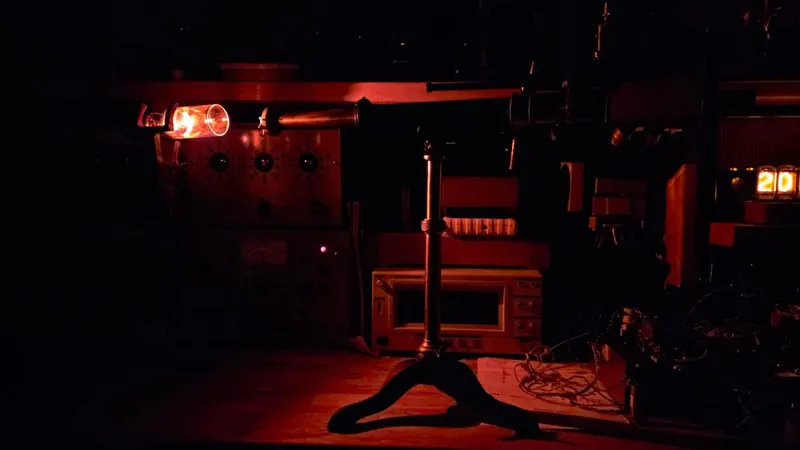
The WAVE Foundation from Człuchów collects historic scientific instruments, from spectroscopes to photometers, and presents them so that anyone who has seen a rainbow can understand them. In Charzykowy the exhibits will stand beside modern measuring equipment and the people who build it and use it in laboratories.
Preschoolers in the morning, Newton and SPEKOL in the afternoon
The day opens with children from the Parrot language preschool: colours, light, a rainbow, prisms and simple experiments, without formulas or definitions. Science, the organisers write, begins with the simplest question: why.
In the afternoon the bar rises. Teenagers start with Newton and the prism, the moment humans learned to split light, and move through historic spectroscopes to the classic SPEKOL 11 spectrophotometer, flame photometry, monochromators, lasers, photomultipliers and modern detectors. At the end of the road stand modern instruments, an absorbance scanner and a TECAN microplate reader with a PAL autosampler, which show how a single sample and a single measurement became the automated analysis of hundreds of samples with computer processing of the results. The foundation wants to show not only the devices but what is inside them and why they can measure light.
The engineering side will be shown by SINTIA Innovations, a Człuchów company whose founder Krzysztof Makowski also runs the foundation: how optics, mechanics, electronics, automation and software combine into a measuring instrument. From photon to detector, from detector to electrical signal, from signal to data, from data to a graph, from a graph to information about matter. It sounds complicated, the organisers write, but anyone who knows that white light splits into many colours already knows one of the meeting's key principles.
Prof. Marcin Sobczyk, dean of the Faculty of Chemistry at the University of Wrocław, will introduce the audience to modern chemistry. The meeting is meant to combine three perspectives: WAVE with the history of science and education, the University of Wrocław with contemporary research, and SINTIA with technology and engineering.
In the evening, dimmed light and waves you listen to
The adult session will have a different character: in dimmed light, in the Bellevue's interiors, the history of science, antique instruments and modern technology will meet. Participants will travel from the prism, through spectroscopes and photometers, to devices in which the spectrum is no longer viewed by people but by detectors, electronics and computers.
And since the subject is waves, the organisers point out that not all of them need to be seen. The surprise of the evening is a concert by Maciej Świerczewski, who will demonstrate the possibilities of acoustic waves by performing the greatest hits of jazz and pop. Some waves can be seen with instruments, others measured, and others are best simply listened to.
Medical imaging as sponsor, or physics in medicine
The hotel's space is provided by Mariusz Sobol, who is actively helping to prepare the event, and the sponsor is the MRI and Tomography Imaging Diagnostics Centre in Szczecinek and Połczyn-Zdrój, with which he is associated. The foundation calls the pairing exceptionally apt: WAVE shows how physics and waves reveal a reality beyond our senses, and magnetic resonance and tomography are exactly that, in medicine.
The local patron is the chojnice.com portal of Bogdan Duraj, and the media patron of the WAVE Foundation is KPH Group, publisher of Gazeta Morska and Daily Mare and co-organiser of the ARMA Forum. Admission details for the afternoon and evening sessions are published on the foundation's channels.
The Science Evening in Charzykowy is the first of a series of events in which the Człuchów foundation wants to take science beyond the walls of the laboratory. The next, in February in Chojnice, is to deal with water security, and we will report on it separately.
Source: Gazeta Morska · Compiled by: Kamil Kusier
Related articles
 Energy and offshore Offshore wind enters the classroom in Świnoujście. ORLEN Neptun to teach logistics and navigation students
 Education Drones at the Naval Academy, Dar Młodzieży in Gdynia, a sports hall at UG. Coastal universities open the year
 Sailing and water sports Poland argues over where Dar Młodzieży should retire, while its successor still does not exist
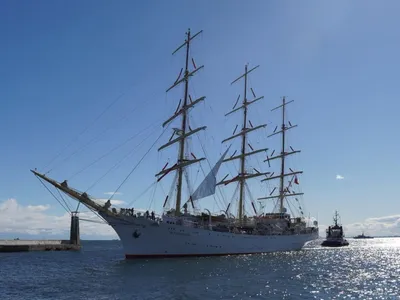 Education Dar Młodzieży is back in Gdynia after five months, two Atlantic crossings and three intakes of cadets
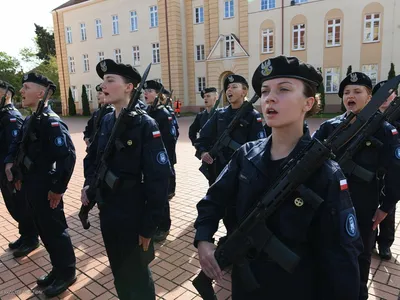 Navy and defence Polish Naval Academy swears in 114 cadets as an intake of 185 begins officer training
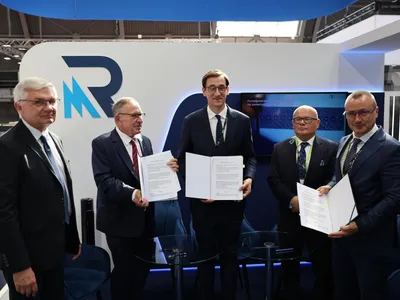 Equipment and technology Łukasiewicz and Radiotechnika sign in Kielce. Motors and generators for combat vehicles and drones
Comments (0)
The discussion is moderated by the editors: a comment appears after review. Your e-mail address is not published.
Nobody has commented on this article yet.