Ustka a NATO opportunity? What a port on the border of two regions could change
Ustka, a small seaside town located almost exactly on the border between the Pomeranian and West Pomeranian voivodeships, has for many years played a notable role on Poland’s Baltic coast. Although its port is far smaller than those of Gdynia or Szczecin, Ustka is increasingly appearing in discussions related to national security, allied preparedness and military logistics.
security logistics navy nato pomerania west pomerania ports news12 january 2026 | 07:07 | Source: Gazeta Morska | Prepared by: Kamil Kusier | Print
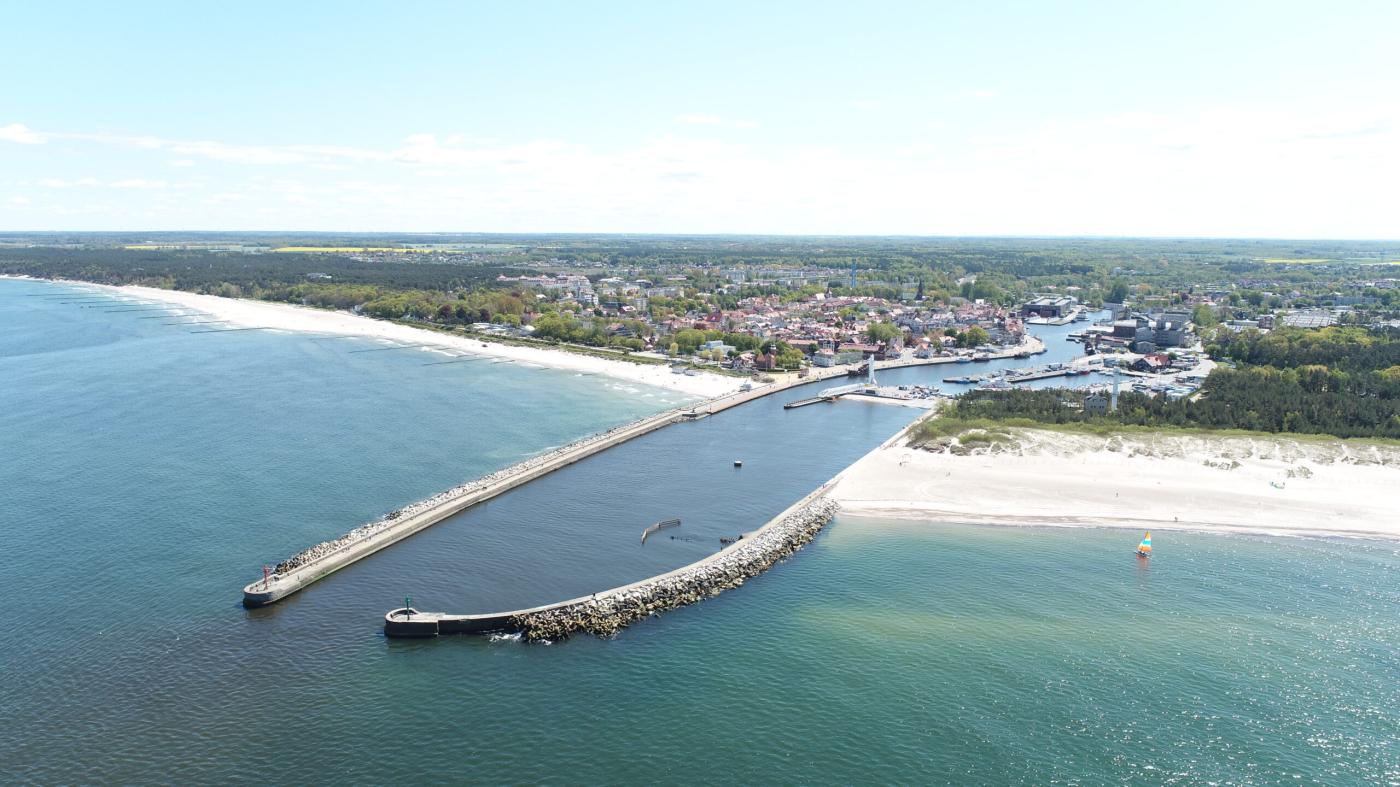
fot. Urząd Morski w Gdyni
In recent months, debate about the port’s potential has gained new momentum, driven by ongoing investments, strategic assessments and discussions about its future role in Poland’s and NATO’s defence system. The issue is worth examining through technical, strategic and historical lenses, all of which have for decades shaped the perception of Ustka as a location whose potential exceeds its current civilian scale.
Port infrastructure: current state, modernisation and capabilities
The main catalyst for the renewed focus on Ustka is the ongoing modernisation of its port infrastructure. In 2025, the Gdynia Maritime Office signed contracts for the renovation of key hydrotechnical structures, including the reconstruction of the Eastern and Western breakwaters and the modernisation of parts of the quays. The project, largely financed from Poland’s National Recovery and Resilience Plan (KPO), exceeds PLN 100 million in value and is scheduled for completion within about 15 months.
The scope of work includes strengthening the breakwater structures, improving hydrometeorological safety and facilitating vessel manoeuvring within the port. Better breakwater parameters will also reduce heavy wave action during storms, one of the port’s long-standing operational problems. These upgrades will not only enhance safety and comfort but also widen the range of possible maritime operations – from larger civilian vessels to potential state and military logistics tasks.
At the same time, design work is under way to deepen the access channel. Originally this was primarily intended to support vessels serving offshore wind farms on the Słupsk Bank in the Baltic Sea. The dredging will allow Ustka to handle service and supply vessels for the offshore sector, but the planned depth parameters are equally relevant for military and logistical operations, enabling the entry and berthing of higher-tonnage ships.
Importantly, port development goes beyond hydrotechnical works. Ustka is gradually gaining more advanced technical and logistical facilities, improving its usefulness for both civilian and potential defence-related operations. Quay upgrades, adaptation of cargo handling areas and better road and rail connections are all part of a broader plan to increase the port’s competitiveness and functionality.
Geographic location and logistical value
Ustka lies in the central part of Poland’s Baltic coast, giving it several logistical advantages. Unlike the large ports of the Tricity or Świnoujście, it is not burdened with intense commercial traffic, which provides greater flexibility for rapid logistical operations in crisis situations. When major ports are congested or subject to heightened security procedures, smaller ports such as Ustka can serve as valuable supplementary hubs.
The port is also connected to Poland’s national transport network. While Ustka is not a major rail or road hub, its existing infrastructure allows cargo and equipment to be moved efficiently inland, using both rail and road links. For military planners, the ability to quickly tranship and distribute matériel is a strategically important asset.
Naval training facilities and the Wicko Morskie range
Ustka does not operate in isolation from Poland’s defence infrastructure. Nearby lies the Wicko Morskie naval range, a long-established training and testing area for naval units. This facility is a key element of Poland’s Baltic training and evaluation system.
Close by is also the Polish Navy Training Centre, which for years has used the region’s facilities for preparing naval personnel and allied forces for maritime operations, including amphibious, manoeuvre and logistics exercises. These training and testing functions have long underpinned Ustka’s reputation as a location of greater military significance than its commercial scale might suggest.
Historical planning context
Ustka has featured in military and maritime planning for decades. During the interwar period, it was considered as a potential auxiliary port to support Poland’s main naval bases, particularly Gdynia. Although no major military facilities were built, the concept itself reflected recognition of Ustka’s strategic location.
During the Cold War, the port also appeared in operational planning as a possible logistical support point, even if it never became a primary naval base. This long-standing presence in planning documents underscores the area’s perceived defence potential.
NATO and allied logistics concepts
In recent years, the role of secondary and auxiliary ports in NATO logistics has become more prominent in Polish strategic analyses. One example is the Ministry of National Defence’s working concept known as the “Pact for Poland’s Security – Central Pomerania”, which aims to assess how various elements of national infrastructure could support the movement of allied forces in peacetime, heightened readiness and crisis scenarios.
Within this framework, ports capable of handling high-tonnage transports, military equipment and logistics vessels are being evaluated. Ustka is regularly mentioned as a candidate due to its modernisation programme, potential channel deepening, geographic location and relatively low commercial congestion. In NATO logistics planning, such smaller ports are seen as complementary assets that increase resilience and flexibility.
Development prospects and challenges
Preparing a port for state or allied military logistics is a complex, long-term process requiring coordinated investment and institutional cooperation. Despite the current modernisation works, further steps are still needed, including the development of cargo yards, technical facilities, transport links and clear operational procedures for crisis situations.
Equally important are governance and security frameworks defining how civilian and military users would cooperate under different scenarios.
Ustka’s emerging role
Ustka’s port is now on the threshold of changes that could significantly affect its role in Poland’s security architecture. Infrastructure upgrades and strategic planning suggest it could become an important logistics and support hub for national and allied forces. However, this is based on technical capacity, location and existing training functions, not on transforming Ustka into a major naval base.
In the coming years, the port is likely to evolve as a dual-use facility, combining economic, energy and training functions with a growing logistical role for NATO and Poland’s armed forces. Rather than competing with Poland’s largest ports, Ustka could become a key component of a diversified, resilient and flexible maritime infrastructure system.
see also
Buy us a coffee, and we’ll invest in great maritime journalism! Support Gazeta Morska and help us sail forward – click here!
Kamil Kusier
redaktor naczelny
comments
Add the first comment
see also
Radmor hosts delegation from the Republic of Turkey. Advancing maritime security cooperation
French Navy expands global operations from the Pacific to the Red Sea
"Let everyone know we will prevail". Poland’s armed forces set strategic course for 2026-2039
“Army 500” and strategic transformation: Poland sets the course for long-term deterrence and allied readiness
Medical evacuation from offshore vessel in the Baltic. Rescue 511 helicopter and m/s Huragan deployed
Karol Nawrocki: “The strength of the republic lies in its armed forces”. Security requires national unity
Human trafficking, money laundering, millions frozen. Successful operation by border guard and tax administration
Evening SAR operation in the Baltic. Two kitesurfers stranded offshore
Medical evacuation from sailing ship in Gdynia port. 17-year-old safely transported
Medical evacuation from Danish-flagged vessel Skoven off Łeba. Joint SAR operation in the Baltic Sea
ADVERTISEMENT
ADVERTISEMENT