USA expands sanctions on more Iran-linked tankers
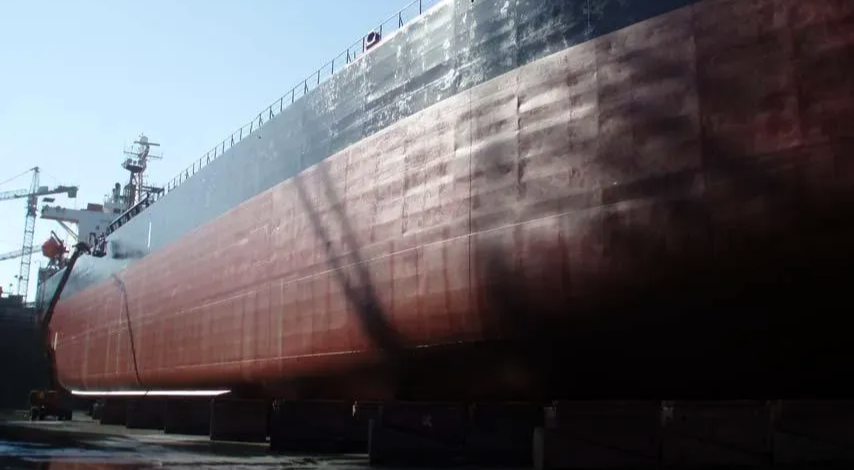
The United States administration has imposed sanctions on additional vessels and entities linked to Iran's energy sector. The updated list includes 13 tankers and 22 companies engaged in the transportation and trade of crude oil.
business maritime economy worldwide ports news25 february 2025 | 17:29 | Source: Gazeta Morska | Prepared by: Kamil Kusier | Print
fot. marinetraffic.com
The expansion of sanctions aligns with the "maximum pressure" strategy on Iran, as declared by President Donald Trump after resuming office in January this year. The objective of this policy is to prevent Tehran from developing its nuclear program and ballistic missile systems, as well as to limit its ability to finance conflicts in the Middle East region.
Iran, heavily dependent on foreign fleet operators and the Chinese oil market, remains vulnerable to such restrictions. The U.S. Department of the Treasury systematically expands the sanctions list, with the latest decisions aimed at further obstructing illegal oil shipments.
- This network of illicit oil transport entities employs disinformation techniques to conceal its role in the loading and transportation of Iranian oil to buyers in Asia, stated U.S. State Department spokesperson Tammy Bruce. - This decision is a crucial step in implementing President Donald Trump's strategy to cut off Iran's oil revenue, which is used to fund terrorist activities."
The sanctioned companies include AustinShip Management Pvt Ltd, Cosmos Lines, Flux Maritime, and BSM Marine LLP from India; Alkonost Maritime, Petroquimico, and Octane Energy from the United Arab Emirates; IMS Ltd. from Malaysia; NyCity Shipmanagement from Shandong, China; and Petronix Energy Trading from Hong Kong. The latter company has been accused of purchasing hundreds of thousands of metric tons of Iranian oil from the sanctioned entity Naftiran Intertrade Co.
Among the newly sanctioned vessels are the tankers Amak, Asterix, Ayden, Casinova, Chamtang, Fiona, Lydia II, Meng Xin, Peterpaul, Phoenix I, Urgane I, Violet I, and Yateeka.
U.S. sanctions continue to significantly impact the global crude oil shipping market, forcing operators to exercise caution when dealing with entities linked to Iran. In response to these restrictions, Tehran is seeking new strategies to bypass sanctions, including covert refueling locations and route-masking techniques.
The maritime industry closely monitors the ongoing developments, particularly market reactions to the new sanctions and potential countermeasures from Iran and its trading partners.
Buy us a coffee, and we’ll invest in great maritime journalism! Support Gazeta Morska and help us sail forward – click here!
Kamil Kusier
redaktor naczelny
comments
Add the first comment
see also
MON, Arka Gdynia and AMW sign letter of intent supporting "Green Industrial District - Kashubia" project
Mine countermeasure vessel Jaskółka begins sea acceptance trials
PEJ relocates headquarters to Pomerania. A strategic step in Poland’s nuclear power development
Radmor hosts delegation from the Republic of Turkey. Advancing maritime security cooperation
3D-printed catamaran: robotic manufacturing sets course for the future of small craft
Navantia and Fincantieri deepen cooperation on the european patrol corvette programme
Galeon Yachts and Meyer Shank Racing: merging luxury yachts with motorsport expertise
Unmanned systems and naval firepower modules. WB Group showcases integrated capabilities at Enforce Tac 2026
Swedish ports record lowest ship calls in 18 years. Implications for the maritime sector
February in Szczecin’s shiprepair sector. Ice, overhauls and North Sea expansion
ADVERTISEMENT
ADVERTISEMENT