USA to build Arctic fleet with Canadian and Finnish support. Icebreakers ready in 36 months
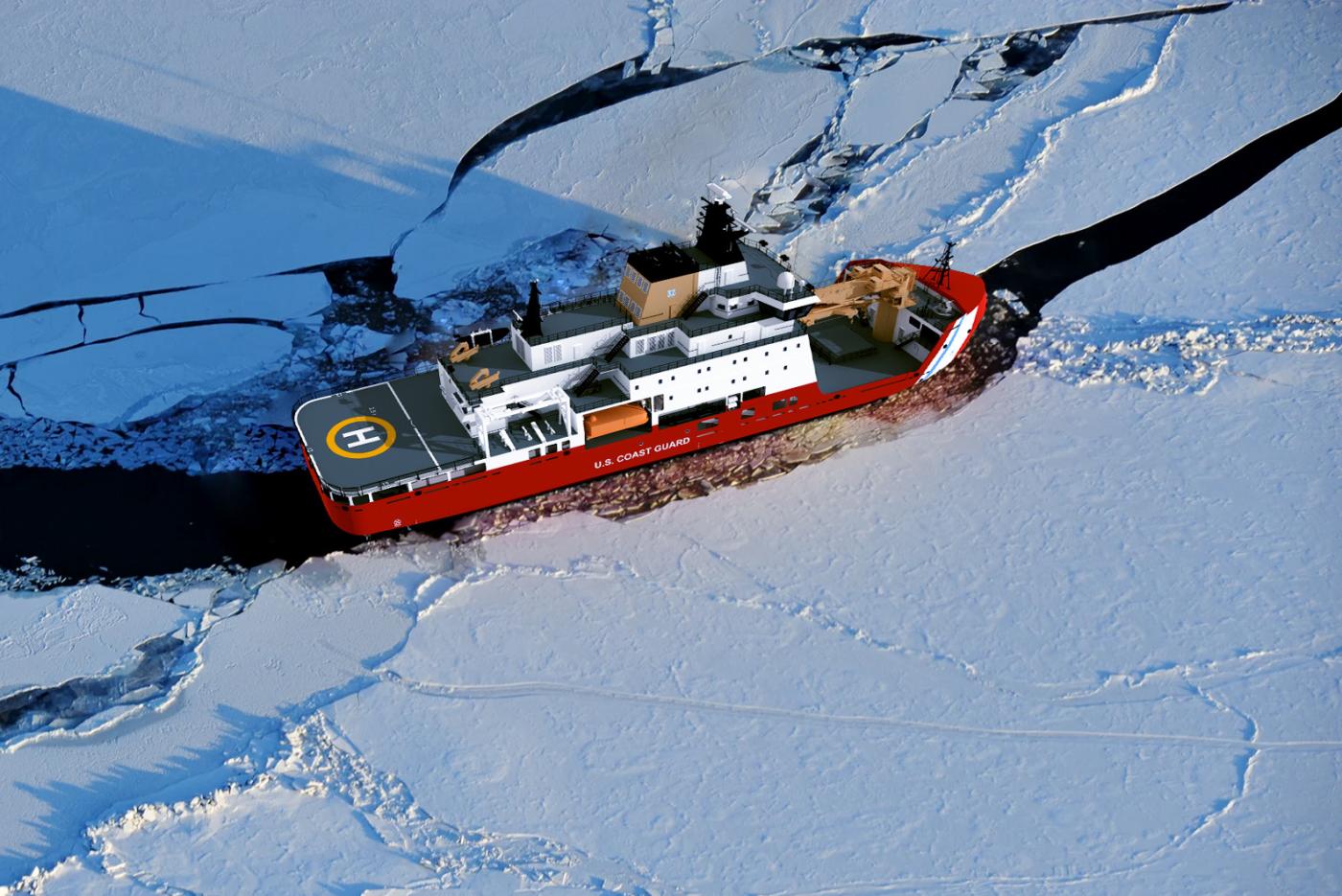
In response to growing geopolitical pressure in the Arctic, a new trilateral partnership will deliver state-of-the-art Arctic Security Cutters (ASC) for the US Coast Guard. The initiative is based on a proven multipurpose icebreaker platform and involves leading shipyards from the USA, Canada, and Finland.
business maritime economy worldwide shipbuilding industry news30 july 2025 | 09:19 | Source: Gazeta Morska | Prepared by: Kamil Kusier | Print
fot. Seaspan
Strategic partnership for Arctic capabilities
A strategic industrial partnership has been launched between four global shipbuilding leaders: Bollinger Shipyards (USA), Rauma Shipyard (Finland), Seaspan Shipyards (Canada), and Aker Arctic (Finland), a renowned expert in polar ship design. The goal is to deliver a new class of Arctic Security Cutters (ASC) for the United States Coast Guard.
The program is being developed under the ICE Pact – a trilateral initiative between the US, Canada, and Finland aimed at building shared industrial capacity and operational readiness in the Arctic. Based on the proven Multi-Purpose Icebreaker (MPI) design originally developed for the Canadian Coast Guard, the ASC vessels will provide the US with a robust tool for power projection, infrastructure protection, and civil support operations in the polar region. The first cutter is scheduled for delivery within 36 months of contract signing.
A proven design, ready for deployment
The ASC vessels will be built using the Canadian-developed MPI design, which not only meets but exceeds US Coast Guard requirements for Arctic operations.
Each cutter will be capable of:
- breaking through ice up to 1.2 meters thick,
- sailing up to 12,000 nautical miles without refueling,
- operating autonomously for more than 60 days in extreme Arctic conditions.
The ASC class is designed for multi-mission use, including shipping lane patrols, critical infrastructure protection, search and rescue, research support, and logistics. They will also be equipped for cooperation with drones, unmanned systems, and NATO forces.
Industrial capacity and integrated expertise
Bollinger Shipyards (USA) – program integrator
US-based Bollinger Shipyards will lead the program as the prime integrator, responsible for final assembly and delivery. The company brings extensive experience in delivering both civilian and military vessels to the US Navy and Coast Guard.
- Aligned with the priorities of President Donald Trump and the ICE Pact vision, Bollinger offers the scale, capability, and execution culture needed to meet delivery deadlines, said Ben Bordelon, CEO of Bollinger Shipyards. - Our goal is to deliver long-lasting assets that serve US national interests in the Arctic for decades.
Rauma Shipyard (Finland) – Arctic production readiness
Finland’s Rauma Shipyard, experienced in building ice-class naval and coast guard vessels for Baltic Sea nations, will be responsible for manufacturing and technical support.
- We have a skilled workforce and efficient production lines ready to deliver ASC components immediately, said Mika Nieminen, CEO of Rauma Shipyard. - Our role extends beyond production to training, service support, and operational advice for crews operating in polar regions.
Seaspan Shipyards (Canada) – regional capacity builder
Canadian shipbuilder Seaspan, a key player in the West Coast maritime industry, will contribute by expanding regional infrastructure and service capabilities for polar vessels.
- This is more than a contract for us – it’s a strategic project that strengthens both Canadian industry and North Atlantic Arctic capability, said John McCarthy, CEO of Seaspan Shipyards. - This trilateral cooperation is a model for building lasting technological and operational alliances.
Aker Arctic (Finland) – mission-specific naval architecture
Aker Arctic, a global leader in Arctic ship engineering, is providing the ASC’s design tailored for the operational requirements of the US Coast Guard.
- From the beginning, our goal was to design vessels that perform reliably in the world’s harshest environments, said Mika Hovilainen, CEO of Aker Arctic. - We are proud to see the MPI platform moving into full-scale production as part of such a strategic program.
ICE Pact: Arctic security through industrial cooperation
The ASC program is a flagship initiative under the ICE Pact – a trilateral framework developed by the US, Canadian, and Finnish governments to strengthen Arctic industrial and military capabilities. It responds to increasing competition among major powers in the region and addresses the need to protect trade routes, natural resources, and the environment.
Once delivered, the ASC vessels will form the most advanced multipurpose Arctic fleet in the world – capable of crisis response, search and rescue, climate monitoring, and sovereignty operations in the high North.
see also
Buy us a coffee, and we’ll invest in great maritime journalism! Support Gazeta Morska and help us sail forward – click here!
Kamil Kusier
redaktor naczelny
comments
Add the first comment
see also
Navantia and Fincantieri deepen cooperation on the european patrol corvette programme
Galeon Yachts and Meyer Shank Racing: merging luxury yachts with motorsport expertise
Unmanned systems and naval firepower modules. WB Group showcases integrated capabilities at Enforce Tac 2026
Swedish ports record lowest ship calls in 18 years. Implications for the maritime sector
February in Szczecin’s shiprepair sector. Ice, overhauls and North Sea expansion
Advanced ROV trials conducted at CTO to validate subsea technologies for offshore applications
University of Gdańsk and PGZ Naval Shipyard join forces for innovation and security
Stadt Naval to deliver electric propulsion system for Polish rescue vessel Ratownik
Gdańsk port’s Basen Górniczy to gain modern port infrastructure
First month of Jantar Unity operations. Polsca ferry paves the way for Batory program units
ADVERTISEMENT
ADVERTISEMENT