The Battle of Kołobrzeg. A bloody struggle of Polish soldiers for access to the Baltic and return to the sea
On March 18, 1945, history recorded a triumph for Polish soldiers in the Battle of Kołobrzeg. After 11 days of fierce fighting, the city was captured by the 1st Polish Army, symbolizing Poland's return to the Baltic Sea. This operation was crowned by the ceremonial wedding of Poland with the sea, conducted by corporal Franciszek Niewidziajło.
history news18 march 2025 | 08:07 | Source: Gazeta Morska | Prepared by: Kamil Kusier | Print
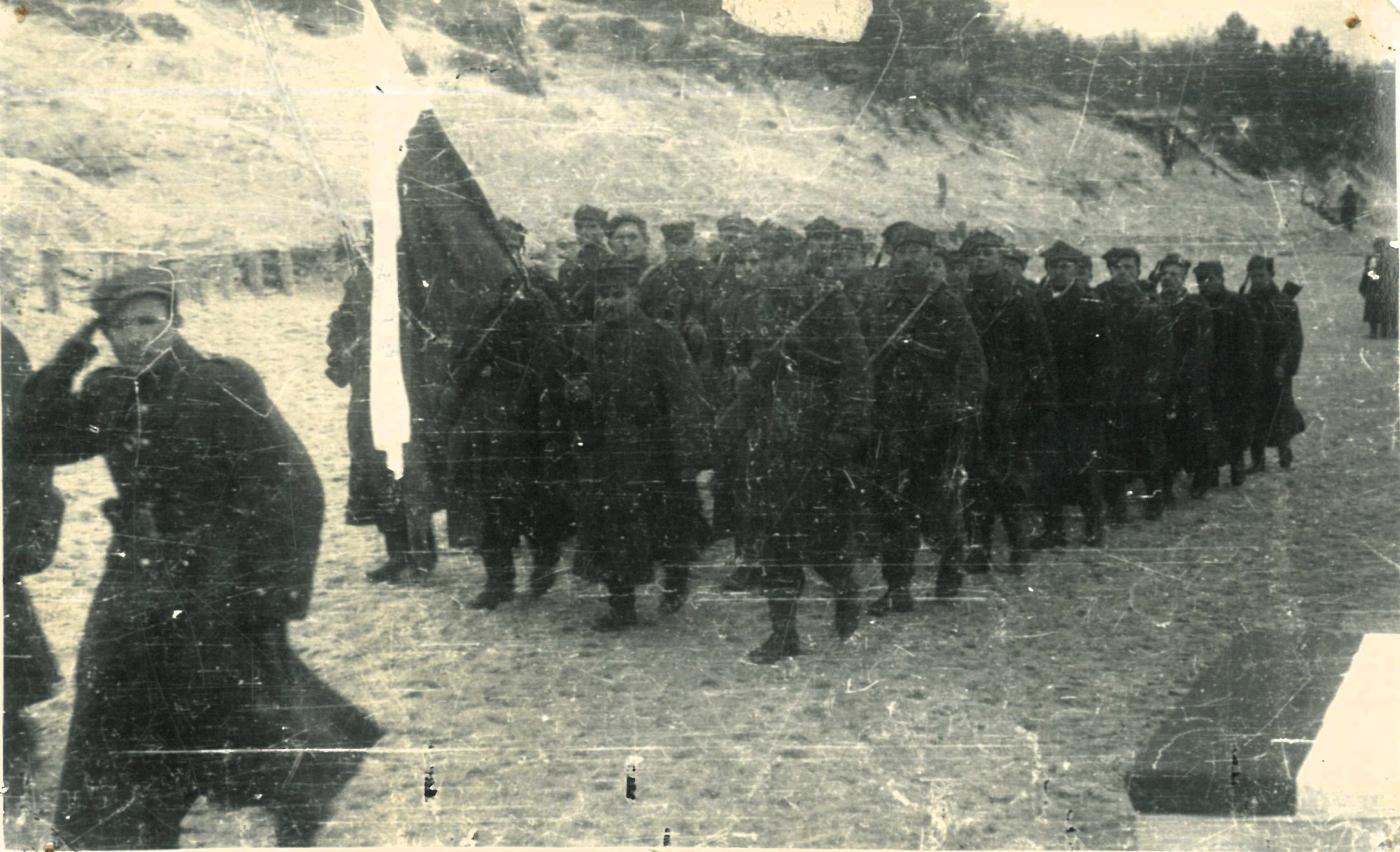
Defilada żołnierzy 5. Brygady Artylerii Ciężkiej po zdobyciu Kołobrzegu marzec 1945. Zdjęcie ze zbiorów Tadeusza Delawskiego / fot. Wikimedia
Strategic importance of Kołobrzeg
In the German defense system, Kołobrzeg served as a crucial evacuation point and naval base. Due to its location, it was well-prepared for prolonged defense—Germans utilized natural obstacles such as the Parsęta river and Drzewny canal, built an extensive system of fortifications and barricades, and reinforced civilian buildings for military use. The garrison, consisting of around 10,000 soldiers, was supported by Kriegsmarine units, coastal artillery, and an armored train.
Course of battle
The siege of Kołobrzeg began on March 7, 1945. Polish units systematically broke through German defensive lines. The fiercest battles took place around St. George's church, the white and red barracks, and the old town area. Among the key clashes was the destruction of the German armored train Panzerzug 72A and the capture of the port.
The final assault started on the night of March 17-18. By morning, Polish forces had seized the railway station and the port. Despite desperate resistance, the Germans failed to hold the city. Some forces managed to retreat by sea, but approximately 8,000 soldiers were taken prisoner.
Wedding with the sea
Following the battle, on March 18, 1945, a symbolic ceremony of Poland’s wedding with the sea took place on Kołobrzeg’s beach. Corporal Franciszek Niewidziajło, throwing a ring into the waves, uttered the following words:
"We have come, sea, after hard and bloody effort. We see that our struggle was not in vain. We swear never to abandon you. Throwing this ring into your waves, I take you in marriage, for you have been and always will be ours."
Losses and remembrance
The battle of Kołobrzeg was one of the toughest independent engagements fought by the Polish army during World War II. Out of 28,000 Polish soldiers involved in the battle, 1,266 lost their lives, and over 2,500 were wounded.
Today, the heroism of Polish soldiers is commemorated on the tomb of the unknown soldier in Warsaw and Kraków. Thanks to the sacrifices of thousands of Poles, Kołobrzeg was reclaimed, reaffirming Poland’s historic connection to the Baltic Sea.
Buy us a coffee, and we’ll invest in great maritime journalism! Support Gazeta Morska and help us sail forward – click here!
Kamil Kusier
redaktor naczelny
comments
Add the first comment
see also
Two Lancaster wrecks, one operation. The bombers fell over the Baltic laying mines still disarmed today
Seven dead in war, seven in peacetime. Błyskawica turns 90 and still flies the ensign
Batavia goes ashore. The Dutch show what to do with a ship no longer worth keeping afloat
17 September 1939. The Soviets invaded Poland. Aggression, deportations and Katyn
563 years ago Gdańsk and Elbląg destroyed the Teutonic fleet. 44 vessels against 30 privateers
Nearly 5,000 motorcycles ride to Piaśnica. The memory of a crime the Germans failed to burn
Suicide according to the secret police, murder according to Solidarity. IPN seeks answers 43 years on
Ninth Piaśnica Memorial Motorcycle Ride on 12 September. Riders to honour victims of the 1939 massacre
Polish PM at Westerplatte: loneliness of Polish soldiers as deafening as the Schleswig-Holstein's salvoes
Polish defence minister at Westerplatte: Never again a Poland that had only courage
ADVERTISEMENT
ADVERTISEMENT