Strong first quarter -Port of Gdańsk strengthens position in container handling
The Port of Gdansk has kicked off 2025 with solid growth in container throughput, further establishing itself as a strategic logistics hub in the Baltic Sea and Central and Eastern Europe. In the first quarter, the port’s container terminals handled over 624,000 TEUs, marking a 17% increase compared to the same period last year.
business maritime economy logistics pomerania ports transport and forwarding news23 april 2025 | 07:23 | Source: Gazeta Morska | Prepared by: Kamil Kusier | Print
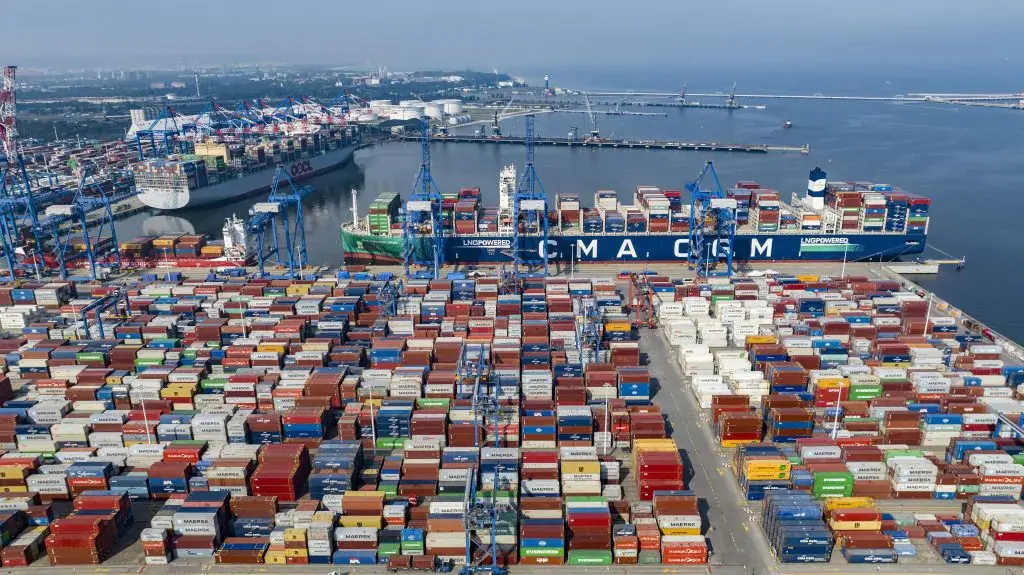
fot. Port Gdańsk
This growth has been fueled by infrastructure development and the expansion of service networks, including new ocean connections operated by some of the world’s largest container ships. Gdansk continues to capitalize on both its geographical location and long-term investment strategy.
- Over the past two decades, we’ve implemented a wide range of infrastructure projects that boosted our terminal capabilities and integrated the port more effectively into national and international transport systems. Today, those investments are directly reflected in our efficiency and competitiveness – said Dorota Pyć, CEO of the Port of Gdansk.
Resilience in challenging times
In total, the Port of Gdansk handled 18.4 million tonnes of cargo in Q1 2025 – a modest 2% year-on-year decrease, which, in light of ongoing global economic disruptions and transport instability, demonstrates the port’s strong resilience and operational agility.
One of the most striking trends is a 560% surge in ore throughput, driven by a sharp increase in iron ore imports supporting the steel industry in Poland and neighboring countries. The data confirms Gdansk’s growing role as a strategic raw materials hub.
The port also recorded a 74% year-on-year increase in timber throughput (from 7.6 thousand to 13.2 thousand tonnes). This raw material, primarily sourced from Latvia, is shipped via Gdansk to customers in Scandinavia and Asia.
Selective declines across bulk segments
Not all cargo categories followed the upward trend. Coal volumes fell by 14.8%, while fuel and grain saw declines of 7.5% and 21% respectively. These shifts reflect broader market conditions and pricing fluctuations on global commodity markets.
Despite the declines in certain bulk segments, the port maintains strong throughput levels, reinforcing its key role in European and international trade flows.
- Despite a challenging macroeconomic environment, we’re not only keeping volumes high, but also developing new cooperation routes and strengthening our position as a logistics gateway for Central and Eastern Europe. We take a pragmatic approach to the months ahead and are actively preparing for further growth – added Dorota Pyć.
see also
Buy us a coffee, and we’ll invest in great maritime journalism! Support Gazeta Morska and help us sail forward – click here!
Kamil Kusier
redaktor naczelny
comments
Add the first comment
see also
Navantia and Fincantieri deepen cooperation on the european patrol corvette programme
Galeon Yachts and Meyer Shank Racing: merging luxury yachts with motorsport expertise
Unmanned systems and naval firepower modules. WB Group showcases integrated capabilities at Enforce Tac 2026
Swedish ports record lowest ship calls in 18 years. Implications for the maritime sector
February in Szczecin’s shiprepair sector. Ice, overhauls and North Sea expansion
Advanced ROV trials conducted at CTO to validate subsea technologies for offshore applications
University of Gdańsk and PGZ Naval Shipyard join forces for innovation and security
Stadt Naval to deliver electric propulsion system for Polish rescue vessel Ratownik
Gdańsk port’s Basen Górniczy to gain modern port infrastructure
First month of Jantar Unity operations. Polsca ferry paves the way for Batory program units
ADVERTISEMENT
ADVERTISEMENT