Korea-US summit: defense talks with a strong maritime agenda
Defense and the denuclearization of the Korean Peninsula topped the agenda as South Korean president Lee Jae-myung met US president Donald Trump in Washington on Monday. While geopolitics dominated the headlines, the visit also carried a strong maritime and shipbuilding dimension, reflecting Seoul’s growing industrial footprint in the United States.
security business maritime economy worldwide politics news25 august 2025 | 13:49 | Source: Gazeta Morska / PAP | Prepared by: Kamil Kusier | Print
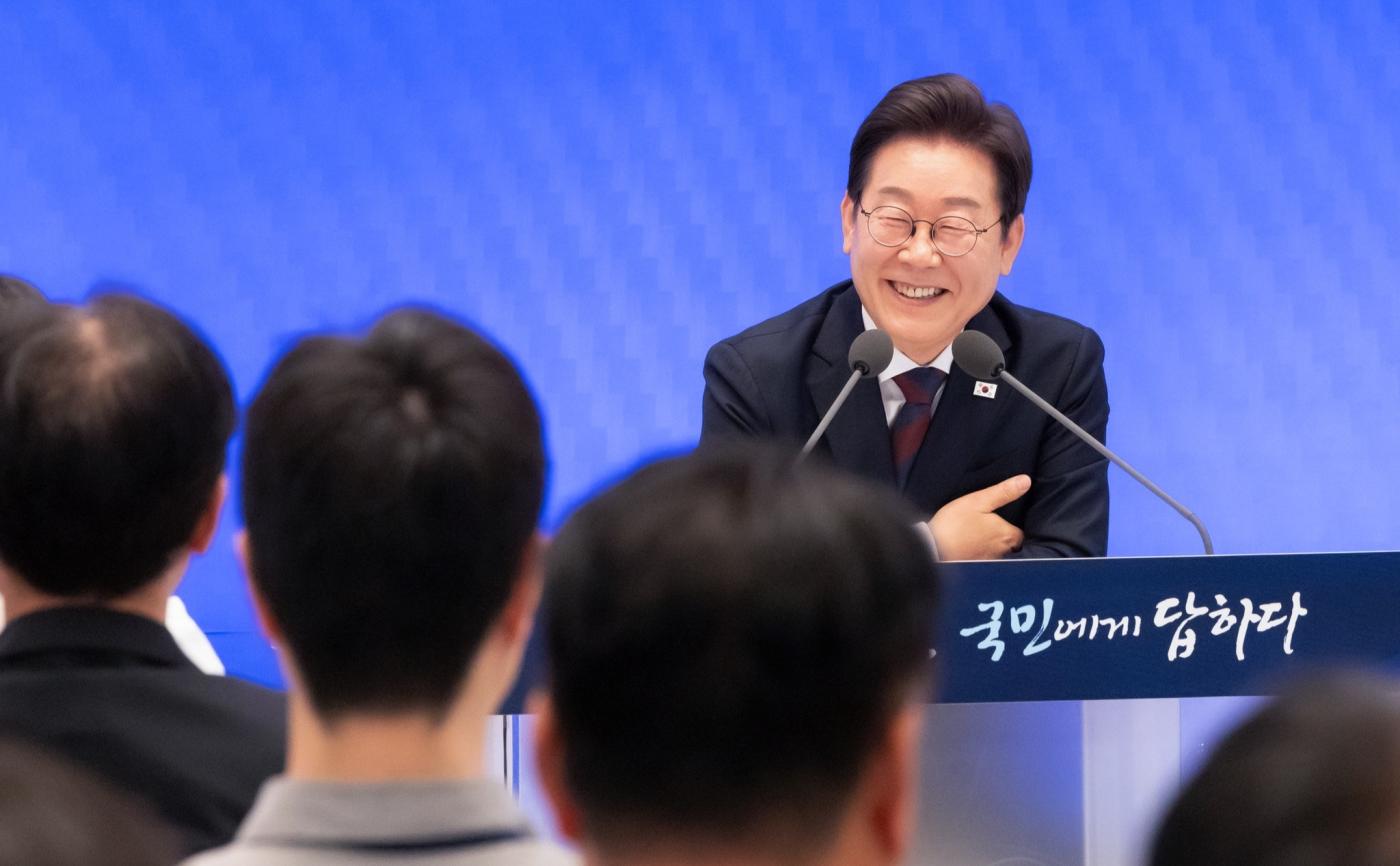
fot. Lee Jae-myung
Security and strategy
Trump has repeatedly pressed Seoul to shoulder more of the financial burden of maintaining the 28,500 US troops stationed in South Korea. Although Seoul has agreed to raise its contribution by 8.3% to 1.52 trillion won (USD 1.09 billion) by 2026, this remains far below Trump’s stated goal of 5% of GDP. Lee emphasized a phased approach to denuclearization, starting with freezing North Korea’s nuclear program before moving toward full dismantlement.
Maritime focus: Hanwha in Philadelphia
A centerpiece of Lee’s American itinerary will be his visit to Hanwha Philly Shipyard in Philadelphia, acquired by South Korea’s Hanwha Ocean. The move underscores Korea’s determination to strengthen its position in the US shipbuilding market.
Seoul has pledged USD 350 billion in investments in the US economy, with USD 150 billion earmarked specifically for supporting the entry of Korean shipbuilders into the American market. For the maritime industry, this signals deepening cooperation that could reshape production capacity, technology transfer, and job creation on both sides of the Pacific.
Tariffs and industry impact
Despite efforts by Seoul to keep tariffs off the summit agenda, Trump announced in late July that South Korean goods will be subject to a 15% tariff. Industry observers note, however, that the scale of Korean investment in US shipyards helped secure a more favorable outcome than initially anticipated.
Looking ahead
Beyond defense and diplomacy, Lee’s visit highlights the maritime sector as a strategic pillar in the Korea–US partnership. His stop at Hanwha Philly Shipyard is expected to showcase how Korean capital and know-how will accelerate the revitalization of American shipbuilding, while reinforcing Korea’s global leadership in the industry.
see also
Buy us a coffee, and we’ll invest in great maritime journalism! Support Gazeta Morska and help us sail forward – click here!
Kamil Kusier
redaktor naczelny
comments
Add the first comment
see also
Strait of Hormuz at a strategic crossroads: sinking of IRIS Dena and implications for maritime transport
The submarine contract of the decade? Canada weighs South Korea against Germany
When two powers clash, Poland must be ready to act. Military security must be the priority
Commodore Przemysław Karaś appointed deputy commander of the Maritime Operations Centre - Naval Component Command
Radmor hosts delegation from the Republic of Turkey. Advancing maritime security cooperation
French Navy expands global operations from the Pacific to the Red Sea
"Let everyone know we will prevail". Poland’s armed forces set strategic course for 2026-2039
“Army 500” and strategic transformation: Poland sets the course for long-term deterrence and allied readiness
Medical evacuation from offshore vessel in the Baltic. Rescue 511 helicopter and m/s Huragan deployed
Karol Nawrocki: “The strength of the republic lies in its armed forces”. Security requires national unity
ADVERTISEMENT
ADVERTISEMENT