









Shipbuilding industry is awesome.. Technical drawing: the universal language of shipyards
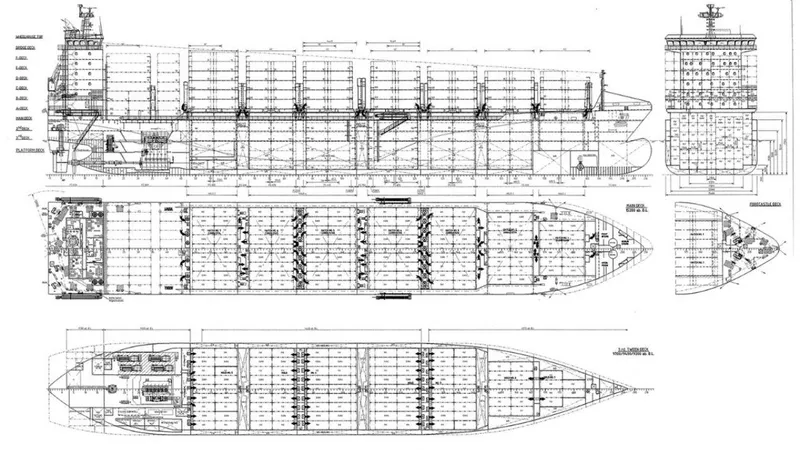
Across shipyards around the world, vessels are built that differ in size, purpose and level of complexity. Although design processes take place in different countries and cultural environments, they are all united by one common code of communication – the technical drawing.
In brief
Technical drawings serve as the universal language of shipbuilders, says Marcin Ryngwelski, president of PGZ Stocznia Wojenna. Designing a single vessel or warship involves hundreds, and often thousands, of drawings, from concept sketches to working designs, which are verified and approved at multiple stages before reaching the production hall. Marcin Ryngwelski points out that unified standards allow the Polish shipyard to begin costing and production preparation on the basis of drawings from foreign design offices. The piece belongs to the Gazeta Morska series celebrating the shipbuilding industry as a great place to work.
For engineers and designers, it is the primary working tool. A Polish shipbuilder may struggle to hold a conversation with a colleague from South Korea, Qatar or Brazil. Yet the moment both of them look at a drawing, all language barriers disappear. Technical documentation becomes a universal language, where lines, symbols and projections replace words.
From “the Line” to a global standard
- Every student of naval architecture, marine engineering, mechanics or mechatronics learns technical drawing from day one – and this standard holds true everywhere in the world. And it’s not just theory; everyone must learn to draw by hand, reminds Marcin Ryngwelski, CEO of PGZ Naval Shipyard.
Older generations will remember the subject under its former name – Descriptive Geometry, informally called simply “The Line”. Demanding and unforgiving, it was a true test of precision and patience. Professors would have students redo the same drawing multiple times until absolute accuracy was achieved.
Thousands of drawings – one ship
Designing a vessel means working through hundreds, often thousands of drawings. The documentation covers everything from initial concept sketches to detailed production plans. Before any blueprint reaches the production hall, it undergoes rigorous verification and a multi-stage approval process. It’s this discipline that ensures every finished ship meets the highest standards of quality and safety.
A shared technical language of the industry
- Any drawing created by a Polish or Korean shipyard design office is perfectly understandable to both sides, regardless of native language. If our shipyard received documentation from international partners today, we could immediately begin calculations and production planning – because the standards are unified globally, emphasizes the CEO of PGZ Naval Shipyard.
This standardization enables seamless international collaboration. Polish shipyards frequently work on projects developed by foreign design offices. Thanks to the universal language of technical drawing, such contracts progress smoothly – unaffected by linguistic or cultural differences.
Series: Shipbuilding industry is awesome
This article is part of Daily Mare’s series showcasing the world of Polish shipyards. We offer an inside look at the everyday work of engineers and designers, the tools they rely on and the strategic importance of the shipbuilding industry for national security and the economy. The series draws inspiration from the insights and observations of Marcin Ryngwelski, CEO of PGZ Naval Shipyard.
Source: Gazeta Morska · Compiled by: Kamil Kusier
Related articles
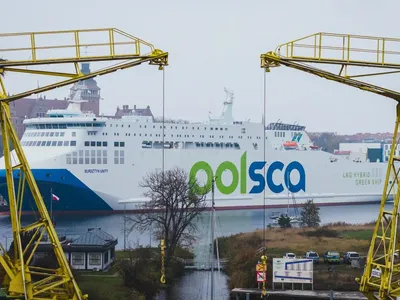 Shipbuilding industry Poland christens ro-pax ferry Bursztyn Unity in Szczecin on Independence Day. Ystad service starts 18 November
 Energy and offshore Orlen Neptun deploys V-LiDAR buoys at Baltic West ahead of Poland's 2027 offshore wind auction
 Energy and offshore Equinor takes over Bałtyk 2 and 3 O&M base in Łeba. Port to serve 1.44 GW of offshore wind for 30 years
 Navy and defence Port Gdański Eksploatacja secures NATO NCAGE code. Gdańsk port company lines up for defence tenders
 Shipbuilding industry Ex-Enterprise towed to Mobile under $418.5m contract. Test case for Nimitz-class disposal begins
 Energy and offshore Energa renames Gdańsk gas plant company as foundations for 6,000-tonne turbine and boiler are laid
Comments (0)
The discussion is moderated by the editors: a comment appears after review. Your e-mail address is not published.
Nobody has commented on this article yet.