









Russian escort and U.S. oil chase: a new front in the North Atlantic. Implications for shipping and energy markets
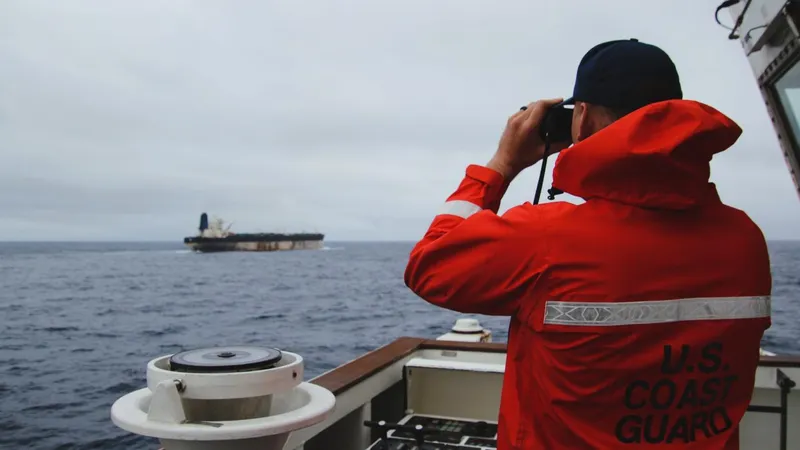
An extraordinary scenario is unfolding in the North Atlantic, drawing attention from maritime security experts and the shipping industry alike. At the center is the tanker Marinera, formerly known as Bella 1, linked to Iranian companies under sanctions. For several weeks it has been pursued by the U.S. Coast Guard, while Russia has deployed its naval units, including a submarine, to escort and protect it from seizure. This case illustrates how sanctions policies directly impact the shipping industry and create a new geopolitical front at sea.
In brief
The tanker Marinera, formerly Bella 1, linked to sanctioned Iranian companies, has been pursued for several weeks by the US Coast Guard in the North Atlantic. In December the vessel refused to allow US inspectors to board, after which it was reflagged to the Russian flag and renamed, and Russia sent a submarine and surface vessels as escort. The tanker Marinera is located near Iceland's exclusive economic zone and is heading for Murmansk, with P-8 Poseidon reconnaissance aircraft flying overhead. US actions have also covered the vessels Skipper and Centuries.
Shadow fleet risks and shipping challenges
Marinera is part of the so-called shadow fleet, older tankers used to circumvent sanctions and transport oil from Russia, Iran, or Venezuela. The fleet employs various tactics: changing flags of convenience, operating in less-monitored regions, and using shell companies to obscure actual ownership. These maneuvers create risks for insurers, ship operators, and logistics providers, who must anticipate possible maritime incidents and potential financial losses.
Bella 1 refused boarding by the U.S. in December and was subsequently reflagged under the Russian flag and renamed Marinera. This move allows Russia to formally protect the vessel, although the legal situation remains complex. For the maritime sector, it signals that sanctions procedures can be challenged, and flag changes can hinder seizure efforts even in clear cases of international law violations.
North Atlantic pursuit
Marinera is currently near Iceland's Exclusive Economic Zone, heading toward Russian ports such as Murmansk. The U.S. is conducting intensive surveillance. P‑8 Poseidon reconnaissance aircraft are monitoring the vessel, and additional aircraft and helicopters have been deployed to the U.K., suggesting a potential intervention. Each day in the pursuit zone increases risk levels for operators, brokers, and insurers, both financially and operationally.
Russian escort: power demonstration and industry implications
Russia dispatched a submarine and surface units to escort Marinera. This unprecedented move demonstrates the country's willingness to defend its interests in international waters. For the shipping industry, it means potential incidents in heavily trafficked maritime zones, navigational challenges for other operators, higher insurance premiums, and increased regional tension.
Other shadow fleet vessels and U.S. actions
Marinera is not the only target. Recent weeks have seen chases and seizures involving vessels such as Skipper and Centuries, with more tankers under sanction or monitoring. Many vessels change flags and ownership to evade control. U.S. actions, often coordinated with allies, aim to maintain surveillance over the North Atlantic, prevent illegal oil transport, and minimize disruption to international trade. Sanctions target both ships and associated companies, increasing financial pressure and compelling greater caution throughout the supply chain.
Legal and military risks
The legal challenge is significant: changing a vessel's flag mid-voyage complicates the legal basis for seizure. If properly registered under a state flag, the U.S. would need that country's consent or risk acting in a legally contentious manner. Russia's escort underscores that economic conflicts can quickly escalate into military tensions, and the maritime industry must prepare for emerging crisis scenarios.
Industry takeaways
The pursuit of shadow fleet tankers and Russia's escort in the North Atlantic highlights a new dimension of modern sanctions and maritime geopolitics. The sea remains an arena not only for transport but for international competition, where every flag, vessel, and movement carries consequences for operators, insurers, and logistics providers. The maritime sector must be ready for increased volatility and risk in strategically sensitive regions.
Source: Gazeta Morska · Compiled by: Kamil Kusier
Related articles
 Safety and rescue Dublin Civil Defence volunteers helped Kraków victims. Polish SAR director Sebastian Kluska once served with them
 Navy and defence HMS Prince of Wales takes on ammunition in Norway. First resupply outside the UK
 Maritime economy Poland’s constitutional crisis is also a maritime story
 Navy and defence Norwegian submarine Utstein completes NATO patrol guarding offshore oil and undersea infrastructure
 Safety and rescue Polish SAR’s new rescue vessel Mistral launched at Kewatec in Finland
 Safety and rescue Icelandic Coast Guard and police delegation visits Polish Border Guard’s Maritime Division
Comments (0)
The discussion is moderated by the editors: a comment appears after review. Your e-mail address is not published.
Nobody has commented on this article yet.