Poland turns north: Baltic Sea as a strategic hub for energy and security
Long perceived mainly as a Central European country, Poland is increasingly pivoting toward the Baltic Sea. This strategic reorientation – noted in international analyses – is driven by the country’s energy transition and the consequences of Russia’s invasion of Ukraine.
business power engineering maritime economy investments offshore politics ports news01 september 2025 | 15:53 | Source: Gazeta Morska / PAP | Prepared by: Oskar Wojciechowski | Print
fot. Tomasz Dresler / Port Gdańsk
Baltic energy at the core
The energy sector is at the forefront of this shift. Poland has committed to phasing out coal by 2049, and in June 2025, for the first time, renewable sources generated more electricity than coal (Forum Energii data).
Gas infrastructure is expanding as well. The Świnoujście LNG terminal has increased its capacity to 8.3 bcm per year, while a second terminal is under development in Gdańsk, scheduled to open in 2028 with a planned capacity of 6.1 bcm.
In the 2030s, Poland’s first nuclear power plant is set to be built on the Baltic coast, with cold seawater ensuring efficient and safe reactor cooling.
Offshore wind is becoming a pillar of Poland’s energy mix, currently accounting for 14.7%, compared to just 0.3% two decades ago. Government projections estimate 18 GW of capacity in the Baltic by 2040, requiring an investment of over USD 140 billion within 15 years.
- The Baltic course is not a matter of choice. It is practically the only way we can import energy. The sea becomes our window to the world, says Zuzanna Nowak from the foreign policy think tank Opportunity.
Ports and logistics – Baltic as a gateway
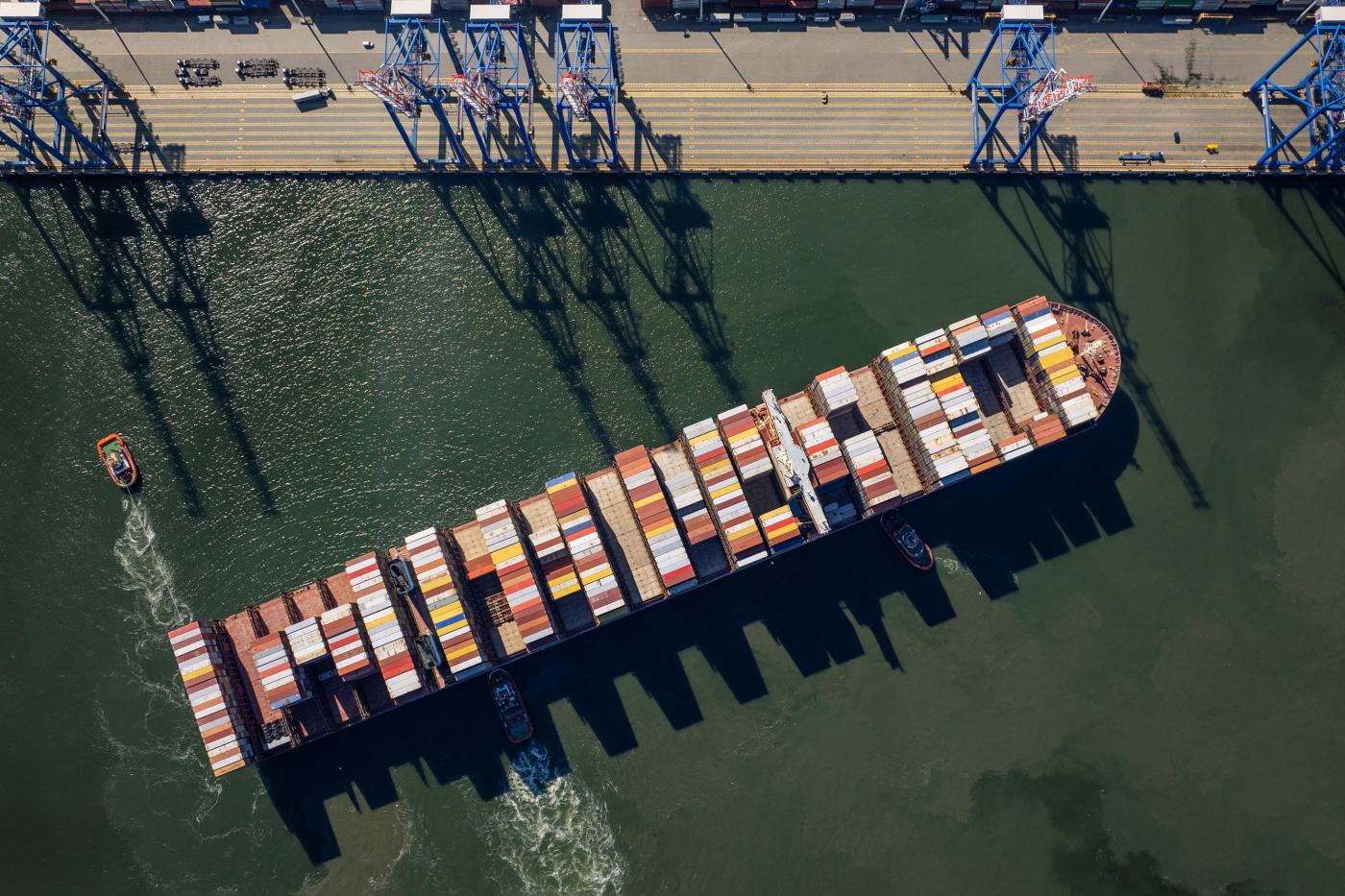
Geopolitical tensions and sanctions on Russia have reinforced the role of Poland’s ports. Over the past decade, cargo volumes have nearly doubled. Today, Gdańsk is the fifth-busiest seaport in the European Union, while Gdynia has emerged as a critical NATO logistics hub, handling shipments of military equipment for Ukraine and U.S. bases in Europe.
New alliances, new priorities
At the same time, Poland’s ties with Central European neighbors are weakening, with the Visegrád Group losing relevance amid pro-Russian policies in Budapest and Bratislava. Instead, Poland is deepening cooperation with Baltic and Nordic countries, including newly admitted NATO members Sweden and Finland. The Rail Baltica project, linking Poland with Lithuania, Latvia, and Estonia, is a flagship symbol of this northern integration.
A northern course set to stay
Regardless of political outcomes in the 2027 parliamentary elections, Poland’s trajectory seems clear: energy, maritime logistics, and regional security firmly anchor the country to the Baltic Sea. The northern course is set.
Buy us a coffee, and we’ll invest in great maritime journalism! Support Gazeta Morska and help us sail forward – click here!
Oskar Wojciechowski
redaktor
comments
Add the first comment
see also
StartupHack 3.0 at GPNT: Space and maritime technologies at the core of innovation
Polish technology powers zero-emission public transport. AREX secures largest municipal contract
Defence.Hub strengthens capabilities in technologies supporting maritime infrastructure security
Hanseatic Global Terminals takes full ownership of Florida International Terminal
Aleksandra Kosiorek: The sea has always been a space of openness for us, and that will not change
Gdańsk to launch Baltic Sea monitoring center
Türkiye advances indigenous GNSS ambitions: what FGN-100-D3 means for the maritime sector
Lithium at the core. TKMS and E3 Lithium align on Canada’s submarine ambitions
Błażej Konkol appointed vice president for infrastructure at the Port of Gdańsk Authority
WB Group expands into Romania, strengthening presence in the Black Sea region
ADVERTISEMENT
ADVERTISEMENT