Polish Astronaut Back on Earth After Pacific Splashdown
In the early hours of Tuesday (CET), SpaceX’s Dragon capsule safely returned to Earth, splashing down in the Pacific Ocean after a successful mission to the International Space Station (ISS). Among the crew: Dr. Sławosz Uznański, the second Polish astronaut in history — marking a milestone not only for Poland’s presence in space, but for global technological integration between aerospace and maritime operations.
worldwide equipment and technology news15 july 2025 | 22:49 | Source: Gazeta Morska | Prepared by: Kamil Kusier | Print
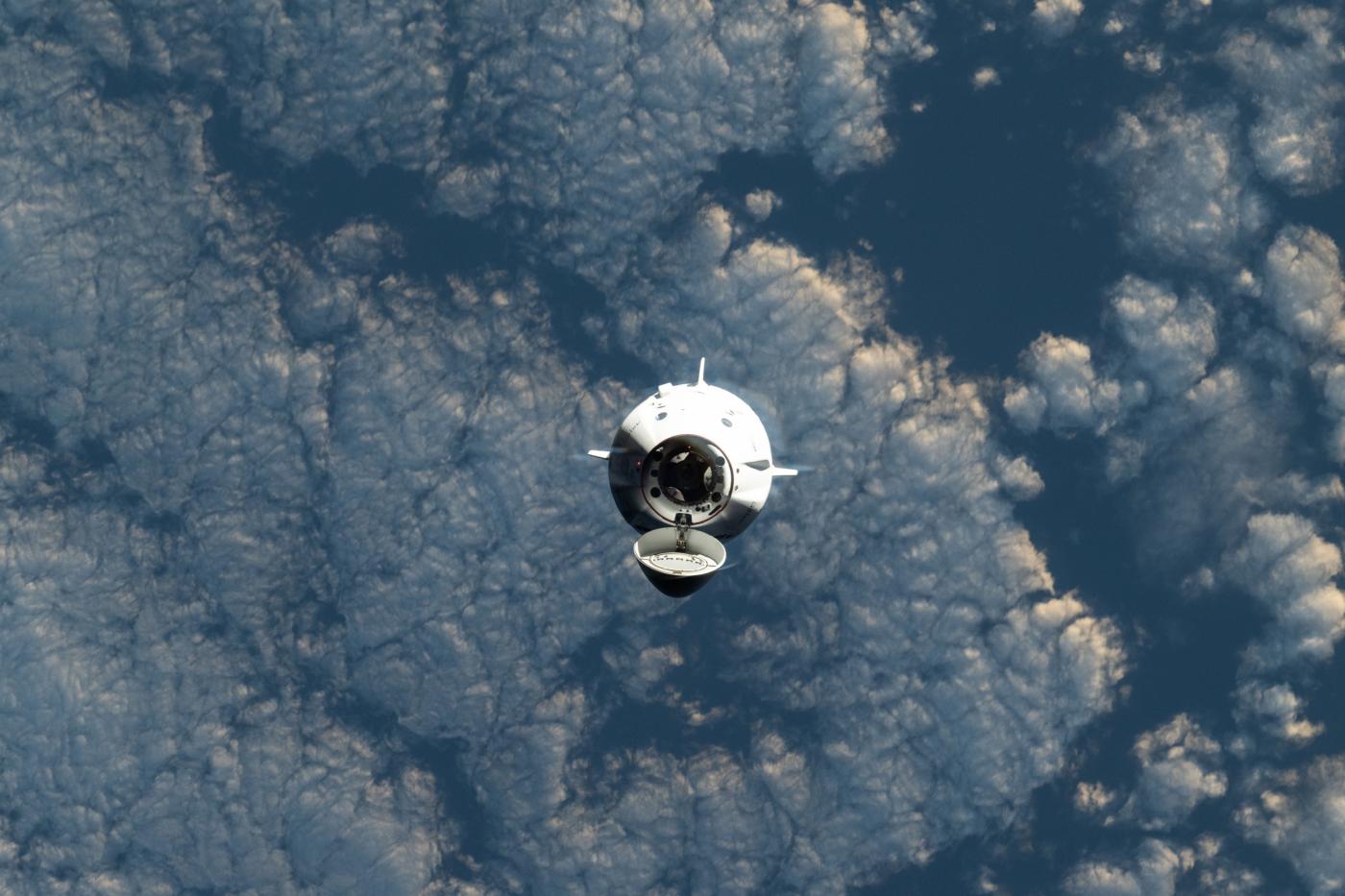
fot. SpaceX
Following undocking from the ISS, Dragon performed a meticulously planned reentry, culminating in a soft-landing at sea. A specialized maritime recovery vessel — part of SpaceX’s fleet — was dispatched to retrieve the capsule and its crew, highlighting the critical role of ocean-based operations in modern spaceflight.
While the mission was orbital, its conclusion reminds us of a simple fact: space missions still rely on the sea. From capsule recovery and crew extraction to navigation, telemetry, and weather tracking, ocean logistics and maritime expertise remain indispensable components of the space industry’s ground (and water) support systems.
For the maritime sector, this is more than just a technical footnote. It exemplifies the growing convergence between space and sea-based industries — a trend seen in satellite-enabled maritime surveillance, dual-use propulsion systems, and increasingly sophisticated offshore platforms designed to support space launches and recovery.
Poland’s presence in this mission brings added significance. It serves as a powerful signal for both the Polish space and maritime communities — a reminder that cross-sector collaboration is key to innovation and strategic independence. As both industries continue to evolve, partnerships between marine engineering, satellite technologies, and aerospace logistics will shape the next frontier of sustainable development.
Daily Mare continues to monitor these intersections — where sea meets sky — as the lines between domains blur in pursuit of exploration, security, and commercial growth.
see also
Buy us a coffee, and we’ll invest in great maritime journalism! Support Gazeta Morska and help us sail forward – click here!
Kamil Kusier
redaktor naczelny
comments
Add the first comment
see also
Strait of Hormuz at a strategic crossroads: sinking of IRIS Dena and implications for maritime transport
Austal partners with Damen for local construction of LST 100 for Australian Army
The submarine contract of the decade? Canada weighs South Korea against Germany
Radmor hosts delegation from the Republic of Turkey. Advancing maritime security cooperation
French Navy expands global operations from the Pacific to the Red Sea
Navantia and Fincantieri deepen cooperation on the european patrol corvette programme
Unmanned systems and naval firepower modules. WB Group showcases integrated capabilities at Enforce Tac 2026
Swedish ports record lowest ship calls in 18 years. Implications for the maritime sector
Hapag-Lloyd to acquire ZIM for $4.2bn: strategic consolidation in the container shipping market
Damen Shipyards and Blue Water Autonomy announce license for Liberty-class autonomous vessel for the U.S. Navy
ADVERTISEMENT
ADVERTISEMENT