









Polish Astronaut Back on Earth After Pacific Splashdown
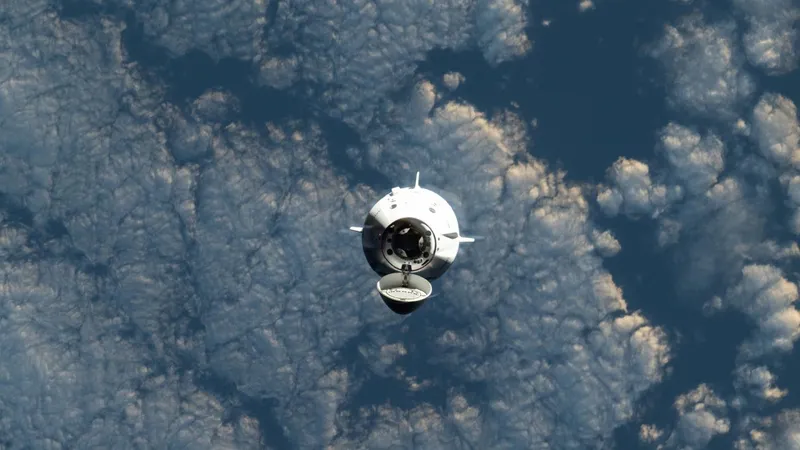
In the early hours of Tuesday (CET), SpaceX’s Dragon capsule safely returned to Earth, splashing down in the Pacific Ocean after a successful mission to the International Space Station (ISS). Among the crew: Dr. Sławosz Uznański, the second Polish astronaut in history — marking a milestone not only for Poland’s presence in space, but for global technological integration between aerospace and maritime operations.
In brief
The SpaceX Dragon capsule splashed down successfully in the Pacific Ocean on the night from Monday to Tuesday Polish time, ending a mission in which Dr Sławosz Uznański took part, the second Pole in history to fly into space. After undocking from the International Space Station, the Dragon capsule performed a deorbit manoeuvre lasting several hours, and a specialised vessel responsible for recovering the crew and transporting the capsule ashore took part in securing the landing. The splashdown required cooperation with maritime rescue teams and precise navigational calculations.
Following undocking from the ISS, Dragon performed a meticulously planned reentry, culminating in a soft-landing at sea. A specialized maritime recovery vessel — part of SpaceX’s fleet — was dispatched to retrieve the capsule and its crew, highlighting the critical role of ocean-based operations in modern spaceflight.
While the mission was orbital, its conclusion reminds us of a simple fact: space missions still rely on the sea. From capsule recovery and crew extraction to navigation, telemetry, and weather tracking, ocean logistics and maritime expertise remain indispensable components of the space industry’s ground (and water) support systems.
For the maritime sector, this is more than just a technical footnote. It exemplifies the growing convergence between space and sea-based industries — a trend seen in satellite-enabled maritime surveillance, dual-use propulsion systems, and increasingly sophisticated offshore platforms designed to support space launches and recovery.
Poland’s presence in this mission brings added significance. It serves as a powerful signal for both the Polish space and maritime communities — a reminder that cross-sector collaboration is key to innovation and strategic independence. As both industries continue to evolve, partnerships between marine engineering, satellite technologies, and aerospace logistics will shape the next frontier of sustainable development.
Daily Mare continues to monitor these intersections — where sea meets sky — as the lines between domains blur in pursuit of exploration, security, and commercial growth.
Source: Gazeta Morska · Compiled by: Kamil Kusier
Related articles
 Navy and defence ORP Mewa marks four months with SNMCMG1. Poland's first Kormoran II deployment runs to year-end
 Equipment and technology WB Group takes Polish drones from Tokyo to SOFEX in Jordan in a single week
 Environment 51st Polish Antarctic Expedition arrives at Arctowski Station aboard Ukrainian vessel Noosfera
 Sailing and water sports Poland wins two medals and team title at iQFOiL Youth and Junior European Championships
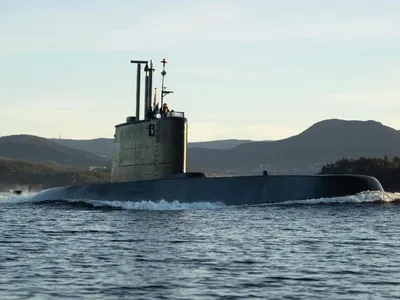 Navy and defence Norwegian submarine Utstein completes NATO patrol guarding offshore oil and undersea infrastructure
 Safety and rescue Polish SAR’s new rescue vessel Mistral launched at Kewatec in Finland
Comments (0)
The discussion is moderated by the editors: a comment appears after review. Your e-mail address is not published.
Nobody has commented on this article yet.