









Poland changes military symbols. Changes to the Polish Navy ensign and the Air Force checkerboard
The Government of the Republic of Poland has announced significant changes to national symbols related to the armed forces. The plans include, among other things, modifications to the Polish Navy ensign and the recognition symbol on Polish military aircraft – the traditional white-and-red checkerboard. This initiative carries both symbolic and practical significance. The draft bill amending the Act on the Symbols of the Armed Forces of the Republic of Poland will be discussed by the government on Wednesday, December 18, 2024.
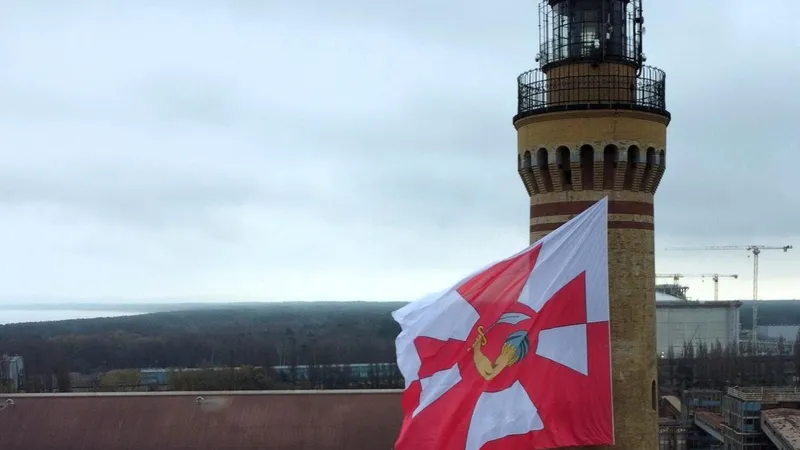
In brief
The Government of the Republic of Poland will consider on Wednesday, 18 December 2024, a draft act amending the act on the insignia of the Armed Forces of the Republic of Poland, covering the Polish Navy pennant and the aviation checkerboard. The changes provide for restoring the historical design of the Polish Navy pennant under the Presidential Decree of 1937, used during the Second World War and in 1959 and 1993. The new low-visibility checkerboard has reduced contrast of its white and red elements for better camouflage of aircraft. The draft also allows a sash in the ribbon of the Order of Virtuti Militari to be placed on military colours.
New (old) Polish Navy ensign
The Polish Navy ensign, used by warships as a distinguishing national symbol, is set to undergo a redesign. The current design, which reflects a long maritime tradition, has been deemed in need of adaptation to meet contemporary requirements and modernize the image of the armed forces. The new design will likely be more simplified, while still retaining key elements referencing Poland's tradition and history.
The Ministry of National Defence emphasizes that the modernization of the ensign is part of a broader program aimed at updating the image of the armed forces and their visual identity. This process aims to strengthen the recognition of the Polish armed forces on the international stage while respecting the historical heritage of the Polish Navy.
As part of the changes, the historical design of the Polish Navy ensign, as defined by the 1937 Presidential Decree, will be reinstated. This design was used by the Polish Navy during World War II and again from 1959 to 1993.
Change to the Air Force checkerboard
The second element of the change involves modifying the white-and-red checkerboard, the symbol of the Polish Air Force used since 1918. While the current emblem is deeply rooted in the tradition and history of Polish aviation, it will be adapted to meet modern tactical and technological needs. The key goal is to improve the camouflage of military aircraft in combat operations.
The new design for the checkerboard includes reducing the contrast between the white and red elements, making it harder to detect in combat conditions, while still preserving its unique character. The introduction of a low-visibility version of the checkerboard will provide better camouflage for military aircraft, preventing their early detection while still ensuring proper identification of their national affiliation. The change also aims to align the Polish emblem with NATO standards, where less contrasting and more practical markings are used on military aircraft.
Reasons for the changes
The modernization of national symbols stems from the needs of the modern battlefield, where technologies related to target detection and tracking play a crucial role. Modern recognition systems require reduced visibility of national markings on military equipment, which will significantly increase the chances of the Polish armed forces conducting successful combat operations.
The changes also include clarification of the regulations concerning the approval of the Minister of National Defence for the use, including modification, of the symbols defined in the Act of February 19, 1993, on the Symbols of the Armed Forces of the Republic of Poland (Journal of Laws from 2019, item 1351). Additionally, changes will be introduced to allow the placement of a ribbon with the Virtuti Militari Order on military standards.
Controversy around the changes
The proposed changes have been met with mixed reactions among experts and the public. Traditionalists emphasize the importance of preserving the existing designs, which symbolize patriotism and Poland's history. They argue that excessive simplification or changes to the color proportions could lead to a loss of national identity.
On the other hand, proponents of the modernization argue that the changes are necessary in light of rapidly changing technological and tactical requirements. Examples include other NATO countries, which have been adapting their military markings to modern battlefield realities for years, while still maintaining their recognizability and symbolic value.
Source: Gazeta Morska
Related articles
 Safety and rescue Three hundred metres and 42 seconds. A Russian Mi-8 crossed into Polish airspace near Braniewo
 Navy and defence Polish fighters intercept Russian Il-20 over the Baltic, the tenth such intercept this year
 Safety and rescue Nearly 22-hour search on Puck Bay. One of two missing jet ski users found
 Navy and defence Kaliningrad in Moscow’s shadow. Russia’s fortress, NATO and the future of Baltic security
 Navy and defence Neutrality written into the Constitution. Disputes end where the security of the Republic begins
 Safety and rescue Satellite navigation interference, intercepts and the shadow fleet. Baltic security in summer 2026
Comments (0)
The discussion is moderated by the editors: a comment appears after review. Your e-mail address is not published.
Nobody has commented on this article yet.