Polish Astronaut Launches into Orbit: Marine Technologies Ride Along Aboard Ax-4 Mission
At precisely 06:31 UTC (08:31 CET), a SpaceX Falcon 9 rocket lifted off from launch pad LC-39A in Florida, carrying the Crew Dragon spacecraft with four astronauts aboard. Among them: Dr. Sławosz Uznański-Wiśniewski, the first Polish national in space since 1978 and an official astronaut of the European Space Agency (ESA).
worldwide equipment and technology news25 june 2025 | 09:31 | Source: Gazeta Morska | Prepared by: Kamil Kusier | Print
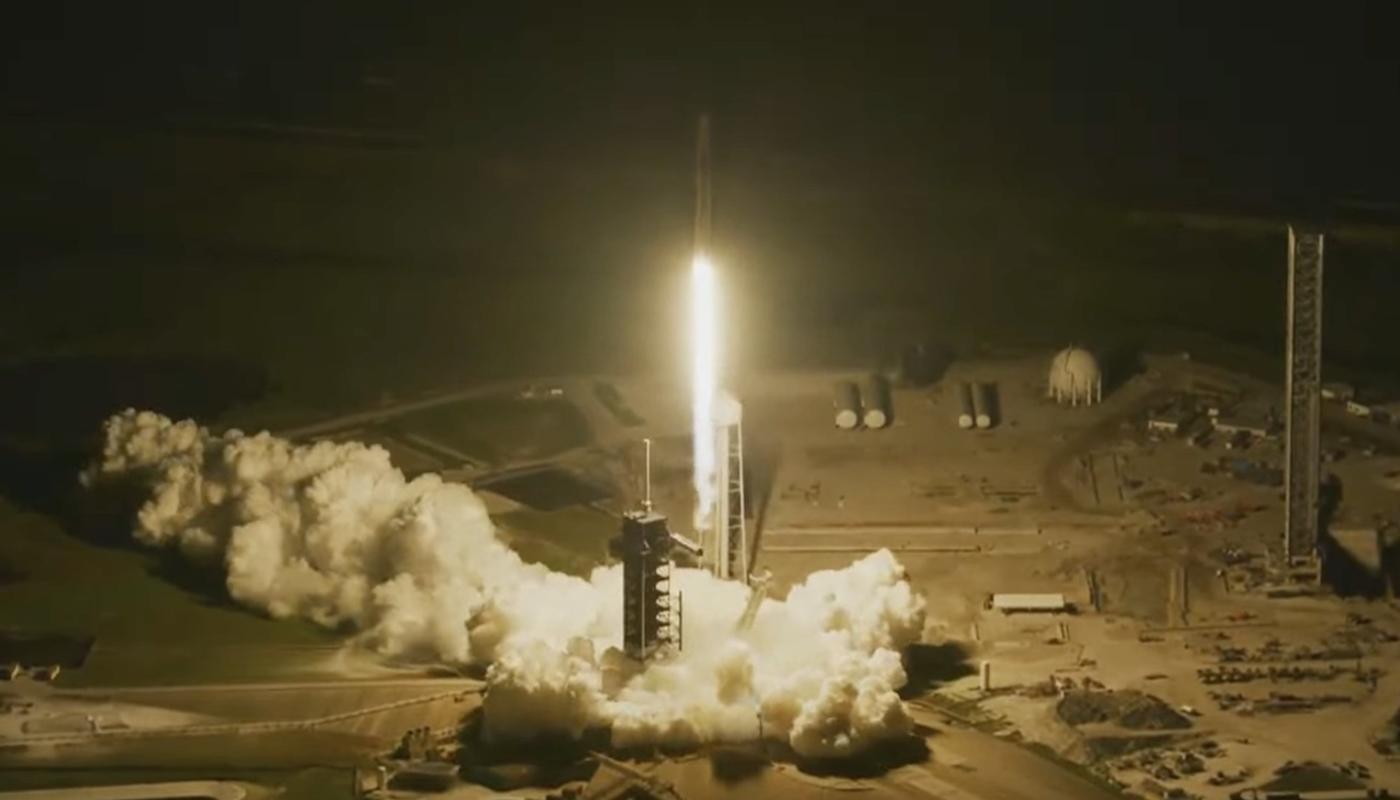
fot. ESA
This launch marks a new milestone not only for Poland’s growing role in international spaceflight, but also for the country’s industrial sectors — including marine technology — which are increasingly contributing to orbital infrastructure and experiments aboard the International Space Station (ISS).
Marine-Derived Technologies Enter Orbital Service
The Ax-4 mission brings to orbit a selection of Polish-developed technologies and research packages, some of which are directly inspired by or adapted from maritime engineering. These include:
- Environmental sensors designed to operate in enclosed, corrosive or high-humidity environments;
- Radiation-hardened electronics based on offshore control system designs;
- Water management prototypes suited for use in both space missions and autonomous deep-sea vessels.
The crossover between marine and space technologies is no coincidence. Systems developed for offshore platforms, remote oceanographic vessels, and autonomous subsea operations often face environmental and operational constraints that mirror those encountered in spaceflight.
Amber on Board: A Baltic Symbol in Earth Orbit
As part of his personal allowance aboard Crew Dragon, Dr. Uznański brought with him a small piece of Baltic amber — Poland’s most iconic natural material and a symbol of centuries-old maritime commerce.
Amber’s presence on orbit is more than a sentimental gesture. It represents the cultural continuity between Poland’s maritime heritage and its emerging role in cutting-edge space science. Known as “Baltic gold,” amber connects the nation’s coastal identity with a new frontier — this time not across oceans, but above Earth.
National Message from Orbit
Shortly after reaching orbit, Dr. Uznański delivered an official address in Polish:
- Dear Poles — today we take a huge step toward the future of Poland, a Poland built on science. Let this mission mark the beginning of an era in which our courage and persistence shape a modern nation — for us and for future generations. Space has always united people. Today, I carry with me a part of each of you: your strength, your hope, your trust.
The message has resonated not only within scientific circles but also across the broader industrial and maritime sectors, where innovation, resilience, and long-term investment remain cornerstones of sustainable growth.
POLSA Backs the Mission with €65M Investment
The Ax-4 mission is also a landmark in institutional engagement. The Polish Space Agency (POLSA) played a central role in enabling the flight, contributing €65 million (approximately PLN 278 million) to cover mission costs, experiments, astronaut training, and supporting infrastructure.
This investment, coordinated with ESA and Poland’s Ministry of Development and Technology, positions Poland as a serious participant in human spaceflight. It also opens doors for domestic companies — including those with maritime backgrounds — to scale their technologies for orbital and planetary applications.
Broader Industrial Implications
Ax-4 demonstrates how marine-origin technologies can evolve toward aerospace-grade applications. Among the crossover areas:
- Navigation and telemetry systems, originally designed for maritime and offshore platforms, now support orbital tracking and capsule reentry.
- Corrosion-resistant materials used in shipbuilding are tested for durability in vacuum and radiation-rich space environments.
- Redundant life-support protocols, first developed for isolated sea missions, now form the basis of long-duration orbital habitation systems.
This technology convergence is fostering new business models for Polish suppliers — many of which operate across shipbuilding, defense, energy, and aerospace sectors.
Crew Profile: Multinational Expertise
The Ax-4 mission features a four-person crew representing diverse scientific and operational backgrounds:
- Peggy Whitson (USA) – Mission commander, veteran of three ISS expeditions, and former NASA astronaut. Holds the American record for most cumulative days in space.
- Dr. Sławosz Uznański-Wiśniewski (Poland) – ESA astronaut, CERN engineer and PhD in microelectronics. Specialized in radiation effects on electronics in extreme environments.
- Shubhanshu Shukla (India) – Aerospace engineer and materials specialist; former participant in India’s Gaganyaan programme.
- Tibor Kapu (Hungary) – Flight physician and biomedical researcher; part of Hungary’s HUNOR national space program, focused on human health in microgravity.
Their joint mission will involve biomedical research, materials testing, and environmental monitoring over a 14-day stay aboard the ISS.
From Shipyards to Spaceports
Poland’s involvement in the Ax-4 mission reflects the increasing synergy between maritime industries and space technologies. The same principles that have guided navigation, engineering, and resilience at sea are now contributing to orbital exploration.
The inclusion of Baltic amber on this flight serves as a symbolic link — bridging centuries of maritime tradition with Poland’s orbital ambitions. From the docks of Gdańsk to the laboratories of ESA, and now to Earth orbit, the trajectory of Polish innovation continues to expand — and diversify — across new frontiers.
see also
Buy us a coffee, and we’ll invest in great maritime journalism! Support Gazeta Morska and help us sail forward – click here!
Kamil Kusier
redaktor naczelny
comments
Add the first comment
see also
Strait of Hormuz at a strategic crossroads: sinking of IRIS Dena and implications for maritime transport
Austal partners with Damen for local construction of LST 100 for Australian Army
The submarine contract of the decade? Canada weighs South Korea against Germany
Radmor hosts delegation from the Republic of Turkey. Advancing maritime security cooperation
French Navy expands global operations from the Pacific to the Red Sea
Navantia and Fincantieri deepen cooperation on the european patrol corvette programme
Unmanned systems and naval firepower modules. WB Group showcases integrated capabilities at Enforce Tac 2026
Swedish ports record lowest ship calls in 18 years. Implications for the maritime sector
Hapag-Lloyd to acquire ZIM for $4.2bn: strategic consolidation in the container shipping market
Damen Shipyards and Blue Water Autonomy announce license for Liberty-class autonomous vessel for the U.S. Navy
ADVERTISEMENT
ADVERTISEMENT