









Pimburaththewa Lake, an ancient marvel of engineering and harmony with nature
Sri Lanka – an island known for its lush vegetation, ancient monuments, and unique culture – hides within it pearls of ancient engineering that continue to serve key functions to this day. One of them is Pimburaththewa Lake, an artificial reservoir whose history dates back to the time of ancient kings. This place not only illustrates the genius of ancient builders but also serves as a reminder of the importance of harmony between humans and nature.
In brief
Pimburaththewa Lake in Sri Lanka is an artificial reservoir dating from the era of ancient kings that still irrigates the fields of local farmers today. The Pimburaththewa reservoir was incorporated into the Mahaweli project, launched in the 20th century to revitalise old irrigation systems for the needs of modern agriculture. The spillway system channels excess water into irrigation canals, preventing floods, and its operating principles have remained the same as centuries ago. Numerous species of birds, fish and mammals live around the lake, including elephants that come to the shore.
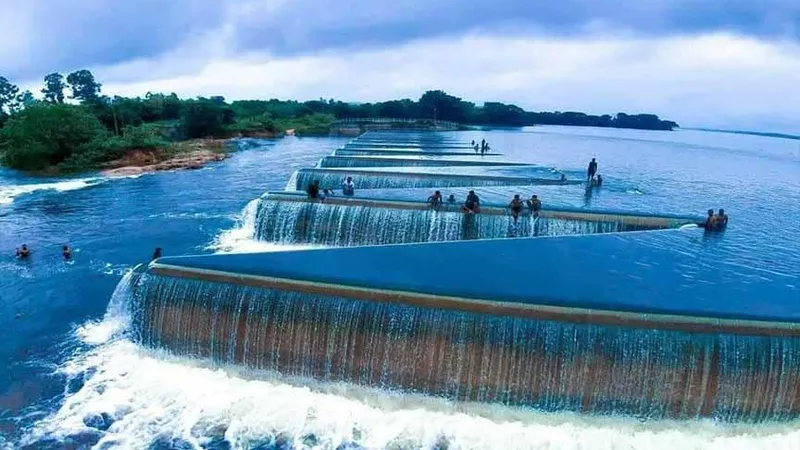
Jezioro Pimburaththewa fot. Sri Lanka Travel
"Wewa" – what lies behind the name?
In Sri Lanka, the word "wewa" means "pond" or "reservoir" in the Sinhalese language. However, in the local culture, this word carries a deeper meaning – it symbolizes life, survival, and the identity of the island. Reservoirs like Pimburaththewa have been central to agricultural and social activities for centuries, providing water not only for irrigation but also as a drinking resource for people and animals.
What distinguishes "wewa" is their strategic location and construction. Created in the island's dry regions, these reservoirs trapped rainwater, which was used during the long dry months. In ancient times, the construction of such a reservoir was not only an engineering feat but also a spiritual act – water was regarded as a gift from nature, to be respected and protected.
Pimburaththewa Lake: from antiquity to modernity
Pimburaththewa is one of many "tanks" scattered across Sri Lanka, but its significance is exceptional. This reservoir was included in the Mahaweli project – an initiative launched in the 20th century aimed at revitalizing ancient irrigation systems and adapting them to modern agriculture. Thanks to this, Pimburaththewa continues to play its original role, providing water to local farmers and maintaining the ecosystem in which numerous species of birds, fish, and mammals thrive.
One of the most distinctive features of the lake is its spillway system. This simple structure was designed with remarkable precision. When the water level in the lake exceeds a set threshold, the excess water flows through the spillway into irrigation channels, preventing floods and ensuring the even watering of the surrounding lands. Interestingly, the principles of this mechanism remain the same as they were centuries ago – modernity has only improved the details without altering the essence of the solution.
Human, nature, and technology in harmony
Pimburaththewa Lake is also a place where humans coexist with nature in perfect balance. The morning fogs over the water's surface and the sight of elephants coming to the shore in search of coolness are part of the daily life in this region. Migratory birds stop here during their travels, and fish and other aquatic creatures find ideal living conditions in the lake.
For the local community, the lake is more than just a water reservoir. It is a source of livelihood, a place of worship, and a space that builds identity. Many residents still treat the lake with respect, seeing it as a legacy of their ancestors and proof that tradition can coexist with modernity.
A legacy for future generations
Pimburaththewa Lake and other "wewa" in Sri Lanka teach us one important lesson: sustainable solutions can be simple and yet incredibly effective. In the era of climate change and water scarcity, ancient irrigation systems demonstrate how the wisdom of the past can inspire the future.
Sri Lanka has built its identity around water for centuries – from religious rituals to everyday agricultural life. The history of places like Pimburaththewa reminds us that water is not just a natural resource but also the foundation of culture, connecting generations.
Source: Gazeta Morska · Compiled by: Kamil Kusier
Related articles
 Safety and rescue They need a breakthrough, so their families are building one. A gene therapy project targets rare SLOS disorder
 Education Opportunity for the next generation of maritime professionals: "Fahrenheit. Future competencies" program launched
 Navy and defence Commander Maciej Janiak award. Honouring those who build maritime Poland
 Maritime lifestyle and tourism Winter on Puck Bay: ice conditions, natural values, and responsible use
 Ports and logistics The technical backbone of Poland’s maritime economy: from port fuel tanks to comprehensive support
 Environment Dolphins spotted in Szczecin: rare observation near the Pioneers’ Bridge ahead of Christmas
Comments (0)
The discussion is moderated by the editors: a comment appears after review. Your e-mail address is not published.
Nobody has commented on this article yet.