









One of the largest drone strikes on Russian infrastructure in the Baltic. Hit on the oil port of Primorsk
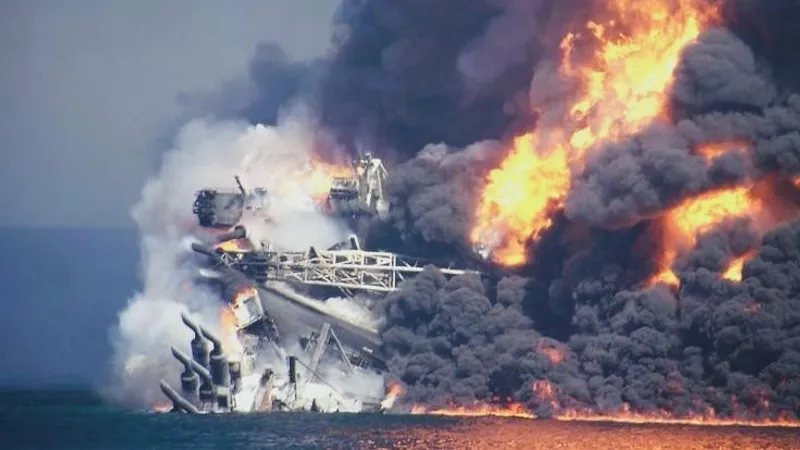
A massive drone strike targeted Russian energy infrastructure on the Baltic coast overnight from Thursday to Friday. The governor of the Leningrad region, Aleksandr Drozdenko, confirmed that a vessel in the oil port of Primorsk had been hit and a pumping station caught fire. Authorities stated there was no immediate risk of an oil spill.
In brief
A massive drone attack struck the Russian oil port of Primorsk on the Baltic Sea on the night of Thursday to Friday, where a ship was attacked and a fire broke out at a pumping station. Leningrad Oblast Governor Aleksandr Drozdenko ruled out the risk of an oil spill, and Russian air defence reported that 221 unmanned aircraft were destroyed across the country, including more than 30 over Leningrad Oblast. A pause in exports could cost Russia about 41 million dollars a day. The port of Primorsk handles about 60 million tonnes of oil a year and generates about 15 billion dollars in revenue.
Scale of the attack and first consequences
According to the Russian Ministry of Defence, air defence units intercepted and destroyed 221 drones across the country that night, including nine in the vicinity of Moscow. More than 30 were said to have been neutralized over the Leningrad region. Local residents reported a series of explosions near Primorsk around 7 a.m. local time, describing the strike as one of the largest in the area since the start of Russia’s full-scale invasion of Ukraine in February 2022.
The Ukrainian news agency Interfax-Ukraine, citing sources within the Security Service of Ukraine (SBU), reported that the strike specifically targeted the Primorsk oil terminal — the largest Russian crude export hub on the Baltic Sea and the end point of the Baltic Pipeline System. Fires broke out on board a vessel and at a pumping station, forcing a suspension of oil loading operations.
Economic losses and disrupted exports
Preliminary estimates suggest that export disruptions could cost Russia approximately USD 41 million per day. According to SBU sources, strikes also hit several critical oil pumping stations — NPS-3, NPS Andreapol and NPS-7 — key nodes supplying the Ust-Luga oil terminal in the Leningrad region.
Primorsk handles around 60 million tonnes of crude annually, generating an estimated USD 15 billion in revenue for the Russian state. The port is also considered a strategic hub for Russia’s so-called “shadow fleet,” which is used to circumvent international sanctions on crude exports.
Strategic importance of Primorsk
Located about 140 km from St. Petersburg on the Karelian Isthmus, Primorsk is the second-largest Russian port on the Baltic Sea. It is connected via pipelines with northern European Russia and Siberia, serving as a central point in Russia’s energy export infrastructure.
Wider context in the war
Ukraine has in recent months intensified its drone and missile strikes against Russian energy facilities, particularly refineries and oil transfer stations. These operations are designed to weaken Russia’s capacity to generate revenue from energy exports. Shortages of gasoline have already been reported in some regions, including the Russian Far East and occupied Crimea.
Implications for Baltic maritime security
The strike on Primorsk highlights the growing vulnerability of energy and transport infrastructure in the Baltic region. With its scale and potential economic consequences, the attack underscores that ports, pipelines and maritime transport hubs are increasingly part of the front line. For Baltic Sea nations, this raises the need for heightened monitoring of maritime and energy security, as well as preparedness for possible spillover effects on fuel markets and environmental safety.
Source: Gazeta Morska / PAP · Compiled by: Kamil Kusier
Related articles
 Navy and defence ORP Mewa marks four months with SNMCMG1. Poland's first Kormoran II deployment runs to year-end
 Equipment and technology WB Group takes Polish drones from Tokyo to SOFEX in Jordan in a single week
 Environment 51st Polish Antarctic Expedition arrives at Arctowski Station aboard Ukrainian vessel Noosfera
 Sailing and water sports Poland wins two medals and team title at iQFOiL Youth and Junior European Championships
 Navy and defence Norwegian submarine Utstein completes NATO patrol guarding offshore oil and undersea infrastructure
 Safety and rescue Polish SAR’s new rescue vessel Mistral launched at Kewatec in Finland
Comments (0)
The discussion is moderated by the editors: a comment appears after review. Your e-mail address is not published.
Nobody has commented on this article yet.