









New strategic simulation system at the Polish Naval Academy
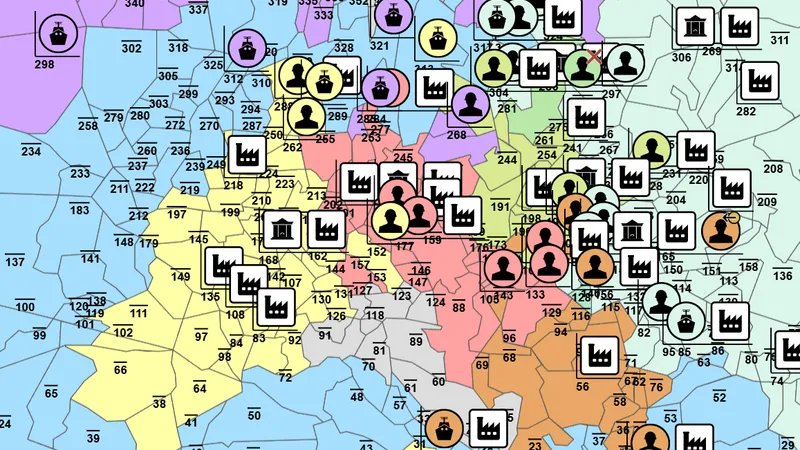
The Naval Academy in Gdynia has acquired a modern educational tool – the "Interregnum. Strategic Simulation Game" system. This is the result of a two-year research and development project carried out jointly by Dr. Łukasz Wyszyński and Dr. Paweł Kusiak. The system was designed to develop key competencies in strategic thinking, negotiation, communication, and leadership.
In brief
The Polish Naval Academy in Gdynia has implemented the Interregnum. Strategic Simulation Game system, developed in a two-year research and development project by Dr Łukasz Wyszyński and Dr Paweł Kusiak. A Games and Simulation Laboratory headed by Dr Paweł Kusiak was established at the Department of International Relations of the Polish Naval Academy. The first implementation of the Interregnum system took place in classes of the MBA Diplomacy programme, and testing has been under way for a year. Dr Łukasz Wyszyński told Gazeta Morska that Interregnum is not a simulator but a tool for building educational scenarios.
Interregnum | fot. Gazeta Morska
A modern approach to education has led to the establishment of a specialized Game and Simulation Lab within the Department of International Relations at the Naval Academy in Gdynia. The lab is headed by Dr. Paweł Kusiak, who emphasizes that Interregnum is not merely a teaching tool but a simulation system that enables the analysis and evaluation of political processes. Based on this foundation, it allows for the simulation and forecasting of political behaviors using various models grounded in international relations and political theories. This enables students to gain practical experience in an environment that simulates real decision-making processes, helping them dynamically manage their chosen strategy.
The Interregnum system will be used in the education of students from the Faculty of Humanities and Social Sciences as well as the entire Naval Academy. Its first implementation took place during the MBA Diplomacy program, although extensive testing has been ongoing for a year.
- "Interregnum" allows for the comprehensive use of knowledge in the field of international relations while creating a space for developing skills and social attitudes applicable in management, politics, strategy, and defense. The system is not a simulator—it is a tool for building educational scenarios and stimulating students' development through gamification of the entire process, said Dr. Łukasz Wyszyński, an expert at Daily Mare.
The innovative educational tool has already generated significant interest, and its potential extends beyond academic education to training programs for public administration and the defense sector.
- "Interregnum" is not just an ordinary strategic or war game. From a gameplay mechanics perspective, it is not overly complex—and that was intentional. We wanted to ensure that the entry threshold for the game is not too high. Anyone can play after a short introduction. Additionally, an important distinguishing feature of Interregnum is the significance of the game scenario. The emphasis can be placed on realpolitik, where the primary measure of power is the potential of the entity being controlled. Alternatively, a scenario can be tailored to develop soft skills, focusing on negotiation and communication. The system can also incorporate random elements or external events. In each case, it will be a different game with a unique educational potential, added Dr. Paweł Kusiak.
Due to Interregnum, students at the Naval Academy gain the opportunity to learn strategy and management in dynamically changing international conditions.
Source: Gazeta Morska · Compiled by: Kamil Kusier
Related articles
 Education From Newton's prism to a microplate reader. A Science Evening in Charzykowy on light and matter
 Energy and offshore Offshore wind enters the classroom in Świnoujście. ORLEN Neptun to teach logistics and navigation students
 Education Drones at the Naval Academy, Dar Młodzieży in Gdynia, a sports hall at UG. Coastal universities open the year
 Sailing and water sports Poland argues over where Dar Młodzieży should retire, while its successor still does not exist
 Education Dar Młodzieży is back in Gdynia after five months, two Atlantic crossings and three intakes of cadets
 Navy and defence Polish Naval Academy swears in 114 cadets as an intake of 185 begins officer training
Comments (0)
The discussion is moderated by the editors: a comment appears after review. Your e-mail address is not published.
Nobody has commented on this article yet.