









New master’s degree aims to shape future leaders of port and maritime logistics
The University of Gdańsk has officially launched a groundbreaking international study programme – the Joint Master in Port Management and Logistics (MIPMAL). Designed for aspiring professionals and future leaders in port operations and maritime logistics, the programme responds to the growing demand for highly skilled specialists in an industry undergoing rapid digital and environmental transformation.
In brief
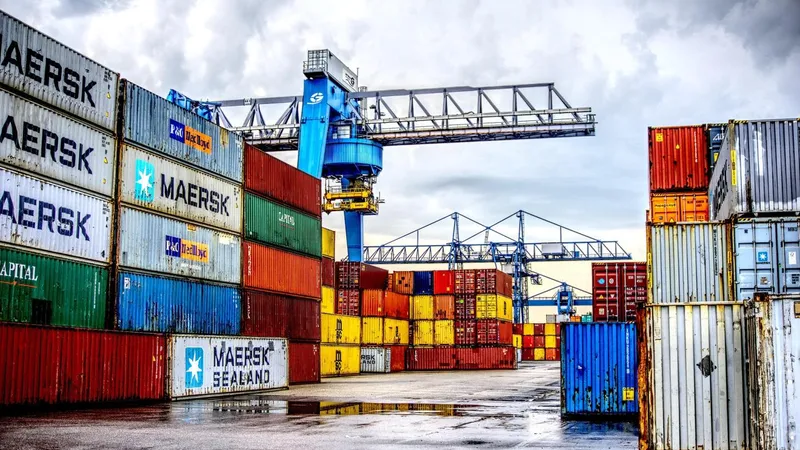
The University of Gdańsk has launched an international master's programme, the Joint Master in Port Management and Logistics, MIPMAL, with the Port of Gdańsk as its strategic partner. The programme comprises four semesters devoted to port operations, maritime economics and logistics, port law and digitalisation, and classes take place at universities of the SEA-EU alliance, including in Cádiz, Gdańsk and Naples. Recruitment started on 15 May, and the first students will begin their studies in 2025.
Developed in close partnership with key European ports – including Port of Gdańsk, Poland’s largest and most strategically significant maritime hub – MIPMAL combines academic excellence with real-world business insight. The curriculum is built on input from practitioners and aims to meet the evolving needs of the global maritime logistics market.
- Ports are gateways to national economies. Around 90% of global trade is carried by sea, which means most of what we use daily arrives through ports – including Port of Gdańsk, explains Dorota Pyć, CEO of the Port of Gdańsk Authority. - Our ambition is to become a sustainable port within the blue and green economy. This requires investments in energy hubs, storage, digital solutions – and most importantly – young, well-educated people who will help lead this transformation.
MIPMAL: Built by and for the Port Industry
What sets MIPMAL apart is its strong integration of academic learning with industry-based training. Lectures and workshops will be led not only by university professors but also by port authorities, logistics experts and professionals from international maritime companies. Students will benefit from exclusive networking opportunities and hands-on experience in real-world settings.
The entire programme is conducted in English and targets individuals ready to think strategically, embrace complexity, and actively shape the future of the maritime transport ecosystem.
Each of the four semesters is structured around a different thematic block:
- Port operations,
- Port economy and logistics,
- Port law and digitalisation,
- Applied research or internship project.
In their final semester, students can opt for either an academic track (research-focused) or a practical business pathway, involving an extended internship and a thesis based on solving a specific problem provided by an industry partner.
- We wanted to offer flexibility that reflects real industry dynamics, says Dr hab. Przemysław Borkowski, academic coordinator of MIPMAL at the University of Gdańsk. - Whether students choose the academic or business path, the goal is to equip them with the tools to deliver value in port operations and maritime supply chains.
An international learning experience
Mobility is at the core of MIPMAL. The University of Gdańsk is part of SEA-EU, a European university alliance of coastal institutions. Students will study across multiple campuses – starting at the University of Cádiz (Spain), continuing to Gdańsk (Poland), and spending the final semester either at a partner university or in an industry placement, depending on their thesis choice.
Graduates will be equipped to pursue a wide range of roles, including:
- Port Operations Manager
- Maritime Logistics Coordinator
- Supply Chain Analyst
- Port Development Planner
- Environmental Compliance Officer
- Business Development Specialist in Port Authorities
With the first intake starting in 2025 and admissions already open (since May 15), MIPMAL is set to become a key talent pipeline for Europe’s port and maritime logistics sectors – combining education, innovation, and global industry needs into one ambitious programme.
Source: Gazeta Morska · Compiled by: Kamil Kusier
Related articles
 Education From Newton's prism to a microplate reader. A Science Evening in Charzykowy on light and matter
 Energy and offshore Offshore wind enters the classroom in Świnoujście. ORLEN Neptun to teach logistics and navigation students
 Education Drones at the Naval Academy, Dar Młodzieży in Gdynia, a sports hall at UG. Coastal universities open the year
 Sailing and water sports Poland argues over where Dar Młodzieży should retire, while its successor still does not exist
 Education Dar Młodzieży is back in Gdynia after five months, two Atlantic crossings and three intakes of cadets
 Navy and defence Polish Naval Academy swears in 114 cadets as an intake of 185 begins officer training
Comments (0)
The discussion is moderated by the editors: a comment appears after review. Your e-mail address is not published.
Nobody has commented on this article yet.