Swedish ports record lowest ship calls in 18 years. Implications for the maritime sector
The year 2025 continued the downward trend in Swedish port traffic. According to the latest statistics released by the Sjöfartsverket, the total number of ship calls decreased by 2.86% compared to 2024, reaching 66,178 vessels. This marks the lowest level recorded since 2008, when systematic tracking of port calls began.
business maritime economy logistics worldwide ports transport and forwarding news24 february 2026 | 09:14 | Source: Gazeta Morska | Prepared by: Oskar Wojciechowski | Print
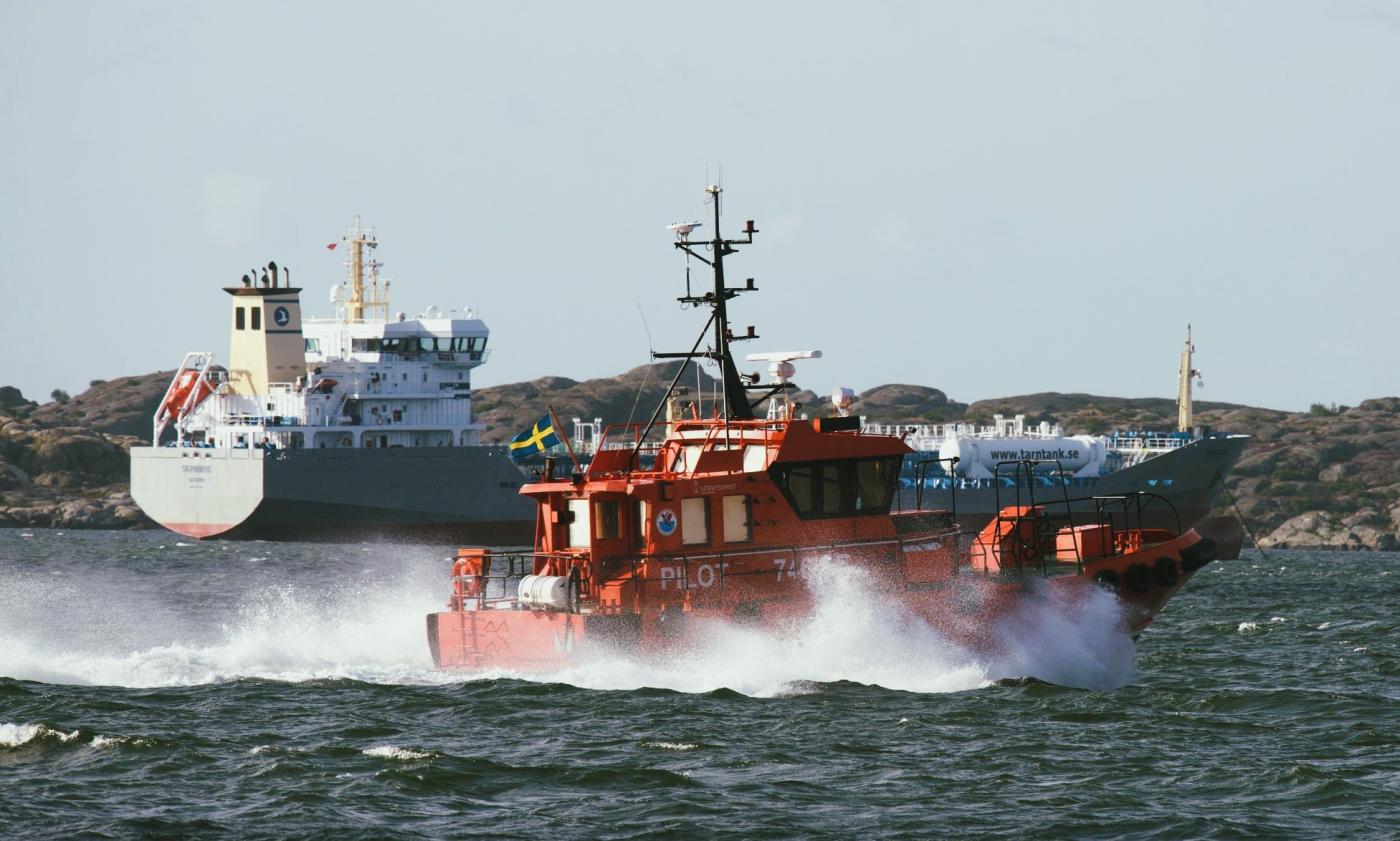
fot. Sjofartsverket
The total volume of cargo handled also declined, totaling 151.6 million tonnes, a 2.41% drop from the previous year. Container traffic was the most affected segment, with the number of calls down by approximately 13%.
Fleet structure: larger vessels replacing smaller units
Data indicates a significant shift in the fleet composition serviced in Swedish ports. Operators are increasingly deploying larger vessels, while smaller and medium-sized units are declining. In the cargo segment, the number of calls fell by around 5% year-on-year. This trend reflects fleet modernization and a focus on improving transport efficiency.
- Last year was marked by recession, reflected in the numbers. Sweden’s primary industry relies heavily on shipping, and nine out of ten imported or exported goods travel by sea within the full logistics chain, commented Niclas Härenstam, Communications Director at Sjöfartsverket.
Cargo ports: leaders and declines
Among cargo ports, the top performers in 2025 were:
- Gothenburg – 37.6 million tonnes (-2.2%)
- Brofjorden – 14.7 million tonnes (-17.18%)
- Trelleborg – 11.8 million tonnes (+1.43%)
The southern port of Ystad recorded the most remarkable year-on-year growth in cargo volumes, reaching +12.93%, the highest among Sweden’s 20 largest ports.
Ports experiencing significant declines include:
- Gävle (-6.03%)
- Norrköping (-6.39%)
Passenger traffic: stability and southern port roles
The total number of passengers handled in Swedish ports remained stable at approximately 20.5 million, a minor decrease of 0.18%. Ferry traffic recorded a marginal decline in calls of 1.9%, while cruise ship calls increased by 6.7%, though cruise passenger numbers fell by roughly 2% to 882,000.
The busiest passenger ports in 2025 were:
- Helsingborg – 5.12 million passengers (+1.3%)
- Stockholm – 5.09 million passengers (+4.27%)
- Ystad – 2.24 million passengers (+1.97%)
Ystad continues to strengthen its role as a “passenger gateway” to Poland and Bornholm, maintaining a trend established since the 1960s. Trelleborg, meanwhile, increasingly focuses on freight efficiency amid declining passenger traffic.
Poland: driving southern corridor growth
Contrary to general downward trends, ferry corridors to Poland recorded cargo volume growth. Strategic partnerships and infrastructure development, such as the Ystad–Świnoujście rail link and Poland’s E65/S3 road upgrades, play a crucial role.
In Trelleborg, despite nearly a 12% drop in ship calls, cargo volumes increased, reflecting fleet modernization by ferry operators—larger, more efficient vessels replaced older logistics models. The truck and trailer transport market between southern Sweden and Świnoujście grew by 3.6%, with Ystad and Malmö ports capturing the largest share of this increase.
Sector outlook and key trends
2025 in the Swedish maritime sector can be summarized as a year of adaptation and restructuring:
- Ship calls fell to the lowest level in 18 years.
- Fleet composition shifted toward larger, more efficient vessels.
- Southern ports, particularly Ystad, strengthened their role in Polish corridors.
- Passenger traffic remained broadly stable, with minor overall declines and growth in cruise operations.
For port operators and logistics providers, this underscores the need for continued infrastructure optimization, fleet modernization, and flexible responses to changing demand in container and bulk transport. Strengthening cross-border collaboration, especially with Poland, remains vital to maintaining the competitiveness of Swedish ports in the European maritime market.
Buy us a coffee, and we’ll invest in great maritime journalism! Support Gazeta Morska and help us sail forward – click here!
Kamil Kusier
redaktor naczelny
comments
Add the first comment
see also
StartupHack 3.0 at GPNT: Space and maritime technologies at the core of innovation
Polish technology powers zero-emission public transport. AREX secures largest municipal contract
Defence.Hub strengthens capabilities in technologies supporting maritime infrastructure security
Hanseatic Global Terminals takes full ownership of Florida International Terminal
Aleksandra Kosiorek: The sea has always been a space of openness for us, and that will not change
Gdańsk to launch Baltic Sea monitoring center
Türkiye advances indigenous GNSS ambitions: what FGN-100-D3 means for the maritime sector
Lithium at the core. TKMS and E3 Lithium align on Canada’s submarine ambitions
Błażej Konkol appointed vice president for infrastructure at the Port of Gdańsk Authority
WB Group expands into Romania, strengthening presence in the Black Sea region
ADVERTISEMENT
ADVERTISEMENT