Italy’s M23 Srl Offers C-Class Midget Submarines to the Polish Navy
On June 17th, Poland’s Deputy Minister of National Defence, Paweł Bejda, held talks with executives from the Italian shipbuilder M23 Srl, led by CEO Bruno Peracchi. The meeting, also attended by Italian Ambassador Luca Franchetti Pardo, focused on the potential inclusion of C-Class midget submarines in Poland’s naval modernization plans.
navy nato politics defense industry equipment and technology news17 june 2025 | 22:09 | Source: Gazeta Morska | Prepared by: Kamil Kusier | Print
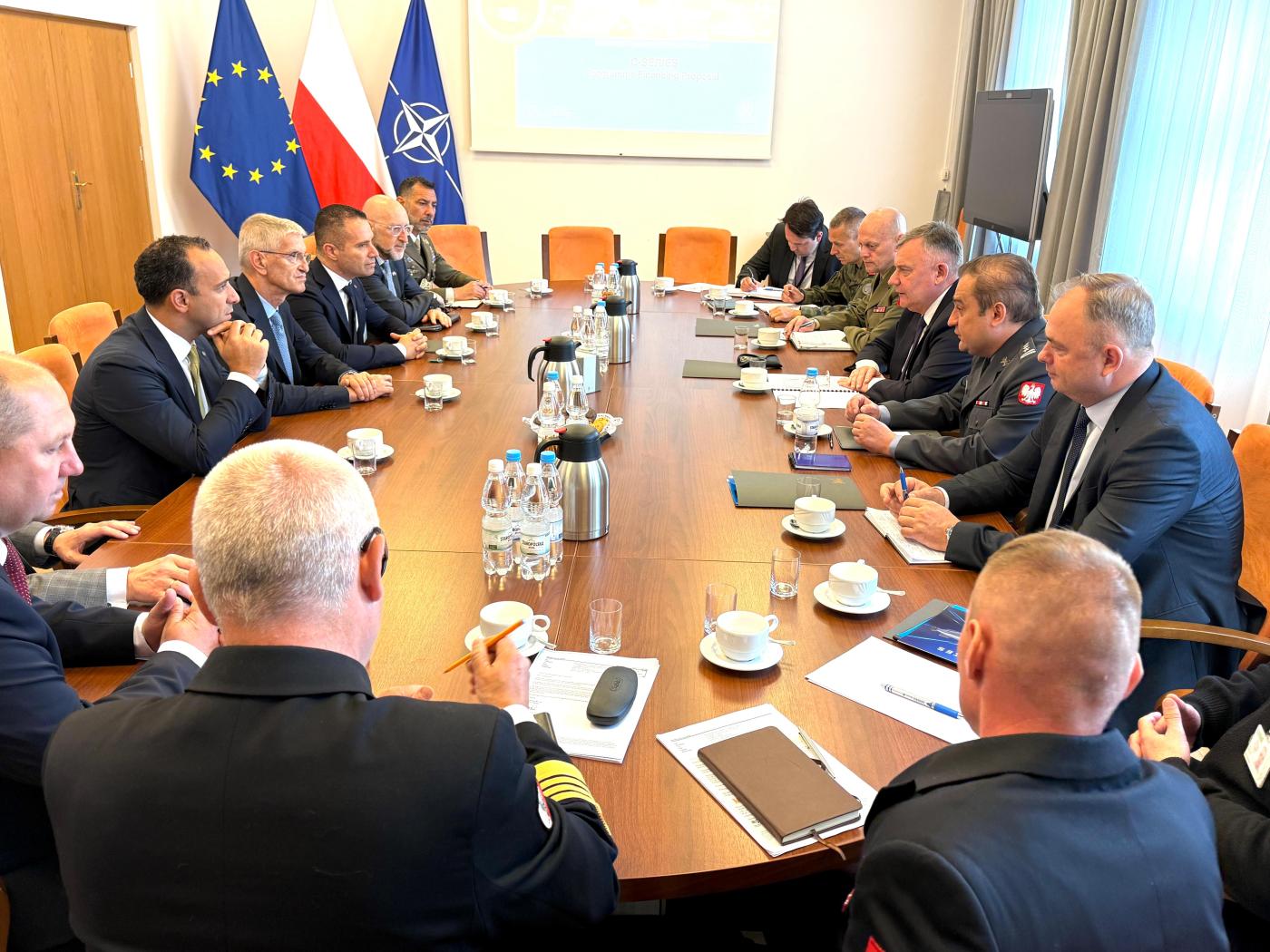
fot. Ministerstwo Obrony Narodowej
his comes as Poland continues its ORKA program — the strategic acquisition of new-generation full-sized submarines — and looks to expand its operational flexibility in the Baltic Sea with complementary, specialized platforms.
Compact, Stealthy, and Built for Littoral Warfare
Headquartered in Ciserano (Lombardy), M23 Srl specializes in the design and production of small, diesel-electric submarines, built in cooperation with Giunio Santi Engineering (GSE Trieste) and supported by the Italian industrial cluster centered in La Spezia. The company’s C-Class midget submarines, which are already under contract with foreign navies, are tailored for shallow-water operations, special forces deployment, and covert reconnaissance missions.
Key technical specifications include:
- Length: ~23 meters
- Displacement: Up to 150 tonnes
- Operating Depth: ~200 meters
- Speed: 12–16 knots
- Crew: 6 + 6 special forces operatives
- Armament: Two 533 mm torpedo tubes, loitering munitions, EW systems, and modular payloads
The C-Class features a dedicated lock-out chamber for combat diver operations and is powered by a hybrid diesel-lithium electric propulsion system, enabling extended autonomous missions lasting several weeks.
Poland Eyes Tactical Complement to ORKA
According to the Ministry of National Defence, the Italian submarines could serve as a tactical complement to the full-size ocean-going vessels planned under the ORKA program. While ORKA aims to deliver high-end deterrence capabilities, C-Class units offer speed, agility, and lower detectability — assets ideally suited for the Baltic’s shallow, complex underwater terrain.
Importantly, the platform enables a shorter procurement cycle (estimated 2 years from contract to delivery) and lower unit cost, reportedly under PLN 400 million (~€90M), depending on configuration.
Industrial Cooperation on the Table
Sources suggest the Polish side is not only evaluating the operational utility of the C-Class but is also open to broader industrial collaboration. This may include technology transfer, local assembly, or even joint development initiatives — aligning with Poland’s ongoing efforts to strengthen its domestic defense manufacturing base.
As hybrid threats and grey-zone operations become increasingly prominent in Europe’s maritime security landscape, compact and mission-adaptable submarines like the C-Class may offer a critical layer of resilience for mid-sized navies such as Poland’s.
see also
Buy us a coffee, and we’ll invest in great maritime journalism! Support Gazeta Morska and help us sail forward – click here!
Kamil Kusier
redaktor naczelny
comments
Pewnie ,ze by sie przydaly ale jest jedno ALE. ALE czy jak dostaniemy te miniorki za te 2-3 lata to naczalstwo nie stwierdzi ,ze jak juz mamy cóś to po jaką cholerę wywalac kase na te duże rybki?
11:52
see also
Strait of Hormuz at a strategic crossroads: sinking of IRIS Dena and implications for maritime transport
Austal partners with Damen for local construction of LST 100 for Australian Army
The submarine contract of the decade? Canada weighs South Korea against Germany
When two powers clash, Poland must be ready to act. Military security must be the priority
Commodore Przemysław Karaś appointed deputy commander of the Maritime Operations Centre - Naval Component Command
Mine countermeasure vessel Jaskółka begins sea acceptance trials
March 1: Remembering the “cursed soldiers”. A legacy that also resonates with today’s navy
Naval Academy cadets take military oath in Gdynia
French Navy expands global operations from the Pacific to the Red Sea
Navantia and Fincantieri deepen cooperation on the european patrol corvette programme
ADVERTISEMENT
ADVERTISEMENT