Hanwha Ocean shortlisted for Canada’s Patrol Submarine Project (CPSP)
Hanwha Ocean was officially shortlisted for the Canadian Patrol Submarine Project (CPSP) – a strategic program to modernize Canada’s submarine fleet with a potential value of up to CAD 60 billion. The Korean shipbuilder is now one of only two remaining contenders, marking a significant milestone in its global naval expansion.
business maritime economy navy shipbuilding industry defense industry news30 august 2025 | 20:36 | Source: Gazeta Morska | Prepared by: Kamil Kusier | Print
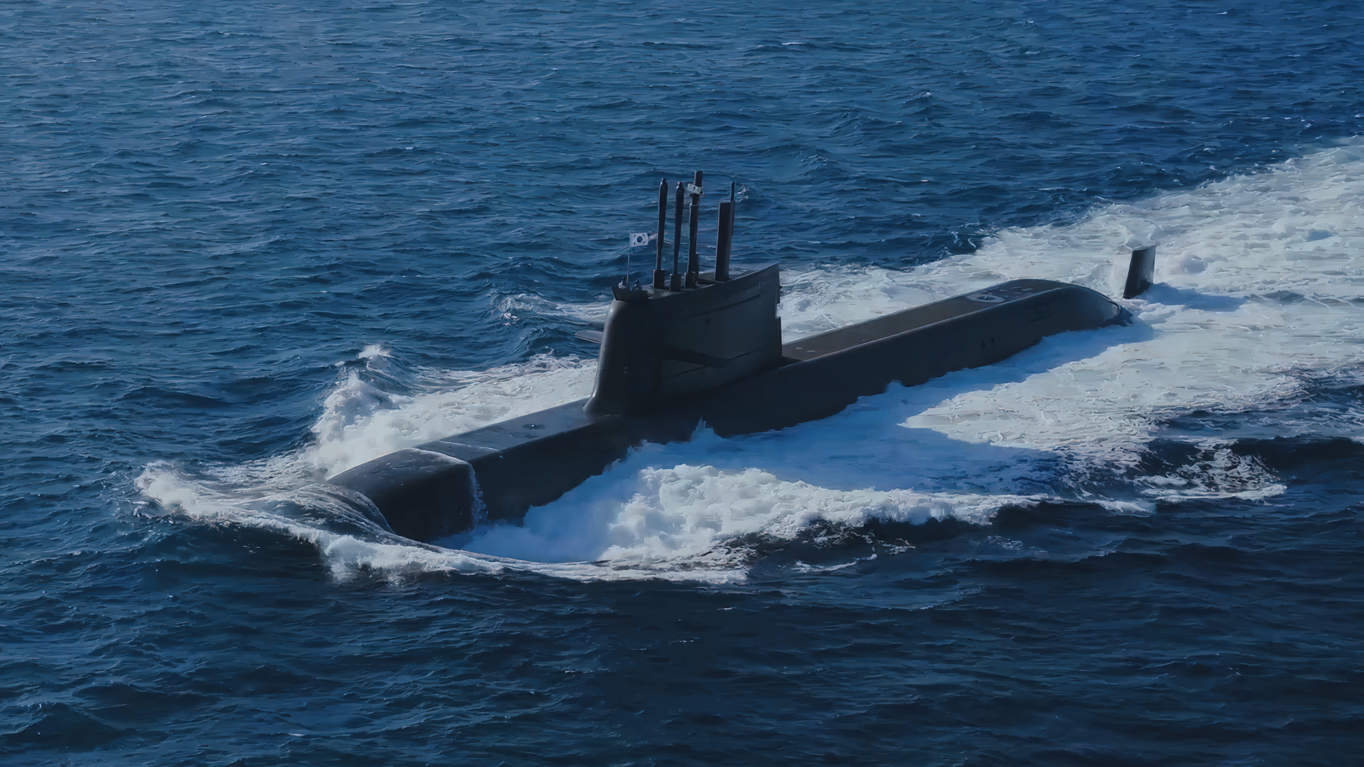
fot. Hanwha Ocean / Wikimedia
KSS-III Batch-II – South Korea’s next-generation submarine
For CPSP, Hanwha Ocean is offering the KSS-III Batch-II (Dosan Ahn Changho class), the latest evolution of South Korea’s indigenous submarine program. The vessel displaces around 3,000 tons, measures 83.5 meters in length and 9.6 meters in beam, and is powered by a diesel-electric propulsion system supplemented with air-independent propulsion (AIP) based on fuel cells and advanced lithium-ion batteries.
The submarine can remain submerged for more than three weeks without snorkeling and has an operational range exceeding 7,000 nautical miles – ideal for operations across the Pacific, Atlantic, and Arctic theaters.
One of the key differentiators of the KSS-III Batch-II is its vertical launching system (VLS), which can deploy cruise missiles and, in the South Korean configuration, submarine-launched ballistic missiles (SLBMs). This gives the platform both conventional and strategic deterrence capabilities. Equipped with a comprehensive sonar suite (including flank and towed arrays) and advanced combat management systems, the KSS-III Batch-II is designed for a full spectrum of missions, from patrol and anti-submarine warfare to special operations and strategic strike.
Ambitions in Canada
Hanwha Ocean emphasizes its ability to deliver the first submarine within six years of contract signature – significantly faster than the typical nine-year timeline. The company has also pledged to establish a local Integrated Support Solution (ISS) center in Canada to ensure lifecycle support, maintenance, and sustainment.
To strengthen its position, Hanwha Ocean signed a strategic partnership with Babcock International Group in November 2024, and has entered into memoranda of understanding with leading Canadian defense and maritime firms including CAE, BlackBerry, and L3 Harris MAPPS.
Toward deeper Korea–Canada cooperation
Through CPSP, Hanwha Ocean aims not only to deliver advanced platforms to the Royal Canadian Navy but also to foster broader defense, shipbuilding, and innovation partnerships between South Korea and Canada.
Thyssenkrupp Marine Systems – the German option for Canada
As part of the CPSP, Thyssenkrupp Marine Systems offers the U212CD submarine, developed in cooperation with Norway. This vessel is designed to operate in challenging environments, including Arctic regions, meeting Canada’s patrol needs. The submarine has a displacement of around 1,800 tons and a length of approximately 70 meters. It features a diesel-electric propulsion system supported by Air Independent Propulsion (AIP), allowing for extended submerged operations and increased stealth during missions.
In terms of armament, the U212CD is equipped with torpedoes and cruise missiles, as well as modern sonar and electronic warfare systems. Thyssenkrupp Marine Systems highlights its extensive experience in submarine construction and its presence in Canada, where it supports engineering and maintenance programs for the Royal Canadian Navy. The German manufacturer’s offer emphasizes proven technology, reliability, and cooperation with NATO allies, all key advantages for meeting the CPSP requirements.
Poland’s “Orka” program
Poland is also preparing to launch its Orka program, which will see the acquisition of new submarines for the Polish Navy. Hanwha Ocean, with its KSS-III Batch-II, is among the potential contenders.
According to Polish Deputy Prime Minister and Minister of National Defence Władysław Kosiniak-Kamysz, decisions on the program’s direction and industrial partnerships are expected later this year. Importantly, President of Poland Karol Nawrocki has repeatedly underlined the strategic importance of strengthening the Polish Navy’s undersea warfare capabilities, framing it as a top priority in the country’s defense modernization.
Other shipbuilders expected to compete include TKMS (with the Type 212CD/214 design), Naval Group (with an evolved Scorpène variant), and Saab Kockums (offering the A26 Blekinge class). Each contender is highlighting technology transfer, industrial cooperation, and long-term sustainment packages to align with Poland’s strategic requirements.
We have been waiting for new submarines for 30 years, which shows how long Poland has delayed the implementation of its own strategic projects.
Canada demonstrates that it is possible to carry out the acquisition of new submarines quickly and efficiently. Within a year of announcing the CPSP project, the government had identified potential suppliers and moved on to final negotiations. This example shows that decisiveness and proactive management can significantly accelerate the execution of key naval programs.
see also
We are on Google News! Join us and follow Gazeta Morska. Get daily updates straight from the sea. Follow us at gazetamorska.pl!
Kamil Kusier
redaktor naczelny
comments
Add the first comment
see also
Navantia and Fincantieri deepen cooperation on the european patrol corvette programme
Galeon Yachts and Meyer Shank Racing: merging luxury yachts with motorsport expertise
Unmanned systems and naval firepower modules. WB Group showcases integrated capabilities at Enforce Tac 2026
Swedish ports record lowest ship calls in 18 years. Implications for the maritime sector
February in Szczecin’s shiprepair sector. Ice, overhauls and North Sea expansion
Advanced ROV trials conducted at CTO to validate subsea technologies for offshore applications
University of Gdańsk and PGZ Naval Shipyard join forces for innovation and security
Stadt Naval to deliver electric propulsion system for Polish rescue vessel Ratownik
Gdańsk port’s Basen Górniczy to gain modern port infrastructure
First month of Jantar Unity operations. Polsca ferry paves the way for Batory program units
ADVERTISEMENT
ADVERTISEMENT