









Grey seals, the "Baltic pups". Deep dive knowledge from the Gdynia Aquarium
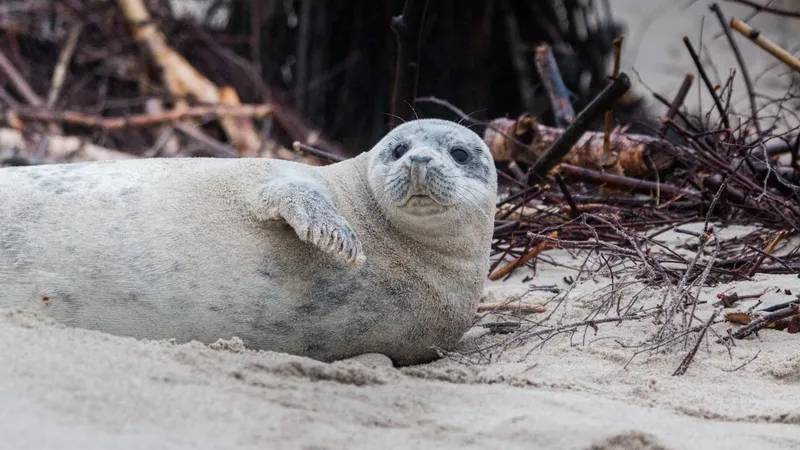
Every year, something remarkable unfolds along the shores of the Baltic Sea. It is the season of grey seal births – the largest seals inhabiting this region. As highlighted in the educational series "Deep dive knowledge" by Akwarium Gdyńskie, these young animals quickly earn their nickname: the "Baltic pups". Behind their soft appearance and awkward movements on land lies one of the most intense survival stories in the marine world.
In brief
Grey seals, the largest seals of the Baltic Sea, are born most often at the turn of February and March, and females give birth to a single pup. Grey seal milk contains up to 60 percent fat, which allows pups to double or even triple their body weight within a few weeks. Adult grey seals dive to depths of more than 100 metres and hold their breath for up to about 20 minutes thanks to high levels of myoglobin in their muscles. The Gdynia Aquarium series Dawka wiedzy z głębin points out that the population is recovering after years of hunting but is still threatened by fishing nets and pollution.
Born in late winter and early spring
Grey seals give birth mainly between February and March, when the Baltic is still cold and unpredictable. Females seek quiet, isolated coastal areas and islands to deliver a single pup.
From the very first days, the young are entirely dependent on their mothers. They cannot yet swim efficiently or hunt, so their survival depends on highly nutritious milk containing up to 60% fat - one of the richest milks in the mammal world. Thanks to this, pups can rapidly double or even triple their body mass in just a few weeks.
A race against time: a short learning window
The nursing period is brief. After several weeks of intensive feeding, the pups undergo a short fasting phase before becoming independent. This is the critical transition stage.
During this time, young seals must quickly learn to:
- swim and dive,
- find and catch prey,
- navigate a challenging marine environment filled with predators and changing conditions.
Their ability to adapt in this narrow window determines their survival in the wild Baltic Sea.
The Baltic diving specialist
The grey seal is perfectly adapted to aquatic life. Although clumsy on land, it becomes an agile and efficient predator underwater.
It can:
- dive deeper than 100 meters,
- hold its breath for up to around 20 minutes,
- optimize oxygen use during dives.
This is possible thanks to high concentrations of myoglobin in muscles, which store oxygen and allow prolonged underwater activity.
Life of adults: following the rhythm of the Baltic
After the breeding season, adult grey seals leave coastal haul-out sites and return to open waters, where they spend most of the year feeding and building energy reserves for the next reproductive cycle.
Their lives are closely tied to the Baltic’s seasonal rhythm – temperature shifts, fish availability, and changing ice conditions all shape their survival strategies.
A species returning to the Baltic
Decades ago, grey seal populations in the Baltic Sea were severely reduced due to hunting and environmental pollution. In recent years, however, protection measures have allowed a gradual recovery.
Despite this progress, challenges remain:
- entanglement in fishing gear,
- chemical pollution,
- limited and disturbed breeding sites.
From "pup" to predator: life shaped by the sea
The story of grey seals is one of resilience and rapid transformation. From fluffy, vulnerable pups to powerful deep-diving predators, every stage of life is a test of adaptation.
As the "Deep dive knowledge" from the Gdynia Aquarium series reminds us, the Baltic Sea is far from a calm postcard landscape. It is a demanding, ever-changing environment where even the most endearing beginnings are governed by the strict rules of survival.
Source: Gazeta Morska · Compiled by: Kamil Kusier
Related articles
 Education Gdynia Maritime School teams up with UCMMiT for a seafarer health day on 6 November
 Education Energa's Kropelka Energii blood drive marks 100th edition with over 4,100 litres donated since 2012
 Education From Newton's prism to a microplate reader. A Science Evening in Charzykowy on light and matter
 Energy and offshore Offshore wind enters the classroom in Świnoujście. ORLEN Neptun to teach logistics and navigation students
 Education Drones at the Naval Academy, Dar Młodzieży in Gdynia, a sports hall at UG. Coastal universities open the year
 Sailing and water sports Poland argues over where Dar Młodzieży should retire, while its successor still does not exist
Comments (0)
The discussion is moderated by the editors: a comment appears after review. Your e-mail address is not published.
Nobody has commented on this article yet.