Eastern Flank Watch: EU-NATO cooperation on drone wall and integrated defense
Polish Deputy Prime Minister and Minister of National Defence Władysław Kosiniak-Kamysz met with EU Commissioner for Defence and Space Andrius Kubilius to discuss the newly proposed Eastern Flank Watch initiative. The project aims to strengthen the EU’s eastern border security through integrated air, land, and maritime defence – with a particular focus on a so-called “drone wall.”
security aviation politics news30 september 2025 | 12:21 | Source: Gazeta Morska | Prepared by: Kamil Kusier | Print
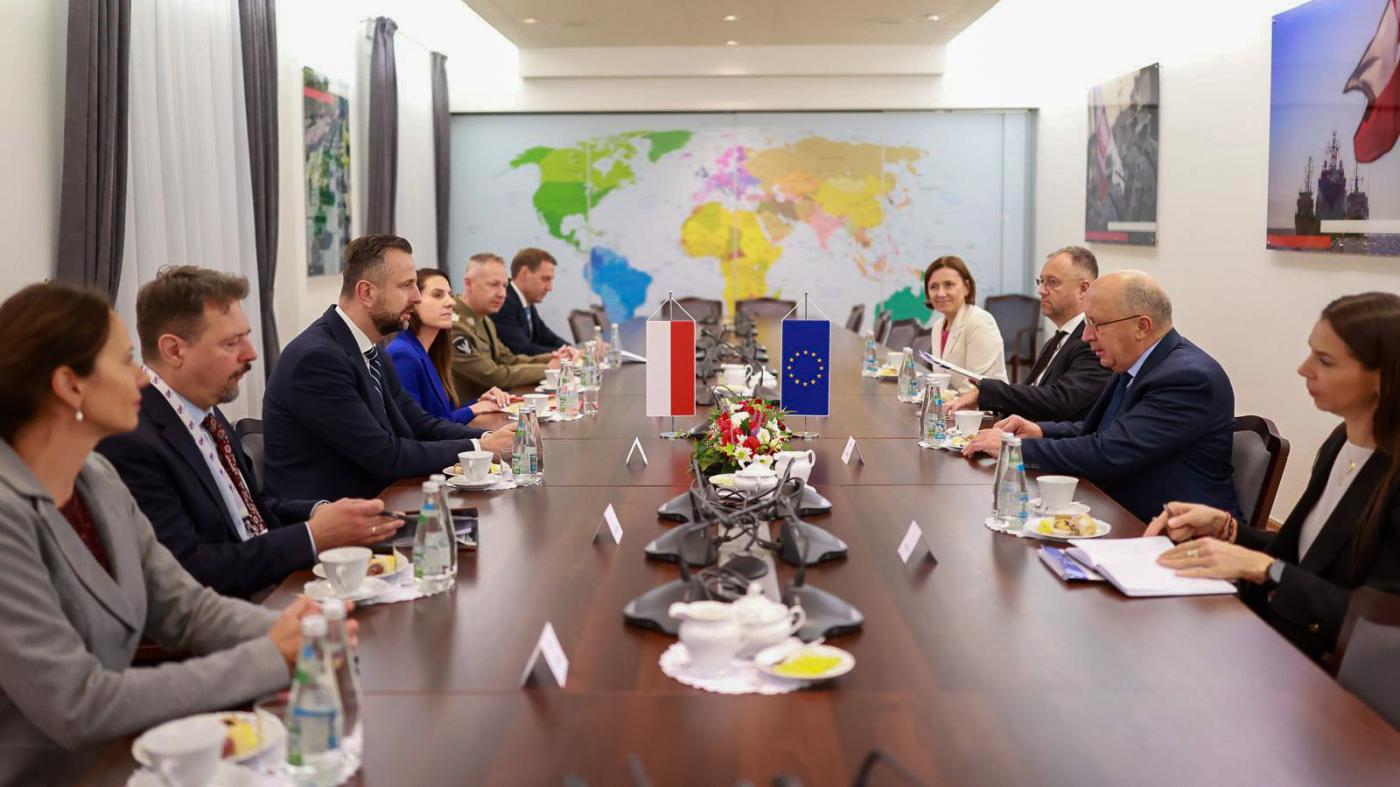
fot. Ministerstwo Obrony Narodowej
Kosiniak-Kamysz underlined that Poland has already launched national capabilities that could form part of the broader European effort, including Barbara aerostats, passive radars, mobile communications stations, and Apache AH-64 attack helicopters.
– These assets will not only serve Poland but will also be a pillar of the wider anti-drone shield for our allies. Security must remain the top priority for Europe – without air and missile defence, no other investment can truly matter, he stated.
The Minister highlighted that the initiative must evolve rapidly, taking into account lessons learned from Ukraine:
- We do not need to wait years to deploy anti-drone systems. Europe must act within months. The experience of Ukrainian forces is invaluable, and we must transfer this knowledge into EU defence planning.
Commissioner Kubilius emphasized that the Eastern Flank Watch is designed as a comprehensive EU framework complementing NATO, ensuring that national capabilities are interconnected:
- Our goal is to strengthen deterrence and defence across the EU. We need to build detection and counter-drone systems in frontline countries, integrating both sensors and effectors to protect critical infrastructure. This is the right moment to leverage Ukrainian battlefield experience and accelerate industrial development.
The initiative foresees three main components: air (drone and missile defence), ground (fortifications and surveillance), and maritime (protection against sea-borne provocations). For Baltic and Black Sea states, the maritime element will play a crucial role in countering hybrid threats.
If implemented, Eastern Flank Watch could become one of the EU’s most significant defence undertakings in the coming years, reinforcing NATO while addressing the fast-growing challenge of drone warfare.
Buy us a coffee, and we’ll invest in great maritime journalism! Support Gazeta Morska and help us sail forward – click here!
Kamil Kusier
redaktor naczelny
comments
Add the first comment
see also
Polish Naval Academy and Institute of Fluid-Flow Machinery establish research partnership
SAR search operation in the port of Władysławowo. man who fell into the water not found
Medical evacuation from Wind Osprey underway as winter keeps Polish SAR services under pressure
Coast Guard ensures fishermen safety on the ice of the Vistula Lagoon Select 81 more words to run Humanizer.
Services on ice. False alarm in Swarzewo in Poland. Such behavior endangers those who truly need help
PIRANIA underwater inspection vehicle: Gdańsk University of Technology and Radmor join forces
Grupa WB joins ASD. Strengthening Central and Eastern Europe’s voice in the European defence industry
Poland’s security in focus. President meets with ministers and heads of special services
NATO’s persistent naval presence in the Arctic and the northern Atlantic strengthens sea lane security
Poland launches second DELFIN SIGINT ship ORP Henryk Zygalski in Gdańsk
ADVERTISEMENT
ADVERTISEMENT