









Dar Młodzieży - A Polish Icon of the Sea
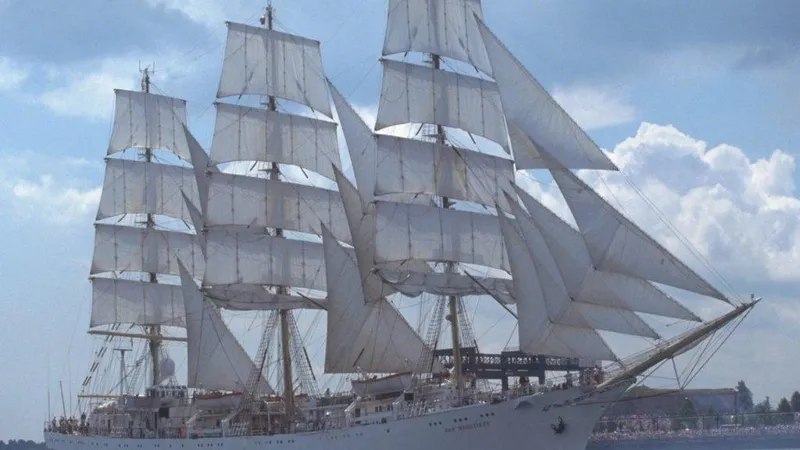
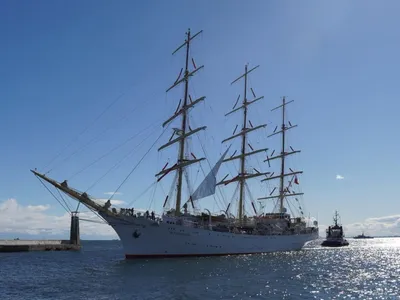
The sailing ship Dar Młodzieży is the pride of Poland's training fleet and one of the most recognizable tall ships in the world. Since its maiden voyage in 1983, this remarkable vessel has sailed hundreds of thousands of nautical miles, training generations of Polish and international sailors. Its history is a story of resilience, collaboration, and successes on the global stage.
In brief
The sail training ship Dar Młodzieży, built in 1982 at Stocznia Gdańska as the successor to Dar Pomorza, completed 125 training voyages by the end of 2006, sailing more than 388,000 nautical miles and visiting 357 ports. The first voyage of Dar Młodzieży departed Gdynia on 22 July 1983 under Captain Tadeusz Olechnowicz with 119 students of the Wyższa Szkoła Morska maritime academy and lasted 217 days and 28,065 nautical miles. In 1987 Dar Młodzieży received the Boston Tea Pot award for covering 32,352 nautical miles in 274 days.
Beginnings at sea
The Dar Młodzieży was built in 1982 at the Gdańsk Shipyard as the successor to the legendary Dar Pomorza. Its godmother was Helena Jurkiewicz, the wife of the esteemed Captain Kazimierz Jurkiewicz. In its very first year of service, the ship proved to be a worthy successor by participating in the prestigious Tall Ships Rally celebrating the 400th anniversary of Osaka Castle.
On July 22, 1983, Dar Młodzieży set sail from Gdynia under the command of Captain Tadeusz Olechnowicz, carrying 119 students from the Gdynia Maritime University. The voyage lasted 217 days, during which the frigate covered 28,065 nautical miles and visited 13 ports, including Osaka. In Japan, over 200,000 guests came aboard the ship. Sailing across the Pacific Ocean was a true test, but despite challenging weather conditions, the ship majestically entered the port in Japan, where it was met with a rousing reception.
Operation Sail – Success on the International Stage
The Dar Młodzieży gained global recognition thanks to its participation in numerous prestigious regattas, one of the most notable being Operation Sail ’84. Departing from Brest, the frigate competed against top vessels like the American Eagle and Bolivian Simon Bolivar. The Polish crew, led by Captain Olechnowicz, achieved a spectacular victory, cementing its place in the history of Polish sailing.
The ship continued its success in subsequent years, participating in Operation Sail ’86 and regattas in Australia. In 1987, after covering 32,352 nautical miles in 274 days, it was awarded the Boston Tea Pot prize for the longest uninterrupted voyage under sail.
Conquering the world and setting new records
Over the following decades, the Dar Młodzieży continued its training mission, participating in numerous regattas, including the Tall Ships’ Races and Columbus ’92, earning further awards and achieving top positions in Class A. By the end of 2006, the ship had completed 125 training voyages, covering more than 388,000 nautical miles and visiting 357 ports worldwide.
The ship's legacy extends beyond Polish sailors. In 2008, for the first time, students from the Belgian maritime school Hogere Zeevaartschool trained aboard, leading to further collaboration. The frigate also took part in events promoting Poland, such as Sea Days in Szczecin and a voyage with the Polish Radio Symphony Orchestra during the Year of Chopin.
Technical specifications
The frigate Dar Młodzieży boasts impressive dimensions: its total length, including the bowsprit, is 108.815 meters, and the sail area reaches 3,015 m². The ship’s maximum sailing speed is 16.5 knots, making it one of the fastest vessels of its kind. The permanent crew consists of 40 members, while the ship can accommodate 136 trainees. Powered by a Cegielski-Sulzer engine, Dar Młodzieży can achieve speeds of up to 12 knots under engine power.
Source: Polski Związek Żeglarski / Gazeta Morska · Compiled by: Daniel Nawrocki
Related articles
 Education From Newton's prism to a microplate reader. A Science Evening in Charzykowy on light and matter
 Energy and offshore Offshore wind enters the classroom in Świnoujście. ORLEN Neptun to teach logistics and navigation students
 Education Drones at the Naval Academy, Dar Młodzieży in Gdynia, a sports hall at UG. Coastal universities open the year
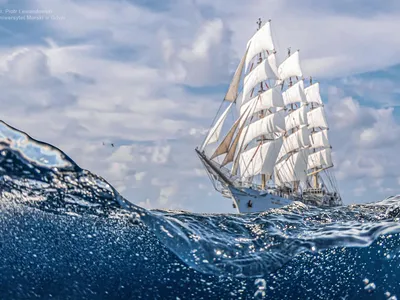 Sailing and water sports Poland argues over where Dar Młodzieży should retire, while its successor still does not exist
 Education Dar Młodzieży is back in Gdynia after five months, two Atlantic crossings and three intakes of cadets
 Navy and defence Polish Naval Academy swears in 114 cadets as an intake of 185 begins officer training
Comments (0)
The discussion is moderated by the editors: a comment appears after review. Your e-mail address is not published.
Nobody has commented on this article yet.