









Aurora borealis over the Baltic Sea: a space weather signal for the maritime industry
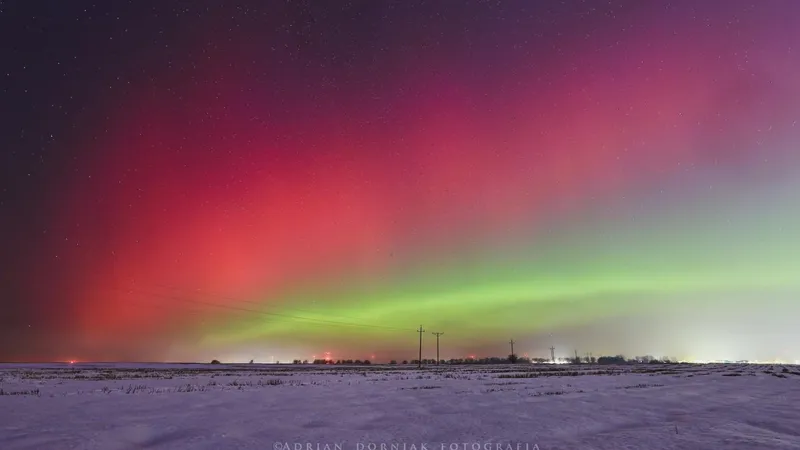
An intense aurora borealis was observed overnight across Northern Europe, including the Baltic Sea region. While the phenomenon captured public attention for its striking visuals, it also signalled heightened geomagnetic activity with potential implications for maritime operations, navigation and port infrastructure.
In brief
An intense aurora borealis was observed last night over northern Europe, including the Baltic Sea, indicating a geomagnetic storm of elevated strength. Disturbances of the magnetic field can affect GNSS systems, including GPS and Galileo, cause deviations of magnetic compasses and produce errors in integrated positioning systems. Experts advise ship and port operators to monitor ECDIS and AIS data more closely and to be ready to navigate by classical methods. The rise in the number of aurora observations over the Baltic is linked to the peak of the 11-year solar activity cycle.
Why auroras matter to shipping
Auroras occur when charged solar particles interact with Earth’s magnetosphere. When visible at lower latitudes than usual, they are commonly associated with moderate to strong geomagnetic storms.
For the maritime sector, such conditions may affect:
- GNSS positioning systems, including GPS and Galileo,
- the accuracy of magnetic compasses,
- the reliability of integrated bridge and navigation systems.
Operational considerations for vessels and ports
Although modern ships are generally resilient to short-term disturbances, periods of elevated space weather activity require increased situational awareness, particularly in congested and shallow waters such as the Baltic Sea.
Operators may need to:
- verify navigation data consistency,
- ensure redundancy between satellite-based and traditional navigation methods,
- assess the robustness of power supply and communications in port environments.
Space weather as an emerging maritime risk factor
The recent auroral display coincides with the current solar maximum phase, during which geomagnetic disturbances are expected to occur more frequently. As maritime operations become increasingly digital and automated, space weather is emerging as a non-traditional but relevant operational risk.
Beyond operations: a rare and inspiring sight
Despite its technical implications, the aurora borealis remains one of nature’s most visually compelling phenomena. For seafarers, port workers and maritime observers, witnessing auroral lights above the sea is often described as a once-in-a-lifetime experience.
Soft green, red and violet bands reflecting off open water and port infrastructure offer a perspective rarely seen outside high-latitude regions. Many professionals take advantage of such moments to experiment with night photography, capturing images that merge maritime landscapes with cosmic processes. In this way, the aurora is not only a space weather indicator, but also a reminder of the sense of awe that still accompanies life and work at sea.
A visual phenomenon with strategic implications
Beyond its aesthetic value, the aurora borealis underscores the fact that maritime safety is influenced not only by weather and sea state, but also by solar activity far beyond Earth’s atmosphere. Integrating space weather awareness into operational planning is becoming an increasingly important element of modern maritime risk management.
Source: Gazeta Morska · Compiled by: Kamil Kusier
Related articles
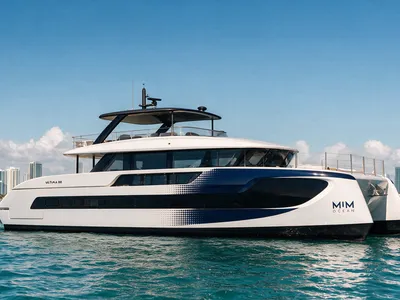 Shipbuilding industry Lionel Messi orders a Sunreef catamaran. The Ultima 88 is being built at the Gdańsk firm’s UAE yard
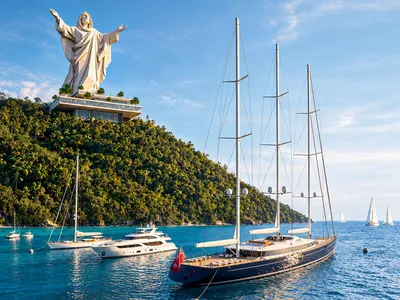 Investments A Szczecin firm is to design the world's tallest Christ statue. A 207-metre core in 40 days
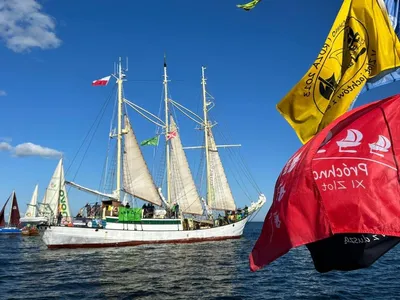 Sailing and water sports A century-old Inga Lisa and Czarny Diament after 32 years at sea. Over 30 classic yachts in Gdynia
 Sailing and water sports Eleven years of trying and metres at the finish. Witold Karałow's Scamp 4 wins the 75th Blue Ribbon
 Sailing and water sports Stanisław Trepczyński's bronze in Puck after five hours of fighting for wind
 Environment The world's largest seahorses move into the Gdynia Aquarium. In this species it is the male that gets pregnant
Comments (0)
The discussion is moderated by the editors: a comment appears after review. Your e-mail address is not published.
Nobody has commented on this article yet.