Antarctica: iceberg A23a in its final weeks
The world’s largest and one of the oldest icebergs – A23a, which calved from the Antarctic ice shelf in 1986 – is now in the final stage of its existence. According to Andrew Meijers, oceanographer at the British Antarctic Survey, the massive block of freshwater ice is expected to melt and vanish completely within the next few weeks. Speaking to AFP, he emphasized that the disintegration is accelerating due to unusually warm ocean waters in the Southern Ocean and the South Atlantic.
ecology other marine lifestyle worldwide marine tourism and recreation news04 september 2025 | 08:22 | Source: Gazeta Morska / PAP | Prepared by: Kamil Kusier | Print
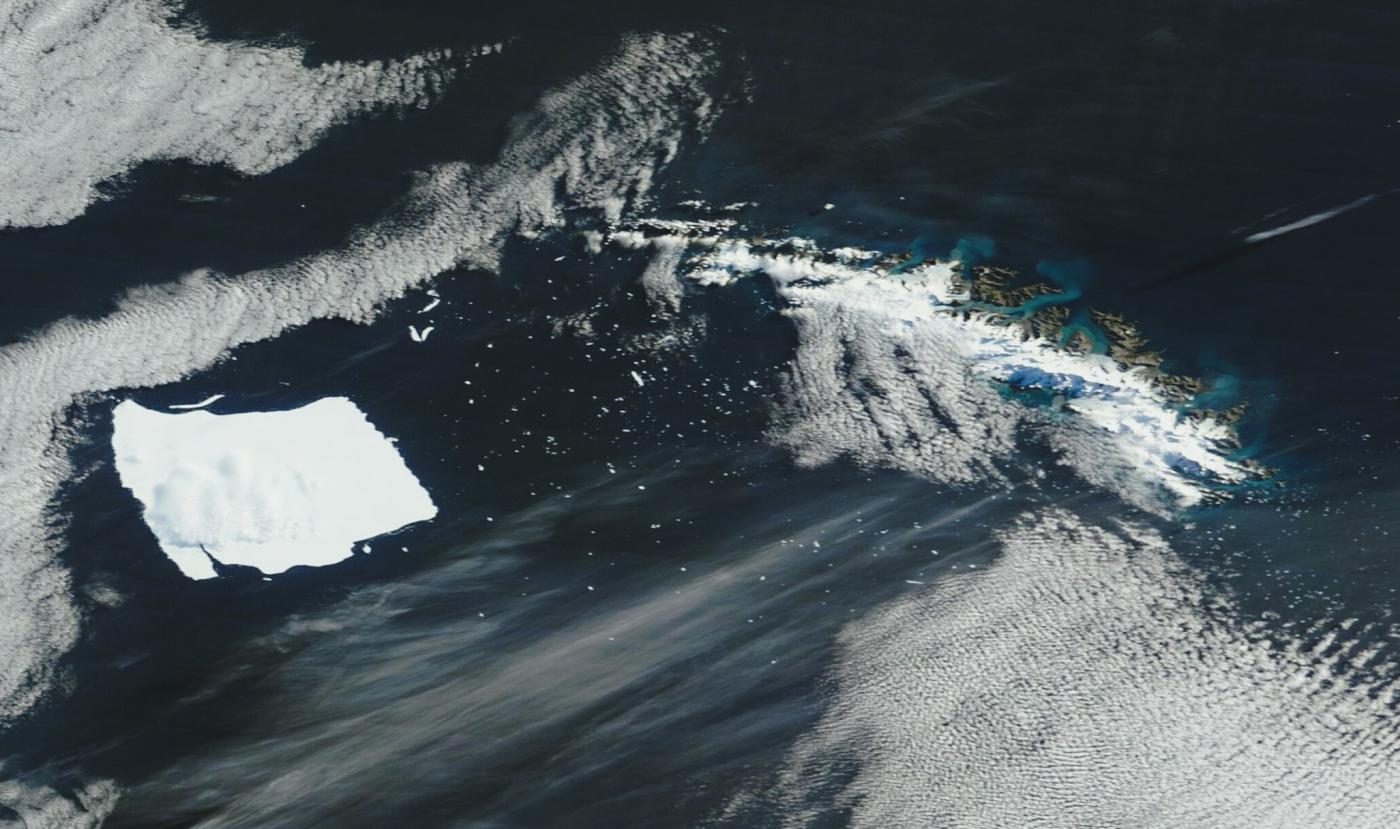
fot. Wikimedia
At the beginning of 2025, A23a was estimated to weigh just under one trillion tonnes, with a surface area more than twice the size of metropolitan London. Satellite observations by the EU’s Copernicus Earth Observation Programme now show the iceberg reduced to less than half of its original size – roughly 1,770 km², stretching about 60 km across at its widest point.
In recent weeks, large fragments covering around 400 km² have broken away, while additional sizeable pieces continue drifting northward. These ice masses are now regarded as potential hazards to commercial and research vessels navigating the South Atlantic. A23a itself is still moving at speeds of up to 20 km per day.
Earlier this year, the iceberg’s trajectory raised ecological concerns as it approached South Georgia Island, a key feeding ground for penguins and seals. By May, however, it passed the island without causing major disruption.
For researchers, A23a’s longevity remains remarkable. As Andrew Meijers noted:
– Most icebergs never make it this far. A23a was truly exceptional – its sheer scale allowed it to survive far longer and drift much farther than the vast majority. But once an iceberg leaves the protective cold waters of Antarctica, its fate is sealed.
While calving and drifting are part of the natural life cycle of icebergs, scientists stress that the rate of melting is being accelerated by human-driven climate change.
see also
Buy us a coffee, and we’ll invest in great maritime journalism! Support Gazeta Morska and help us sail forward – click here!
Kamil Kusier
redaktor naczelny
comments
Add the first comment
see also
Winter periscope mode and sandbanks instead of ice: how seals rest in the southern Baltic
Baltic Sea water levels at a record low: a meteorological-oceanographic anomaly with major implications
PLN 15 million allocated for beach nourishment along Poland’s Baltic coast
Dolphins spotted in Szczecin: rare observation near the Pioneers’ Bridge ahead of Christmas
Beka nature reserve: protecting coastal heritage with support from WFOŚiGW Gdańsk
Marina Szafarnia deploys new PortBin through joint business-GOS initiative
The sound of heavy boots: summer season begins at Poland’s Arctowski Station
Bird monitoring confirms low impact of Baltic 2 offshore wind farm on local avifauna
Dead seal washed ashore on Ustka’s western beach. Marine organisations urge public to report, not approach
SG-301 General Józef Haller drills oil spill response off Gdynia
ADVERTISEMENT
ADVERTISEMENT