Busy night over the Baltic. Poland’s Air Defence in the reality of hybrid pressure
Despite the holiday period, the past night proved operationally demanding for Poland’s air defence forces, once again highlighting the persistent security challenges on NATO’s north-eastern flank and in the Baltic Sea region. A statement released by the Operational Command of the Polish Armed Forces (DO RSZ) illustrates the full spectrum of contemporary threats – from conventional military air activity over international waters to hybrid-style incidents along the eastern border.
security aviation worldwide news25 december 2025 | 12:15 | Source: Gazeta Morska | Prepared by: Kamil Kusier | Print
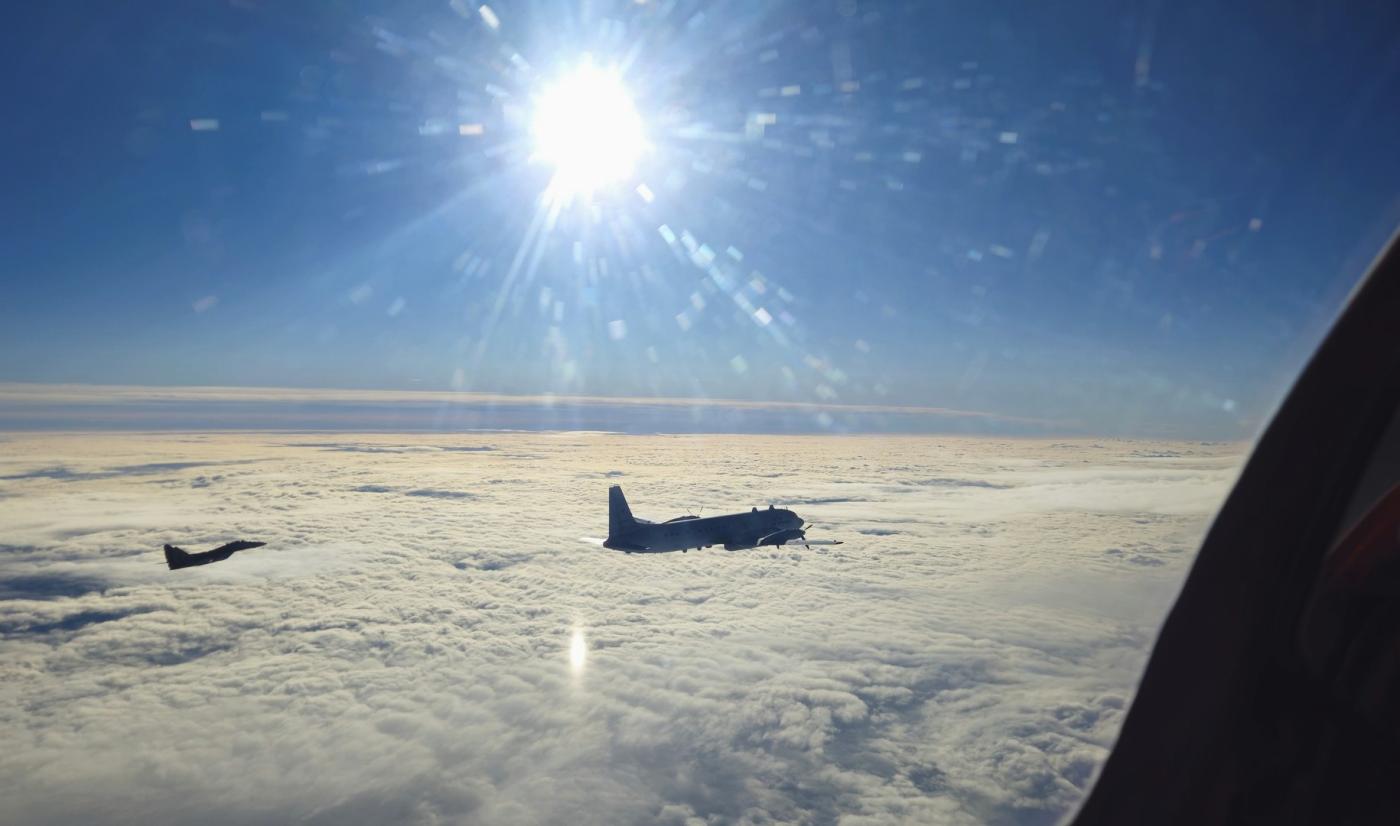
fot. DORSZ
Interception over the Baltic Sea. Routine, but never trivial
In the morning hours, over international waters of the Baltic Sea, Polish fighter aircraft intercepted a Russian Federation reconnaissance aircraft operating close to Poland’s airspace boundary. The mission included visual identification and escorting the aircraft out of the Polish area of responsibility.
While such incidents have become relatively frequent, they remain strategically significant for the maritime domain. Russian aerial reconnaissance missions over the Baltic typically focus on monitoring naval movements, ports, shipping lanes and critical maritime infrastructure, including LNG terminals, offshore energy installations and wind farms. Continuous readiness of Quick Reaction Alert (QRA) fighters, operating within the national air defence system and NATO’s integrated Air Policing framework, remains a key element of deterrence and situational awareness in the region.
Objects from Belarus – the airborne dimension of hybrid activity
During the night, Polish radar systems also detected objects entering Polish airspace from the direction of Belarus. After detailed analysis, the Operational Command assessed that these were most likely smuggling balloons, drifting in line with wind direction and speed.
Although technically simple, such platforms pose a non-negligible challenge to air surveillance systems and civil aviation safety. As a precautionary measure, a portion of airspace over the Podlaskie region was temporarily closed to civilian traffic. All objects were continuously tracked by radar assets.
From a maritime and port security perspective, the incident underlines the growing relevance of low-cost, low-signature airborne platforms in hybrid operations. Similar methods could potentially be employed in coastal areas or near ports and offshore installations, reinforcing the need for closer integration of air and maritime surveillance systems, particularly in littoral environments.
Interagency coordination and continuous readiness
According to the DO RSZ, the situation was managed through constant coordination with relevant national services, with real-time information exchange and data sharing on the detected objects. Appropriate authorities are continuing identification and follow-up actions.
Crucially, the Command confirmed that no threat to the safety of Polish airspace was identified. This assessment, however, should not be interpreted as a reduction in vigilance. Rather, it reflects a high level of preparedness and the effectiveness of layered monitoring and response mechanisms involving both military and civilian institutions.
The Baltic Sea under sustained scrutiny
The events of the night once again demonstrate that the Baltic Sea remains an area of heightened strategic attention, where military signalling, intelligence gathering and hybrid pressure coexist with dense commercial shipping and rapidly expanding offshore energy infrastructure.
For the maritime sector – shipowners, port operators and offshore stakeholders – developments in the air domain are increasingly inseparable from maritime security considerations. As emphasised by the Operational Command, forces and assets remain on constant standby, underscoring a new operational normality: 24/7 readiness, rapid response and continuous situational awareness, regardless of season or calendar.
see also
Buy us a coffee, and we’ll invest in great maritime journalism! Support Gazeta Morska and help us sail forward – click here!
Kamil Kusier
redaktor naczelny
comments
Add the first comment
see also
Defence.Hub strengthens capabilities in technologies supporting maritime infrastructure security
Damen to build 13 SAR units for Turkey. Strengthening search and rescue in the Aegean Sea
Sebastian Kluska, director of MSPiR SAR: No room for improvisation at sea. Skills and judgment matter
MS Kapitan Poinc to deploy FRB 850 in Baltic SAR upgrade
105th life-saving mission. Naval Aviators conduct double "Heart Action" transport
Another successful medical evacuation over the Baltic Sea. Yet another intervention at offshore wind farms
Fishing trip on Vistula Lagoon cut short due to missing certificates
Drifting tanker near Malta highlights risks linked to the global “shadow fleet”
Cross-border SAR operation on the ice of the Gulf of Bothnia
Body recovered from the waters of Puck Bay near Babie Doły in Gdynia
ADVERTISEMENT
ADVERTISEMENT