76 years since the first voyage of SS Sołdek. The birth of Poland’s shipbuilding industry
On 26 October 1949, a new chapter opened in the history of Poland’s maritime economy. That day, the SS Sołdek departed from Szczecin on her maiden commercial voyage to Ghent, Belgium, carrying 2,200 tonnes of coal. She was the first seagoing vessel built in Poland after World War II, and her journey became a milestone marking the rebirth of the Polish shipbuilding industry.
history pomerania west pomerania shipbuilding industry tricity news26 october 2025 | 15:38 | Source: Gazeta Morska | Prepared by: Kamil Kusier | Print
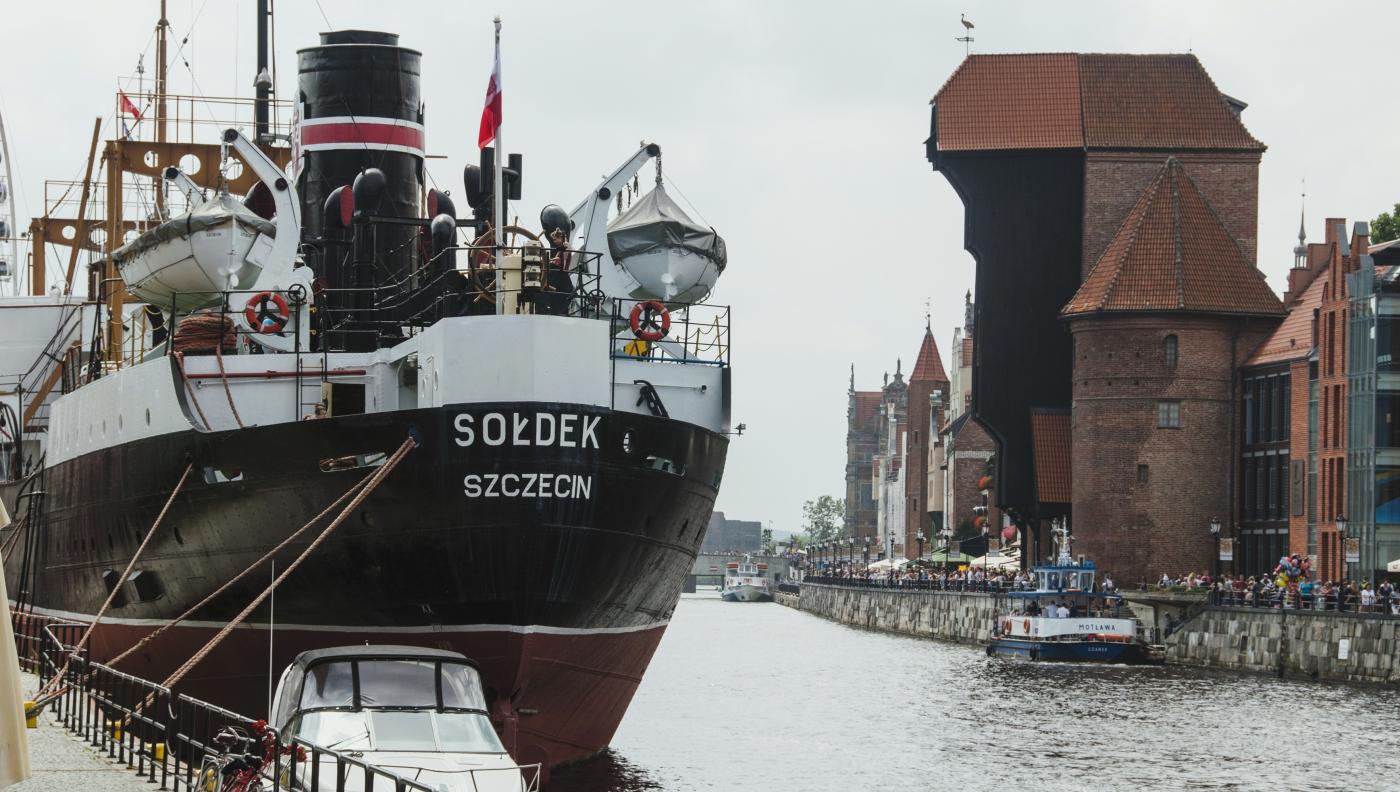
fot. Romuald Gałęcki / pixabay
From blueprint to launch – the making of a symbol
The story of SS Sołdek began on 15 September 1947, when her lines were first laid out at Gdańsk Shipyard. On 3 April 1948, the keel-laying ceremony took place. The first rivet was driven by Minister of Shipping Adam Rapacki, and the first steel plates were blessed by a Capuchin friar from St. James Church in Gdańsk.
The ship was launched on 6 November 1948, with Helena Sołdek, wife of shipyard worker Stanisław Sołdek, serving as her godmother. This event symbolised not only the rebirth of Polish shipbuilding, but also the pride of a nation rebuilding from the ashes of war.
Sea trials and commissioning
After outfitting, Sołdek began her first sea trials on 24 September 1949 at 9:55 a.m. She was guided out of the port by pilot Captain Laskowski, assisted by the tugboats Atlas (bow) and Cyklop (stern).
Following successful trials, the vessel was officially commissioned on 21 October 1949 and handed over to Polska Żegluga Morska (Polish Steamship Company) for commercial service.
The maiden voyage – Poland returns to the sea
From 26 to 30 October 1949, Sołdek undertook her first commercial voyage. The route led from Szczecin to Ghent, Belgium, with a cargo of 2,200 tonnes of coal — Poland’s key export commodity at the time. On her return voyage, she carried iron ore, a crucial raw material for the Polish industry.
This voyage marked Poland’s re-entry into international maritime trade and demonstrated that the nation had once again secured a place among global shipbuilding and seafaring powers.
A name that honoured a worker
The ship’s name held special meaning. It honoured Stanisław Sołdek, a plater and labour leader at Gdańsk Shipyard. This was the first ship in Polish history to be named after a worker rather than a political or historical figure. It reflected the spirit of post-war reconstruction and recognised the contribution of ordinary shipyard workers to the rebirth of the nation’s maritime strength.
The prototype of a new era
SS Sołdek served as the prototype of the B30 series — the first line of ore-and-coal carriers designed and built domestically. Hundreds of young engineers, designers, and shipbuilders gained experience through her construction. The technological expertise developed during this project laid the foundation for what became known as the Polish school of shipbuilding.
In subsequent decades, Polish shipyards in Gdańsk, Gdynia, and Szczecin grew into major producers of merchant vessels for the global market, establishing Poland’s reputation as a significant shipbuilding nation.
From workhorse to museum ship
During more than thirty years of service, Sołdek completed 1,479 voyages and transported over 3.5 million tonnes of cargo across the Baltic and North Seas. She was retired from active service in 1981 but was preserved through the efforts of maritime professionals and museum curators.
Since 1985, SS Sołdek has been preserved as a museum ship under the care of the National Maritime Museum in Gdańsk, moored at the Ołowianka waterfront. Today, her black-and-red hull reflected in the waters of the Motława River stands as a tangible monument to the history of Polish shipbuilding.
A symbol of industrial rebirth
SS Sołdek is regarded as a symbol of Poland’s shipbuilding rebirth because she was the first vessel constructed entirely by Polish workers and engineers in the post-war period. She demonstrated the nation’s capacity to design, construct, and operate complex maritime technology, embodying resilience, technical innovation, and collective pride.
From her riveted hull to her steam-powered engines, Sołdek represents the determination and craftsmanship that defined the early decades of Poland’s maritime industry.
76 years later
In 2025, Poland marks 76 years since the first voyage of SS Sołdek. Though her engines are silent, she continues to embody the legacy of perseverance and skill that shaped the post-war shipbuilding era.
Moored in Gdańsk, Sołdek remains a living testament to the idea that from a single ship, an entire industry — and a maritime identity — can be born.
Kamil Kusier
redaktor naczelny
comments
Add the first comment
see also
Gdynia at 100: ceremonial city council session highlights Poland’s maritime strategy
Poland’s wedding to the sea in Puck: President Karol Nawrocki commemorates 106th anniversary
Gdynia at 100: A Strategic port city celebrates its maritime identity
A city designed from the sea. one hundred years of Gdynia as a project ahead of its time
106 years ago Poland “turned to the sea”. Split celebrations, one goal: a strong maritime Poland
IPN Gdańsk highlights maritime cities and port heritage in its 2026 programme
December 1970: remembering the maritime workers of Gdynia
Cadet Day: tradition, heritage and the professional formation of future naval officers
Gdynia marks its centenary. A port city that shaped Poland’s maritime future
A commanding return: former CO of KNM Stord revisits his submarine decades later
ADVERTISEMENT
ADVERTISEMENT