









World Sailing sets a new benchmark for sustainability with life-cycle assessments of Olympic sailing equipment
World Sailing has launched a landmark initiative that places environmental performance at the centre of Olympic equipment regulation, setting a precedent not only for sailing but for the wider sports and marine industries.
In brief
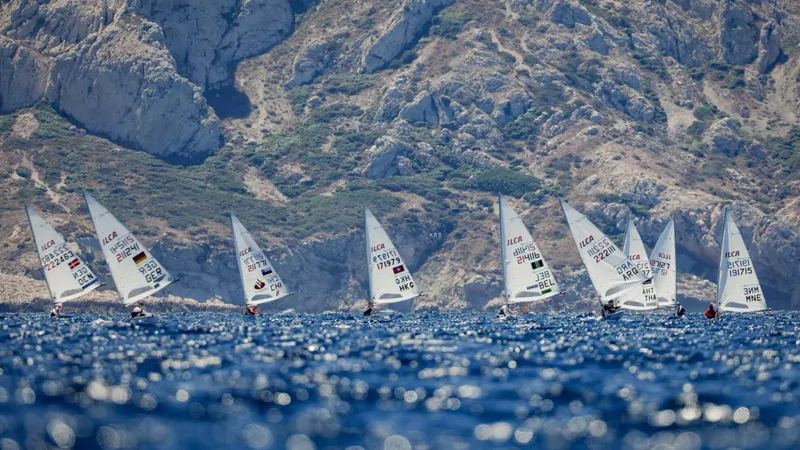
World Sailing has covered six Olympic classes with a full life cycle analysis of equipment, encompassing production, use and end-of-life management. The 12-month initiative uses the MarineShift360 tool, developed by Marine Futures with the support of 11th Hour Racing, providing a common methodology and comparable data. From 2032, every class applying for Olympic status will have to present an independently verified LCA. World Sailing announces further stages covering full Olympic campaigns, including logistics, transport and athlete travel.
The 12-month project will see all six Olympic sailing classes undergo a comprehensive life-cycle assessment (LCA), evaluating environmental impacts across production, use and end-of-life phases. This marks the first time an entire Olympic sport has adopted a unified, data-driven framework to assess the full footprint of its competition equipment.
The findings will directly inform future class rules, technical standards and Olympic class selection processes. From 2032 onwards, any class seeking Olympic inclusion will be required to submit an independently verified LCA, making environmental impact a formal criterion alongside performance, cost and accessibility.
The assessments will be delivered using MarineShift360, a purpose-built LCA tool for the marine sector developed by Marine Futures with support from 11th Hour Racing. The platform provides a shared methodology, training and consistent data reporting for class associations and manufacturers, enabling transparent and comparable results.
For the marine industry, the implications extend well beyond elite sport. Many Olympic equipment manufacturers also supply the recreational, youth and entry-level markets, meaning that improvements in materials, design efficiency and production processes at the top of the sport are likely to cascade across the wider boating sector.
World Sailing has already begun onboarding manufacturers, with initial workshops held in October and each class expected to complete its assessment within a three-month window. Early adopters such as iQFOiL and ILCA, which have previously conducted individual LCAs, are contributing valuable experience to the shared framework.
Future phases of the project will expand the scope to include full Olympic campaigns, covering logistics, equipment transport and athlete travel. The resulting data will help shape more sustainable event structures and identify further opportunities to reduce emissions.
By embedding life-cycle assessment into its decision-making framework, World Sailing is signalling a broader shift within the marine and sports industries: sustainability is no longer an add-on, but a core performance metric shaping the future of design, production and competition.
Source: Gazeta Morska · Compiled by: Kamil Kusier
Related articles
 Sailing and water sports GB1's America's Cup AC75 reaches Naples, swapping cyclors for batteries
 Safety and rescue From lightships to solar power: 160 years of the Grundkallen light station
 Shipbuilding industry Lionel Messi orders a Sunreef catamaran. The Ultima 88 is being built at the Gdańsk firm’s UAE yard
 Investments A Szczecin firm is to design the world's tallest Christ statue. A 207-metre core in 40 days
 Sailing and water sports A century-old Inga Lisa and Czarny Diament after 32 years at sea. Over 30 classic yachts in Gdynia
 Sailing and water sports Eleven years of trying and metres at the finish. Witold Karałow's Scamp 4 wins the 75th Blue Ribbon
Comments (0)
The discussion is moderated by the editors: a comment appears after review. Your e-mail address is not published.
Nobody has commented on this article yet.