









WB Group and Saab deepen cooperation on unmanned systems for NATO's eastern flank
WB Group and Sweden's Saab are deepening their industrial and research cooperation in the field of unmanned reconnaissance and strike capabilities. An agreement setting out specific areas of cooperation was signed in Gdynia, at an event linked to the Orka submarine programme. It is a further step in the growing ties between the Polish and Swedish defence industries, aimed at the security of the Baltic Sea region and NATO's eastern flank.
In brief
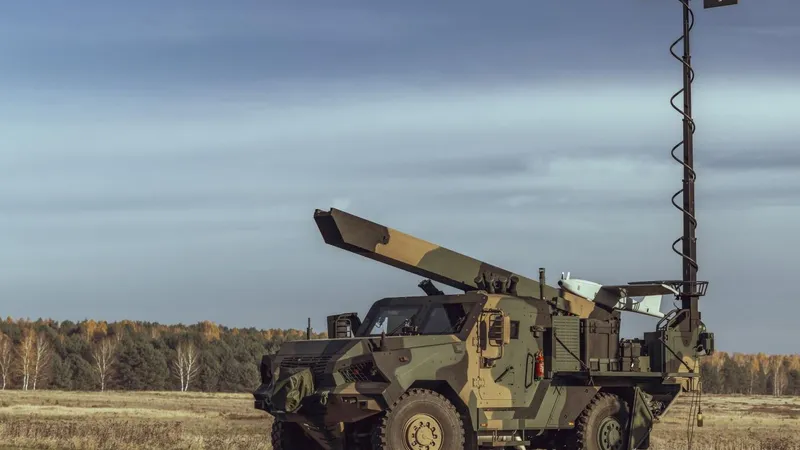
WB Group and Sweden's Saab signed an agreement in Gdynia on industrial and research and development cooperation in unmanned C4ISR UxS class systems. The document, concluded on the sidelines of an event linked to the Orka programme, covers the GLADIUS reconnaissance and strike system, the Future Task Force platoon concept and autonomous surface platforms, with the adaptation of the GLADIUS system to Swedish armed forces requirements as its key element. GLADIUS already serves in the 18th Mechanised Division and proved itself during the Baltic Shield exercise with Danish participation. The cooperation forms part of the European Defence Project of Common Interest Eastern Flank Watch.
The document covers cooperation on unmanned C4ISR UxS systems (reconnaissance, command and strike using unmanned platforms). The goal of the partnership between two leading companies from the two countries is to develop and field solutions that increase the interoperability of the Polish, Swedish and wider NATO armed forces, drawing on the firms' complementary competencies.
GLADIUS, a platoon of the future and unmanned surface vessels
The cooperation is to be built around WB Group's solutions: the GLADIUS reconnaissance-strike system, the Future Task Force manned-unmanned platoon concept, and autonomous unmanned surface platforms. A key element of the agreement is adapting GLADIUS to the operational requirements of the Swedish armed forces.
The first user of GLADIUS is the Polish Armed Forces; the system is in service with the 18th Mechanised Division and other units of the Polish military. During the "Baltic Shield" exercise, held with the armed forces of Denmark, it confirmed its ability to operate in an allied environment and its interoperability with the systems of other NATO states.
A central asset of GLADIUS is its open, modular architecture. This allows integration with national C5 systems (command, control, computers, communications and cyber defence), flexible adaptation to a user's requirements, and the incorporation of components, such as vehicles, supplied by local industry. Compliance with NATO standards and the scope for expansion increase the system's appeal, particularly for eastern-flank states seeking to combine combat effectiveness with industrial sovereignty.
A building block for the region's capabilities
According to the two companies, the synergy of their competencies strengthens Europe's defence-industrial potential and supports the development of a new generation of combat systems and of shared regional capabilities. The joint projects fit the aims of the European Defence Project of Common Interest (EDPCI) "Eastern Flank Watch" and are intended as a step towards interoperable defence capabilities that enhance the security of the Baltic and NATO's eastern flank.
Source: Gazeta Morska · Compiled by: Kamil Kusier
Related articles
 Energy and offshore Equinor takes over Bałtyk 2 and 3 O&M base in Łeba. Port to serve 1.44 GW of offshore wind for 30 years
 Navy and defence Port Gdański Eksploatacja secures NATO NCAGE code. Gdańsk port company lines up for defence tenders
 Shipbuilding industry Ex-Enterprise towed to Mobile under $418.5m contract. Test case for Nimitz-class disposal begins
 Energy and offshore Energa renames Gdańsk gas plant company as foundations for 6,000-tonne turbine and boiler are laid
 Equipment and technology WB Group takes Polish drones from Tokyo to SOFEX in Jordan in a single week
 Ports and logistics PGE books Gdańsk’s T5 terminal for the long haul: Baltica 2 first, then more offshore wind farms
Comments (0)
The discussion is moderated by the editors: a comment appears after review. Your e-mail address is not published.
Nobody has commented on this article yet.