U.S. Navy awards Textron Systems $100M contract to advance uncrewed surface warfare capabilities
The U.S. Navy is accelerating its transition toward autonomous maritime operations. Under a contract worth up to $100 million, the Naval Sea Systems Command (NAVSEA) has selected Textron Systems to enhance the mission software and payload integration of uncrewed surface vehicles (USVs), primarily focused on mine countermeasure (MCM) operations. But the scope of this mission goes far beyond mine warfare.
investments worldwide defense industry news25 april 2025 | 07:33 | Source: Gazeta Morska | Prepared by: Kamil Kusier | Print
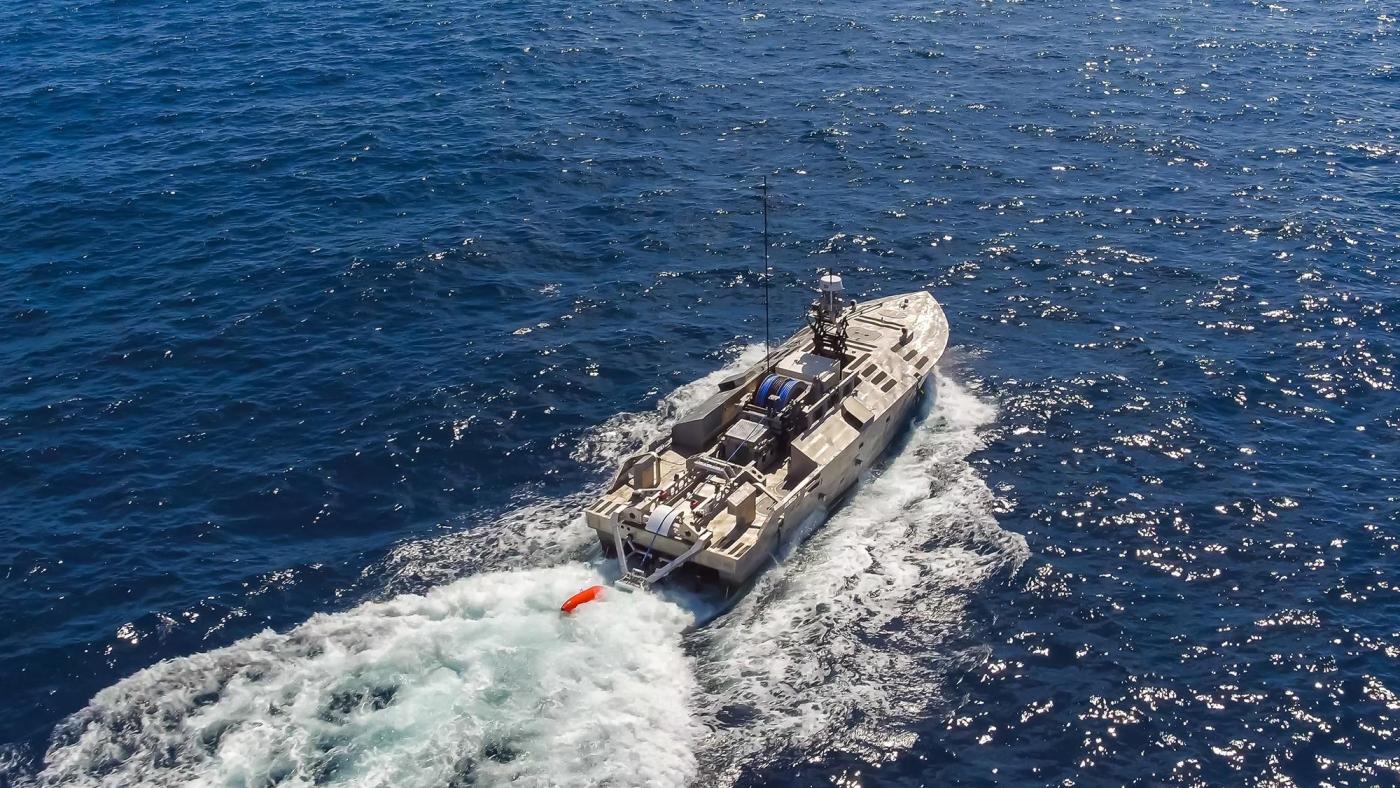
fot. Textron Systems
The autonomous future of naval operations
Maritime warfare is undergoing a major transformation. Autonomous, AI-enhanced surface platforms capable of executing complex missions without onboard crews are becoming critical tools in modern naval strategy. The U.S. Navy, through strategic programs and initiatives, is reshaping its fleet architecture by integrating scalable, multipurpose USVs into surface and littoral combat operations.
Textron Systems, recognized for its development of the common uncrewed surface vehicle (CUSV), is at the core of this evolution. The company has been awarded a three-year cost-plus-fixed-fee contract to lead the software support activity (SSA) and integrate mission payloads across the MCM USV fleet. The scope also includes the integration of mission packages for:
- Surface warfare (SuW)
- Anti-submarine warfare (ASW)
- Intelligence, surveillance, and reconnaissance (ISR)
MAGNUSS, payloads, and the TSUNAMI fleet
One of the notable technologies under development is MAGNUSS (magnetic and acoustic generation next unmanned superconducting sweep), a next-generation payload designed to emulate ship signatures and effectively counter sophisticated naval mines.
Textron is also advancing its proprietary uncrewed surface fleet under the name TSUNAMI (Textron Systems uncrewed networked autonomy maritime initiative). Developed in partnership with Brunswick Corporation—a global leader in advanced marine platforms—the TSUNAMI fleet is engineered for full autonomy, rapid mission reconfiguration, and minimized lifecycle costs. These new systems are intended to support both MCM operations and the growing demand for multi-mission uncrewed platforms across combat and ISR environments.
Public-private collaboration: NAVSEA, DARPA, and the Replicator Initiative
This contract is a key component of a broader transformation effort by the U.S. Department of Defense. Textron's collaboration with NAVSEA, DARPA, and other federal agencies is aligned with the Pentagon’s Replicator Initiative, which seeks to deploy thousands of cost-effective autonomous systems—air, surface, and subsurface—across critical theaters like the Indo-Pacific.
This public-private synergy underscores how innovation in the defense sector is increasingly driven by agile industrial partnerships underpinned by government R&D programs. For NAVSEA, Textron, and their partners, the objective is clear: expand the operational reach of the fleet without expanding its physical footprint.
A signal to NATO and Europe: where does Poland stand?
While the Textron-NAVSEA contract is U.S.-centric, it raises a vital question for European navies: How prepared are we to transition toward autonomous surface warfare? In Poland, companies like PGZ Naval Shipyard, OBR CTM, and Remontowa Shipbuilding possess the technical and industrial capacity to participate in the development of indigenous USVs for both military and civilian maritime applications.
With modern naval missions increasingly demanding ISR, MCM, and rapid-response capabilities, autonomous surface platforms will soon become the backbone of coastal defense and expeditionary operations. There is an emerging opportunity for public-private investment in a Polish USV program, potentially within NATO frameworks or the European Defence Fund.
Conclusion: autonomy and interoperability as core principles
Textron Systems and the U.S. Navy are showcasing what a modern, adaptable surface force could look like. Their approach isn't limited to hardware—it's about building a holistic operational ecosystem where software, sensors, data, and mission agility converge.
In a security environment shaped by multi-domain threats, cyber warfare, and contested sea lanes, one thing is clear: the future of surface warfare is autonomous, scalable, and interoperable.
Those who fail to adapt may find themselves obsolete before the next wave hits.
Buy us a coffee, and we’ll invest in great maritime journalism! Support Gazeta Morska and help us sail forward – click here!
Kamil Kusier
redaktor naczelny
comments
Add the first comment
see also
Navantia and Fincantieri deepen cooperation on the european patrol corvette programme
Stadt Naval to deliver electric propulsion system for Polish rescue vessel Ratownik
Hapag-Lloyd to acquire ZIM for $4.2bn: strategic consolidation in the container shipping market
Baltica 2 cable corridor taking shape: 150 km of inter-array routes completed in the Baltic Sea
Damen Shipyards and Blue Water Autonomy announce license for Liberty-class autonomous vessel for the U.S. Navy
Gateway to the Baltic: Elbląg Moves Forward with Modular, Multimodal Port Expansion
Construction of Ratownik begins. PGZ Stocznia Wojenna lays keel of a new pillar of Baltic security
Port of Gdańsk’s T5 terminal advances as key installation hub for Baltica 2 offshore wind project
Poland’s nuclear project secures landmark financing as PEJ signs first loan agreement with US EXIM
Port of Gdańsk posts strong 2025 performance as liquid fuels dominate and container volumes hit record high
ADVERTISEMENT
ADVERTISEMENT