









US targets shadow fleet with new sanctions on tankers and shipping firms
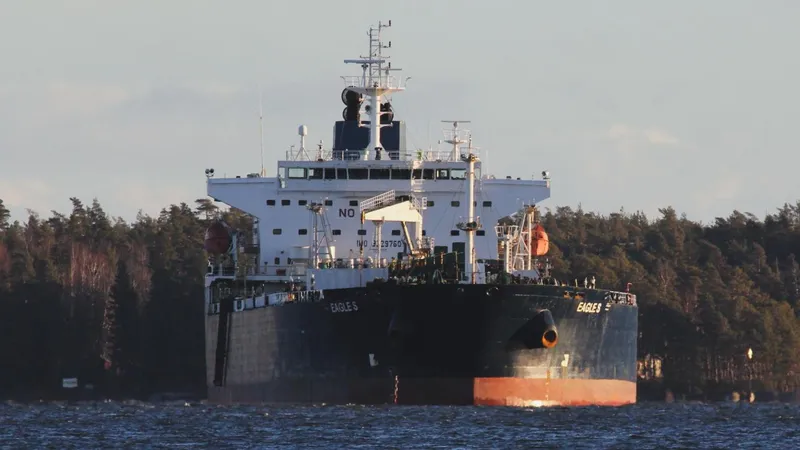
The US Department of the Treasury has imposed sanctions on 13 companies and 8 vessels linked to the illicit export of Iranian crude, according to Iran International. Among those blacklisted is Greek shipowner Antonios Margaritis and his network of shipping firms.
In brief
The United States Department of the Treasury has extended sanctions to 13 entities and 8 vessels linked to the illegal export of Iranian oil, the Iran International portal reported. The list includes Greek shipowner Antonios Margaritis as well as companies from Hong Kong, China, the United Arab Emirates and the Marshall Islands. Secretary Scott Bessent said the measures are intended to limit Iran's ability to finance weapons programmes and support terrorist groups. According to an Allianz report, the shadow fleet accounts for over 17 percent of global tanker tonnage, and analysts estimate its growth at around 30 vessels per month.
Treasury Secretary Scott Bessent stated that the measures are designed to curb Tehran’s ability to fund advanced weapons programs, support terrorist groups, and threaten the security of US forces and allies.
Expanding shadow fleet network
The sanctioned entities include firms registered in Hong Kong, mainland China, the UAE, and the Marshall Islands. These companies operate within the so-called “shadow fleet” — tankers deployed to move oil from sanctioned producers including Iran, Russia, and Venezuela.
To conceal cargo origin, shadow fleet operators frequently:
- switch vessel names, flags, and ownership,
- disable or falsify AIS signals,
- conduct ship-to-ship transfers at sea.
Rising safety and environmental concerns
Allianz estimates that the shadow fleet now accounts for more than 17% of the global tanker market. Elisabeth Braw of the Atlantic Council notes the fleet has doubled in size since Russia’s invasion of Ukraine.
Analysts warn that many of the vessels involved are ageing and poorly maintained.
- The environmental risk of a major spill is extremely high, said Tomer Raanan, a risk specialist advising Lloyd’s.
Sanctions’ effectiveness in doubt
Being added to the US blacklist prohibits all commercial dealings with designated entities. Violations may trigger secondary sanctions, including loss of access to US markets and financial systems.
Yet experts stress that sanctions have so far failed to dismantle the shadow fleet. “No sanctions have eliminated either the Russian or Iranian shadow fleet to date,” said Ian Ralby, head of consultancy Consilium.
Industry observers estimate that the fleet continues to expand by roughly 30 vessels each month, challenging regulators’ ability to contain the trade.
Source: Gazeta Morska / PAP · Compiled by: Michał Iwański
Related articles
 Energy and offshore Equinor takes over Bałtyk 2 and 3 O&M base in Łeba. Port to serve 1.44 GW of offshore wind for 30 years
 Navy and defence Port Gdański Eksploatacja secures NATO NCAGE code. Gdańsk port company lines up for defence tenders
 Shipbuilding industry Ex-Enterprise towed to Mobile under $418.5m contract. Test case for Nimitz-class disposal begins
 Energy and offshore Energa renames Gdańsk gas plant company as foundations for 6,000-tonne turbine and boiler are laid
 Equipment and technology WB Group takes Polish drones from Tokyo to SOFEX in Jordan in a single week
 Ports and logistics PGE books Gdańsk’s T5 terminal for the long haul: Baltica 2 first, then more offshore wind farms
Comments (0)
The discussion is moderated by the editors: a comment appears after review. Your e-mail address is not published.
Nobody has commented on this article yet.