









Turkey deploys troops to Mogadishu in exchange for 30% share in oil and gas revenues
Turkey has deployed 500 counter-terrorism troops and military equipment to the Somali capital, Mogadishu, fulfilling part of its commitments under a defense agreement signed last year. In return, Ankara will receive 30% of the revenues from Somalia’s oil and gas extraction.
In brief
Turkey has sent 500 counter-terrorism troops together with weapons to Mogadishu, fulfilling commitments under a defence agreement signed with Somalia a year ago. Turkey will in return receive 30 percent of revenues from Somali oil and gas as well as unrestricted rights to export its share of the resources at international prices. The Turkish contingent is ultimately to number 2.5 thousand soldiers under a two-year mission approved by the Turkish parliament. Somalia's resources are estimated at 6 billion cubic metres of gas and potentially 30 billion barrels of oil.
The deployment, which is expected to eventually reach 2,500 Turkish personnel, was approved by the Turkish Parliament last year. The mission is slated to last two years and marks a deepening of Turkish involvement in the strategically significant Horn of Africa.
Turkish forces have maintained a presence in Somalia since 2017, where they train Somali special forces and operate the TurkSOM military base—the largest Turkish military facility on the African continent. In addition, Turkey runs a military academy in Mogadishu, which has graduated over 10,000 soldiers since its establishment in 2007.
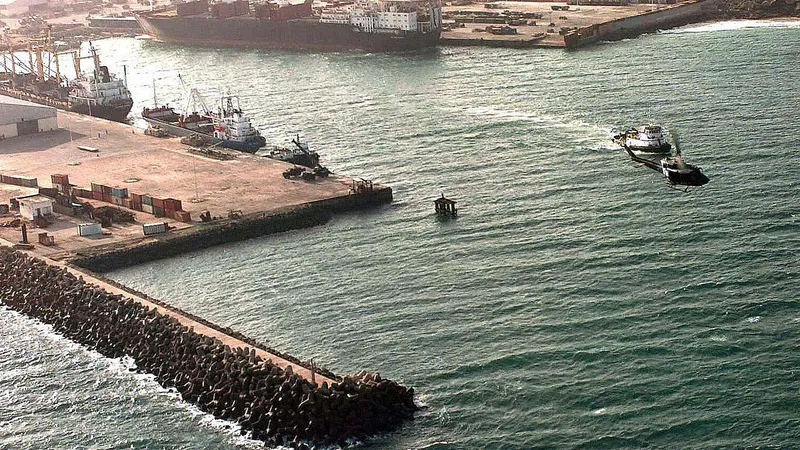
Shortly after signing the defense agreement in 2023, the Turkish warship TCG Kinaliada docked at the Port of Mogadishu. Ankara has also committed to deploying frigates to Somali waters. In March, Turkey delivered at least two Bayraktar Akıncı combat drones to the Somali military, according to social media posts by then-Defense Minister Abdulkadir Mohamed Nur.
In exchange for its security support, Turkey secured rights to 30% of revenues from Somalia’s oil and gas resources, as outlined in the agreement submitted to the Turkish parliament for ratification earlier this week. The deal also grants Turkey unrestricted rights to export its share of hydrocarbons at prevailing global market prices.
Somalia’s natural resource potential is substantial. The country’s land and coastal waters are estimated to hold confirmed reserves of 6 billion cubic meters of natural gas and potentially up to 30 billion barrels of crude oil.
The agreement has raised concern in Washington, which considers the region within its sphere of influence. U.S. pressure is reported to have contributed to the recent dismissal of pro-Turkish Defense Minister Nur—an Ankara-trained official fluent in Turkish—who has been reassigned to the role of Minister of Ports and Maritime Transport by President Hassan Sheikh Mohamud.
Despite continued U.S. airstrikes targeting al-Qaeda-affiliated Al-Shabaab and Islamic State militants, Somalia has struggled to gain control over key territories. Just last week, insurgents captured a strategic military base in the Middle Shabelle region, approximately 200 km from the capital.
Source: PAP / Gazeta Morska · Compiled by: Tadeusz Brzozowski
Related articles
 Energy and offshore Equinor takes over Bałtyk 2 and 3 O&M base in Łeba. Port to serve 1.44 GW of offshore wind for 30 years
 Navy and defence Port Gdański Eksploatacja secures NATO NCAGE code. Gdańsk port company lines up for defence tenders
 Shipbuilding industry Ex-Enterprise towed to Mobile under $418.5m contract. Test case for Nimitz-class disposal begins
 Energy and offshore Energa renames Gdańsk gas plant company as foundations for 6,000-tonne turbine and boiler are laid
 Equipment and technology WB Group takes Polish drones from Tokyo to SOFEX in Jordan in a single week
 Ports and logistics PGE books Gdańsk’s T5 terminal for the long haul: Baltica 2 first, then more offshore wind farms
Comments (0)
The discussion is moderated by the editors: a comment appears after review. Your e-mail address is not published.
Nobody has commented on this article yet.