Time - not money - the key challenge in adapting ports and airports in Pomerania for defense needs
The Ministry of National Defense (MON) has presented a report that will serve as the foundation for the modernization of transport and port infrastructure in Central Pomerania. Experts stress that the main barrier is not funding, but the pace of implementation.
security investments politics pomerania west pomerania ports tricity news08 september 2025 | 07:18 | Source: Gazeta Morska / PAP | Prepared by: Kamil Kusier | Print
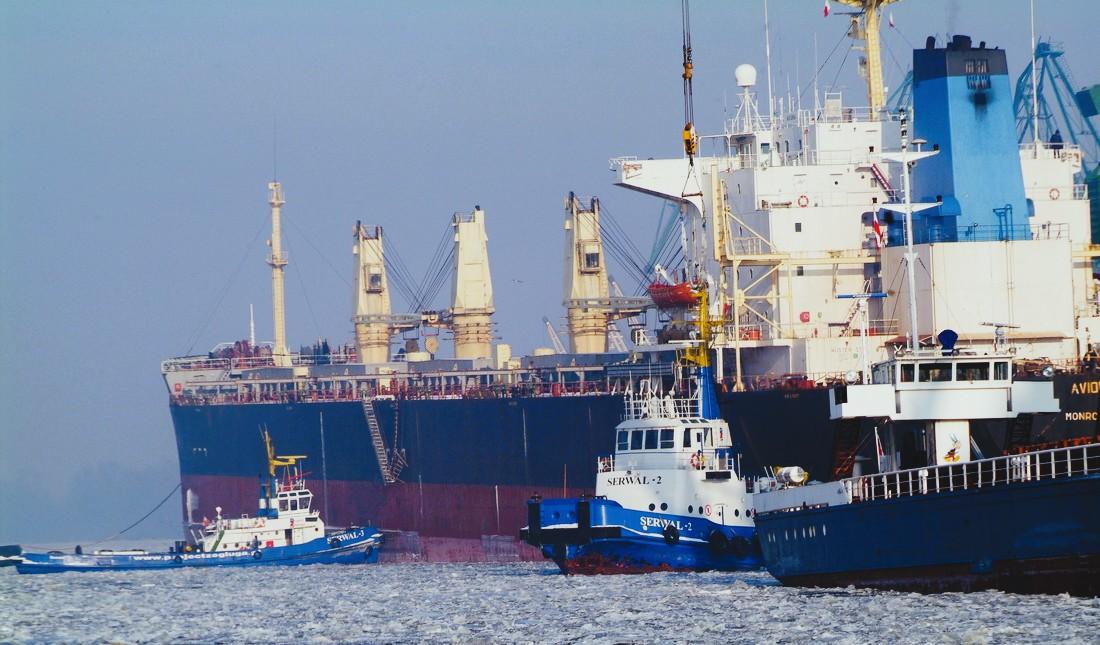
fot. Port Szczecin-Świnoujście
The report, “Pact for Poland’s Security – Central Pomerania”, was prepared by a team led by MON advisor Maciej Samsonowicz and unveiled in Ustka by Deputy Prime Minister and Minister of Defense Władysław Kosiniak-Kamysz. It analyzes the condition of infrastructure across the West Pomeranian, Pomeranian, Kuyavian-Pomeranian, and Warmian-Masurian regions, identifying priority road, rail, port, and airport investments.
According to the report, it is essential to integrate civilian seaports and airports into the defense system by equipping them with anti-drone systems, standardizing security procedures, and preparing operational documentation that enables coordination with the armed forces during crisis situations. Particularly significant are the port in Ustka and airports in Szczecin-Goleniów, Bydgoszcz, and Olsztyn.
The authors also propose streamlining investment procedures in the civilian sector to accelerate the modernization process.
– Ensuring mobility for national and allied forces, as well as the smooth transport of weapons, ammunition, and fuel, is a top priority. The only question is: why has this come so late? – emphasized Andrzej Kiński, editor-in-chief of the monthly Wojsko i Technika, in an interview with PAP.
Kiński highlighted that time, not money, is the critical constraint. He recalled the conclusions of NATO’s June summit in The Hague, which recommended that 1.5% of defense spending (out of 5% total) should be allocated to critical energy and transport infrastructure, with projects co-financed by EU funds.
– This is all interconnected. Modernizing airports and seaports will mean little if road and rail infrastructure are not upgraded at the same time. And vice versa – stressed Andrzej Kiński.
The report is part of the broader “Baltic Shield” strategy, alongside the Baltic Declaration and the Green Industrial Zone “Kaszubia.” As Władysław Kosiniak-Kamysz underlined, the document not only identifies shortcomings but also sets clear directions for action, ensuring Poland and its allies maintain real capacity to respond in the event of a threat.
Buy us a coffee, and we’ll invest in great maritime journalism! Support Gazeta Morska and help us sail forward – click here!
Kamil Kusier
redaktor naczelny
comments
Add the first comment
see also
Strait of Hormuz at a strategic crossroads: sinking of IRIS Dena and implications for maritime transport
The submarine contract of the decade? Canada weighs South Korea against Germany
When two powers clash, Poland must be ready to act. Military security must be the priority
Commodore Przemysław Karaś appointed deputy commander of the Maritime Operations Centre - Naval Component Command
Radmor hosts delegation from the Republic of Turkey. Advancing maritime security cooperation
French Navy expands global operations from the Pacific to the Red Sea
"Let everyone know we will prevail". Poland’s armed forces set strategic course for 2026-2039
“Army 500” and strategic transformation: Poland sets the course for long-term deterrence and allied readiness
Medical evacuation from offshore vessel in the Baltic. Rescue 511 helicopter and m/s Huragan deployed
Karol Nawrocki: “The strength of the republic lies in its armed forces”. Security requires national unity
ADVERTISEMENT
ADVERTISEMENT