The Niederfinow ship lift. German investment, Polish opportunity
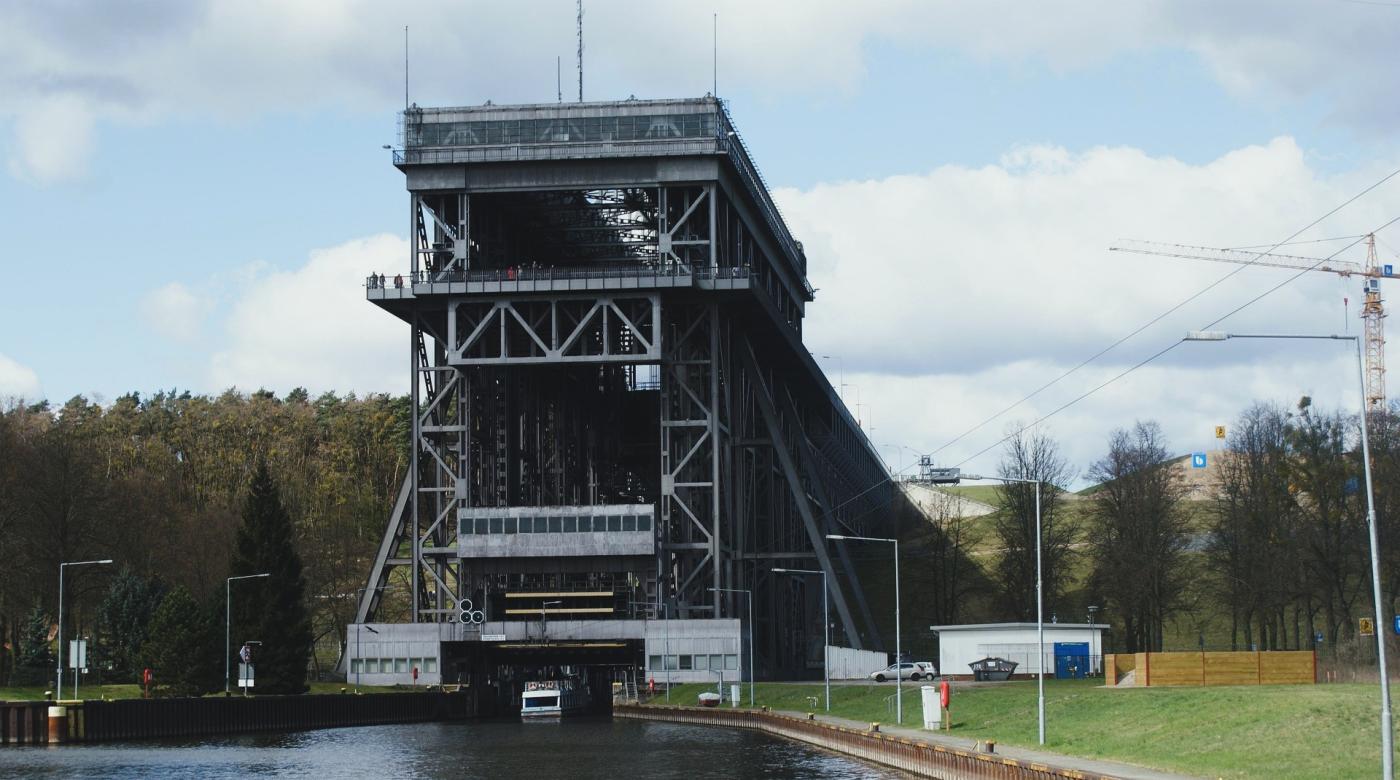
The construction of the new ship lift in Niederfinow, on the Oder–Havel Canal, became a showcase of both ambition and challenge in inland waterway infrastructure. Initially planned to be completed in 2014 with a budget of €285 million, the project eventually consumed more than €520 million and was inaugurated only in October 2022.
business investments logistics worldwide transport and forwarding news inland shipping29 august 2025 | 11:23 | Source: Gazeta Morska | Prepared by: Michał Iwański | Print
fot. Pixabay
Despite the delays and doubled costs, the lift plays a decisive role in Europe’s inland transport network, linking Szczecin and the Oder with Berlin and further with the Rhine corridor. For Poland, this is not just a German success story—it is a window of opportunity.
A strategic link for Polish ports and operators
The new lift accommodates vessels over 110 meters long, removing a long-standing bottleneck on the Oder–Havel Canal. This means cargo from the ports of Szczecin and Police can move more efficiently into Germany, and onward to the Netherlands and Belgium.
For Polish shipping companies and freight operators, this translates into access to larger convoys, modern pushed barge systems, and cheaper, more reliable cargo transport. Key commodities include fertilizers, aggregates, steel, and chemicals, but there is also added value for passenger shipping and water tourism—an area where Polish tour operators are increasingly active.
Poland must invest in the Oder and inland waterways
Germany’s investment directly benefits Poland only if the Polish side develops its own infrastructure in parallel. The Oder still requires modernization to meet European inland navigation standards. Without this, Szczecin’s role as a gateway to the West will remain underutilized.
Inland navigation accounts for less than 1% of transport in Poland, compared with over 10% in Germany. Investments are needed in locks, barrages, dredging, and navigational upgrades, while in the long run, Poland must also consider ambitious solutions of its own. The lesson from Niederfinow is clear: large-scale waterway projects are expensive, but they unlock strategic trade flows and long-term competitiveness.
Lessons for Poland
The Niederfinow ship lift demonstrates that inland waterways can be modern, strategic, and profitable—even when projects exceed original budgets. For Poland, the message is unambiguous: do not limit yourself to watching German infrastructure from the sidelines. Instead, invest in the Oder, strengthen inland connectivity, and actively use these transport corridors to penetrate European trade flows.
The faster Poland acts, the more it stands to gain—for its ports, for logistics operators, and for the broader maritime economy.
Buy us a coffee, and we’ll invest in great maritime journalism! Support Gazeta Morska and help us sail forward – click here!
Michał Iwański
redaktor
comments
Add the first comment
see also
Navantia and Fincantieri deepen cooperation on the european patrol corvette programme
Galeon Yachts and Meyer Shank Racing: merging luxury yachts with motorsport expertise
Unmanned systems and naval firepower modules. WB Group showcases integrated capabilities at Enforce Tac 2026
Swedish ports record lowest ship calls in 18 years. Implications for the maritime sector
February in Szczecin’s shiprepair sector. Ice, overhauls and North Sea expansion
Advanced ROV trials conducted at CTO to validate subsea technologies for offshore applications
University of Gdańsk and PGZ Naval Shipyard join forces for innovation and security
Stadt Naval to deliver electric propulsion system for Polish rescue vessel Ratownik
Gdańsk port’s Basen Górniczy to gain modern port infrastructure
First month of Jantar Unity operations. Polsca ferry paves the way for Batory program units
ADVERTISEMENT
ADVERTISEMENT