Sea Shadow, a ghost ship that haunted the future of naval warfare
When the Sea Shadow (IX-529) emerged from secrecy in the 1990s, it looked like something out of science fiction—a stealth warship capable of slipping through enemy waters undetected. But rather than heralding a new age of naval dominance, this technological marvel ended up as little more than a footnote in history. What went wrong?
navy worldwide defense industry news31 january 2025 | 07:32 | Source: Gazeta Morska | Prepared by: Kamil Kusier | Print
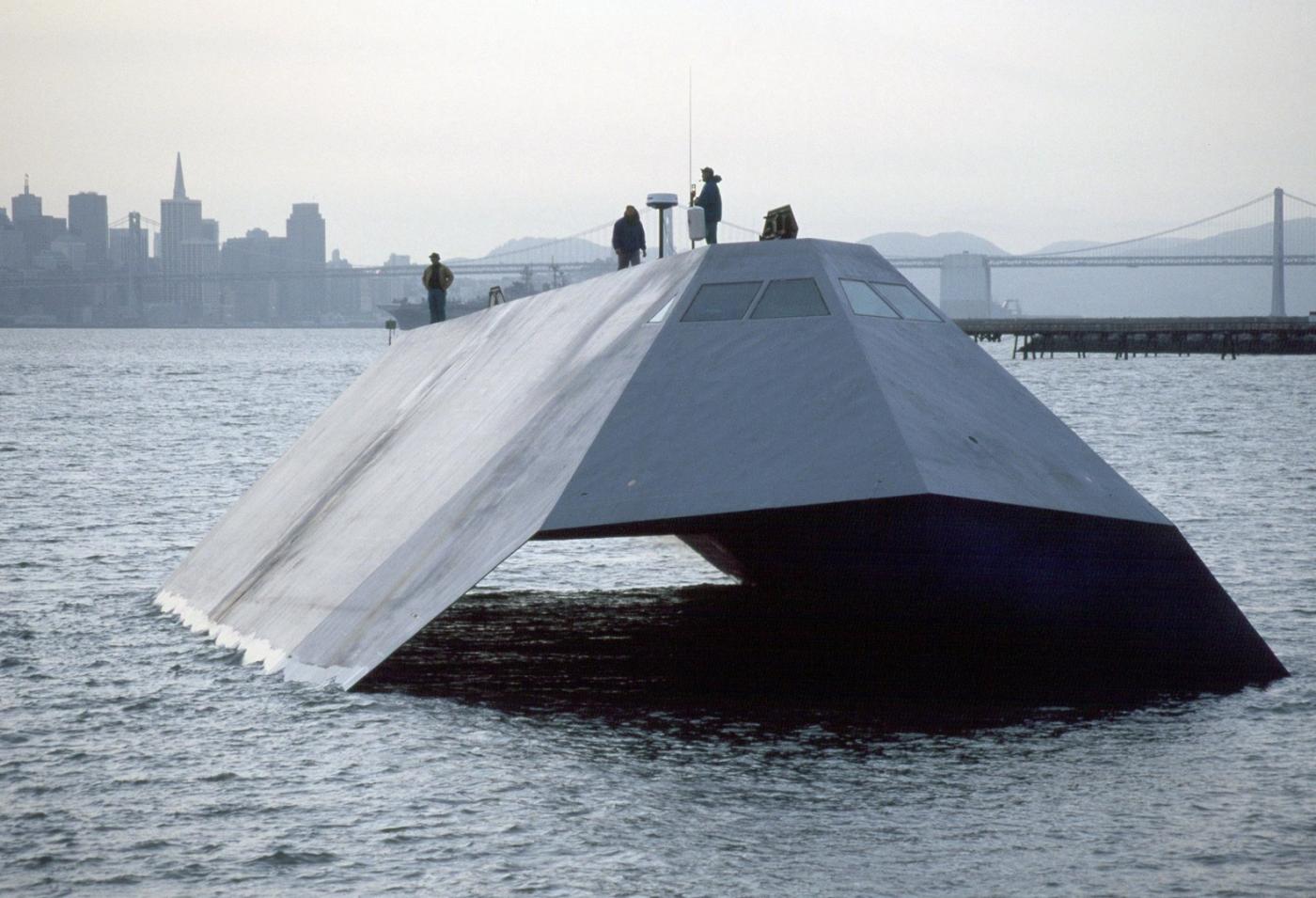
Sea Shadow | fot. Wikimedia Commons
A stealth experiment born in the cold War
Developed in the early 1980s under a top-secret U.S. Navy and DARPA initiative, the Sea Shadow was built inside the Hughes Mining Barge (HMB-1) to test cutting-edge stealth and stability technologies at sea. Designed by Lockheed's Skunk Works, the vessel featured sharp angles and radar-absorbing surfaces, making it nearly invisible to detection systems.
A visionary design with practical flaws
The Sea Shadow utilized the Small Waterplane Area Twin Hull (SWATH) configuration, which provided remarkable stability even in rough waters. Its angular shape and composite materials minimized radar signatures. However, it was plagued by critical limitations: it was too small for practical naval operations, lacked weaponry, and had a maximum speed of only 14 knots—far too slow for modern combat scenarios.
A legacy in scraps
By the mid-1990s, the U.S. Navy had already shifted focus away from the Sea Shadow. Stored in drydock for years, it was ultimately decommissioned. Attempts to preserve it as a museum piece failed, and in 2012, the once-revolutionary ship was scrapped.
Despite its fate, the Sea Shadow's stealth technology paved the way for modern warships, influencing designs like the Zumwalt-class destroyers. It may have been a ghost ship, but its legacy still lingers in the shadows of naval warfare.
Kamil Kusier
redaktor naczelny
gallery


comments
Add the first comment
see also
Lithium at the core. TKMS and E3 Lithium align on Canada’s submarine ambitions
The end of a quiet era. Polish Navy harbour tugs in transition
105th life-saving mission. Naval Aviators conduct double "Heart Action" transport
Another successful medical evacuation over the Baltic Sea. Yet another intervention at offshore wind farms
Key leadership changes announced in the Polish Armed Forces
137 years since the Apia cyclone in Samoa: a lesson for modern shipping
RAS exercises in the Caribbean. Dutch patrol vessel Zr.Ms. Friesland conducts joint operations with French Navy
Royal Navy invests in uncrewed surface vessels. Project Beehive to accelerate development of the "Hybrid Navy"
French Navy increases operational activity from the Mediterranean to the Arctic
Polish Navy retires prototype minesweeper ORP Gopło after 44 years of service
ADVERTISEMENT
ADVERTISEMENT