









Scottish government approves world’s largest offshore wind farm despite ecological concerns
The Scottish Government has granted planning permission for the construction of the Berwick Bank Wind Farm, set to become the largest offshore wind installation in the world. The decision comes just days after former U.S. President Donald Trump completed a private visit to Scotland, during which he sharply criticized wind power developments along the Scottish coast.
In brief
The Scottish government approved on Thursday the construction of the Berwick Bank offshore wind farm off the coast of East Lothian. The project comprises 307 turbines with a total capacity of 4.1 GW, twice what is needed to power every home in Scotland, and construction is to be completed by 2030. Developer SSE Renewables estimates around 8 billion pounds of benefit for the UK economy and more than 9 thousand jobs. Environmentalists warn that the turbines will stand around 32 kilometres from the St. Abb's and Bass Rock seabird colonies, and that more than 30 thousand bird collisions could occur over 35 years of operation.
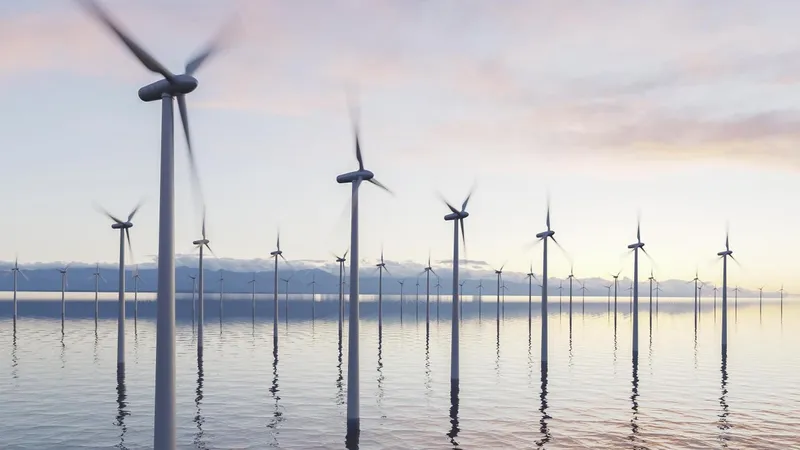
The Berwick Bank project, to be developed by SSE Renewables, will be located off the coast of East Lothian, southeast of Edinburgh. The site will feature 307 turbines and is projected to deliver up to 4.1 GW of renewable energy — enough to power twice the number of homes currently in Scotland, according to the developer.
The project is expected to bring substantial economic benefits, with SSE Renewables estimating up to £8 billion in value added to the UK economy and the creation of over 9,000 jobs throughout the project lifecycle. Completion is slated for 2030.
While the approval has been welcomed by many within the renewable energy sector as a key step toward the UK’s net-zero ambitions, the project has sparked opposition from environmental groups and wildlife advocates. Conservationists warn that the wind farm’s proximity — around 32 km — to internationally significant seabird colonies, including St. Abb’s Head and Bass Rock, could pose serious threats to native wildlife, particularly northern gannets.
According to an assessment reported by The Scotsman, the wind farm could result in over 30,000 bird collisions over its projected 35-year operational lifespan. Environmental campaigners highlight a concerning irony: a climate mitigation project potentially contributing to biodiversity loss.
SSE Renewables has been instructed to submit a mitigation strategy addressing the project's potential impact on seabirds, which must be approved by Scottish ministers before any construction can commence.
The timing of the announcement has drawn attention. Sky News noted that the decision was made just two days after Trump concluded his visit to Scotland, during which he labelled wind turbines “a scam” and “among the ugliest structures ever seen.” His comments are seen by some as being partly influenced by the proximity of his Turnberry golf resort to existing wind developments.
Trump reportedly raised his objections in a meeting with Scottish First Minister John Swinney earlier this week. According to local media, the conversation did little to sway government policy, marking what observers have described as an unsuccessful attempt at last-minute lobbying.
Despite controversy, the Berwick Bank Wind Farm represents a major milestone in the UK’s offshore wind strategy, reinforcing Scotland’s role as a global leader in renewable energy deployment — albeit with a renewed focus on ecological accountability.
Source: Gazeta Morska / PAP · Compiled by: Marta Zabłocka
Related articles
 Energy and offshore Equinor takes over Bałtyk 2 and 3 O&M base in Łeba. Port to serve 1.44 GW of offshore wind for 30 years
 Navy and defence Port Gdański Eksploatacja secures NATO NCAGE code. Gdańsk port company lines up for defence tenders
 Shipbuilding industry Ex-Enterprise towed to Mobile under $418.5m contract. Test case for Nimitz-class disposal begins
 Energy and offshore Energa renames Gdańsk gas plant company as foundations for 6,000-tonne turbine and boiler are laid
 Equipment and technology WB Group takes Polish drones from Tokyo to SOFEX in Jordan in a single week
 Ports and logistics PGE books Gdańsk’s T5 terminal for the long haul: Baltica 2 first, then more offshore wind farms
Comments (0)
The discussion is moderated by the editors: a comment appears after review. Your e-mail address is not published.
Nobody has commented on this article yet.