









Royal Navy advances hybrid fleet transformation with autonomous anti-submarine warfare demonstrations
The Royal Navy is accelerating the development of undersea warfare capabilities through a comprehensive modernisation programme focused on integrating autonomous systems, advanced sensing technologies, and artificial intelligence-driven decision support. The latest milestone in this effort has been the successful completion of technology demonstrations conducted in collaboration with small and medium-sized enterprises (SMEs), marking a significant step towards the delivery of a future “hybrid fleet”.
In brief
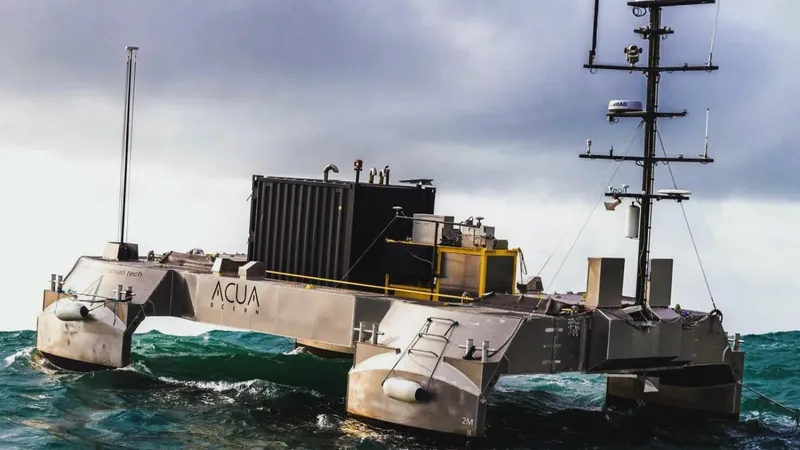
The Royal Navy has completed a four-month cycle of technology demonstrations under the Atlantic Bastion programme, testing commercial anti-submarine warfare systems with small and medium-sized enterprises. Demonstrations included seabed acoustic detection systems, unmanned surface vessels with towed sonars, autonomous underwater vehicles, gliders and control centres using artificial intelligence. Rear Admiral (lower half) Rich Harris indicated that the tests are meant to prove the readiness of the technology to secure the North Atlantic, and Captain (Navy) Chris Hill assessed industry support as exceeding expectations.
The initiative, conducted under the Atlantic Bastion framework, is centred on enhancing anti-submarine warfare (ASW) effectiveness through the rapid adoption of commercially available, off-the-shelf technologies that can be integrated into operational service at pace.
Networked undersea battlespace integration
A core objective of the programme is the development of a unified digital architecture capable of integrating a wide range of crewed and uncrewed platforms into a single operational network. This represents a shift away from traditional platform-centric operations towards a distributed, data-centric battlespace, where sensor inputs are fused and processed in real time to generate actionable operational awareness.
Over a four-month demonstration period, participating industry partners showcased a broad spectrum of technologies, including:
- seabed-deployed acoustic detection systems,
- uncrewed surface vessels equipped with hull-mounted and towed sonar arrays,
- airborne platforms capable of deploying sonobuoys,
- autonomous and remotely operated underwater vehicles,
- long-endurance gliders and acoustic floats for persistent surveillance,
- remote operations centres integrated with AI-enabled analytics tools.
All systems evaluated were commercially available, significantly reducing potential integration timelines into service.
Industry collaboration driving rapid capability development
Engagement with SMEs proved to be a critical enabler of the programme’s success. Companies not only demonstrated mature technologies but also adapted systems to meet specific naval operational requirements during the evaluation process. This iterative collaboration model is designed to accelerate capability delivery while reducing the cost and risk typically associated with traditional defence procurement cycles.
Towards a hybrid naval force structure
The demonstrations form part of the Royal Navy’s broader transition towards a hybrid fleet concept, in which crewed warships operate alongside autonomous systems across the air, surface, and sub-surface domains. This approach is intended to enhance operational flexibility, improve situational awareness, and enable operations in high-threat environments while reducing risk to personnel.
Rear Admiral Rich Harris, Director Develop, Royal Navy, said:
- These demonstrations are about proving that the latest technology is ready to secure the North Atlantic and our nation’s most sensitive waters.
Through close partnership with industry, we are integrating crewed and uncrewed systems with digital decision-making to accelerate the Royal Navy’s transition to a hybrid navy – strengthening our readiness today and ensuring we are warfighting ready for the challenges of tomorrow.
Captain Chris Hill, Atlantic Net Programme Director, added:
- With a focus on automation, sensor performance and AI, this technology demonstration programme has been pivotal in providing the Royal Navy with a focused understanding of cutting-edge developments across the anti-submarine warfare landscape, and just as importantly, their readiness to deliver at pace.
Industry support for this programme far surpassed our expectations and has left those of us developing Atlantic Bastion and wider hybrid navy capabilities with a wealth of exploitable knowledge.
Strategic implications
The evolution of ASW capabilities through autonomous and networked systems is increasingly critical in response to renewed undersea activity in the North Atlantic. The integration of distributed sensors, unmanned platforms, and AI-enabled analytics significantly enhances the ability to detect, track, and classify submarine threats across wide ocean areas.
Operationally, this represents a transition from reliance on individual platforms to a model in which advantage is derived from the rapid aggregation and exploitation of multi-source data within a unified command and control framework.
The successful completion of these demonstrations represents an important step towards operational deployment, reinforcing the growing role of autonomous systems in the future structure of maritime warfare.
Source: Gazeta Morska · Compiled by: Kamil Kusier
Related articles
 Energy and offshore Equinor takes over Bałtyk 2 and 3 O&M base in Łeba. Port to serve 1.44 GW of offshore wind for 30 years
 Navy and defence Port Gdański Eksploatacja secures NATO NCAGE code. Gdańsk port company lines up for defence tenders
 Shipbuilding industry Ex-Enterprise towed to Mobile under $418.5m contract. Test case for Nimitz-class disposal begins
 Energy and offshore Energa renames Gdańsk gas plant company as foundations for 6,000-tonne turbine and boiler are laid
 Equipment and technology WB Group takes Polish drones from Tokyo to SOFEX in Jordan in a single week
 Ports and logistics PGE books Gdańsk’s T5 terminal for the long haul: Baltica 2 first, then more offshore wind farms
Comments (0)
The discussion is moderated by the editors: a comment appears after review. Your e-mail address is not published.
Nobody has commented on this article yet.