Industry, environment and storms:. Strategic challenges in building the Baltica 2 offshore wind farm
The construction of the Baltica 2 offshore wind farm marks the largest offshore energy investment ever undertaken in Poland and one of the most ambitious projects in the Baltic Sea region. Jointly developed by PGE Polska Grupa Energetyczna and Ørsted, the project will deliver nearly 1.5 GW of clean capacity from an area of roughly 190 km², located some 40 km north of the Polish coast between Łeba and Choczewo.
business power engineering maritime economy investments offshore pomerania news12 september 2025 | 07:29 | Source: Gazeta Morska | Prepared by: Kamil Kusier | Print
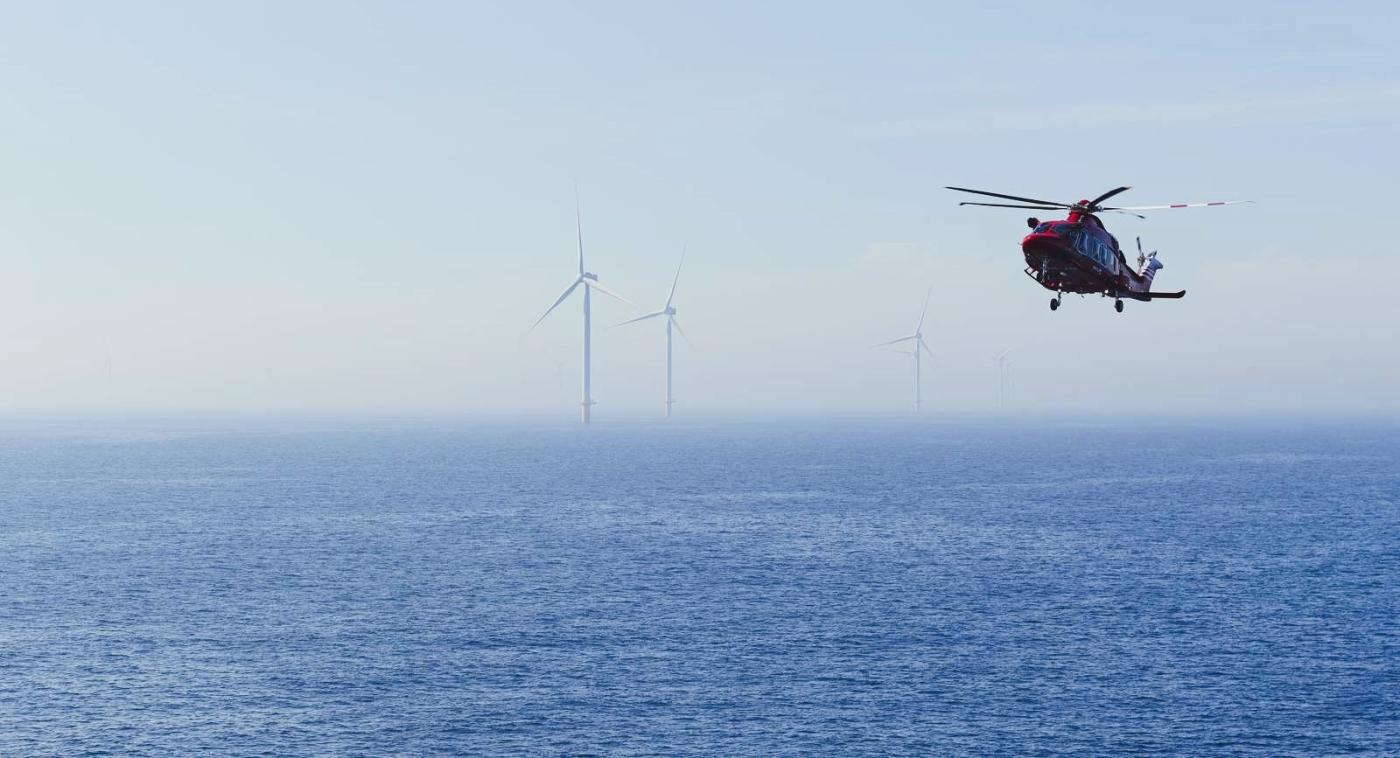
fot. Orsted
Once fully operational in 2027, Baltica 2 will provide renewable electricity to about 2.4 million households, significantly reducing CO₂ emissions while strengthening Poland’s long-term energy security.
Technology and scale
Baltica 2 will deploy 107 Siemens Gamesa SG 14-222 DD turbines, each rated at 14 MW. With a 222 m rotor diameter and 108 m blades, the turbines reach total tip heights of over 250 m – in some cases close to 300 m, making them among the tallest structures in the Baltic Sea.
Designed to IEC Class I/S standards, the turbines are capable of withstanding extreme gusts up to 70 m/s (252 km/h). Electricity generation, however, will automatically shut down when wind speeds exceed approximately 25–30 m/s.
The monopile foundations are being manufactured in Germany, while Poland is already playing a key role in the supply chain through the production of secondary steel structures in facilities in Żary and Gdańsk. These components will be stored in Świnoujście, further strengthening the importance of Polish ports. At the same time, an installation terminal is under construction in the Port of Gdańsk, and a service base is being developed in Ustka, which will support the farm for decades to come.
Construction timeline of Baltica 2
- 2025 – relocation of seabed boulders, HDD drilling for export cables, start of monopile production.
- 2026 – offshore installation of foundations, with all units in place by autumn; commencement of export cable laying.
- 2027 – transport and installation of turbines, first power in Q2, full commissioning in Q4.
Environmental context: Słupsk Bank, porpoises and seabirds
Baltica 2 lies adjacent to the Słupsk Bank (Ławica Słupska) – a Natura 2000 site, key wintering ground for sea ducks and diving birds. The sandy banks and stony reefs provide habitats for benthic communities, while the southern Baltic is also home to the harbour porpoise (with a critically endangered population of only about 500 individuals) and several seal species.
Mitigation measures include:
- continuous acoustic monitoring of porpoises,
- dedicated avian migration and wintering surveys,
- routing of export cables and foundations to avoid sensitive habitats,
- and noise mitigation during pile driving, with possible seasonal restrictions if needed.
Storm conditions and installation challenges
The southern Baltic, 20–40 km offshore, is exposed to strong storm winds in autumn and winter:
- Typical storm gusts: 15–25 m/s (54–90 km/h).
- Severe storms: 25–35 m/s (90–126 km/h).
- Extreme events: >30 m/s (108 km/h), occasionally recorded near Łeba and Ustka.
Offshore winds are generally stronger and more consistent than nearshore measurements, further challenging marine operations.
Operational thresholds are strict:
- jack-up vessels usually limit lifting operations at 16–18 m/s mean wind,
- turbine blade and tower installation is typically constrained to 8–12 m/s.
These limits make weather windows crucial. With Baltic storm seasons concentrated in late autumn and winter, installation schedules are largely planned around calmer summer months, with generous contingency periods built into the programme.
Strategic significance
Baltica 2 has a dual importance:
- Energy – adding about 5 TWh annually of renewable electricity to the Polish grid, significantly diversifying supply.
- Industry – anchoring Poland’s offshore supply chain, stimulating local shipyards, steelworks and ports, and creating hundreds of long-term jobs.
Baltica 2 exemplifies the new phase of offshore wind development in Central Europe. Towering turbines, complex marine logistics in storm-prone waters, and the need to balance industrial growth with environmental stewardship all make this a landmark case in the sector.
As Poland advances towards its first large-scale offshore generation, the commissioning of Baltica 2 in 2027 will not only transform the national energy landscape but also establish the Baltic Sea as a major hub in Europe’s offshore wind future.
Buy us a coffee, and we’ll invest in great maritime journalism! Support Gazeta Morska and help us sail forward – click here!
Kamil Kusier
redaktor naczelny
comments
Add the first comment
see also
Navantia and Fincantieri deepen cooperation on the european patrol corvette programme
Galeon Yachts and Meyer Shank Racing: merging luxury yachts with motorsport expertise
Unmanned systems and naval firepower modules. WB Group showcases integrated capabilities at Enforce Tac 2026
Swedish ports record lowest ship calls in 18 years. Implications for the maritime sector
February in Szczecin’s shiprepair sector. Ice, overhauls and North Sea expansion
Advanced ROV trials conducted at CTO to validate subsea technologies for offshore applications
University of Gdańsk and PGZ Naval Shipyard join forces for innovation and security
Stadt Naval to deliver electric propulsion system for Polish rescue vessel Ratownik
Gdańsk port’s Basen Górniczy to gain modern port infrastructure
First month of Jantar Unity operations. Polsca ferry paves the way for Batory program units
ADVERTISEMENT
ADVERTISEMENT