









Port of Gdańsk: a strategic pillar delivering billions to public finances and tens of thousands of jobs
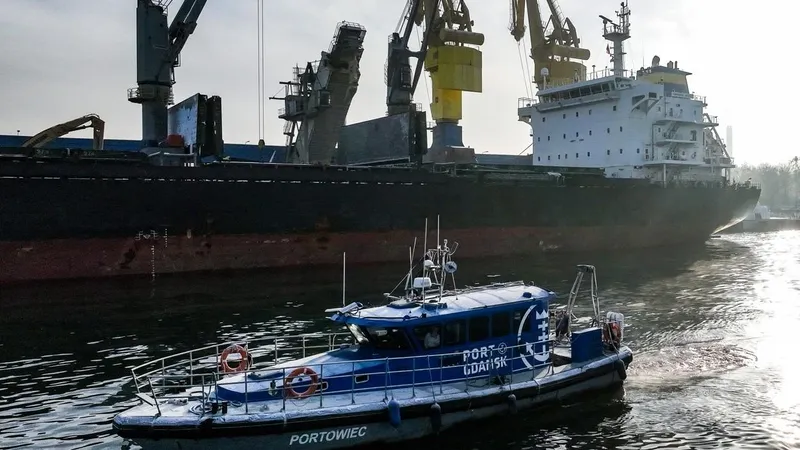
The Port of Gdańsk has firmly established itself as a cornerstone of Poland’s economy, generating substantial fiscal revenues while driving employment and broader economic activity. According to the latest report by PwC Polska, the port’s operations translate into average annual tax contributions exceeding PLN 40 billion.
In brief
The Port of Gdańsk generates average annual tax revenues exceeding PLN 40 billion, and in 2024 receipts reached PLN 44.6 billion, or 6.5 percent of state budget revenues, according to a report by PwC Polska. Activity conducted in the Port of Gdańsk and its surroundings brought about PLN 8.8 billion in receipts to the public finance sector in 2024. Around 16 thousand people work directly in port operations, and in total the port generated 83.7 thousand jobs in the national economy and 5.7 percent of employment in the Pomeranian Voivodeship. Income reaches nearly 70 thousand households and amounted to PLN 8.1 billion.
In 2024 alone, revenues linked to cargo handling reached PLN 44.6 billion, accounting for 6.5% of total state budget income. This highlights the port sector’s critical role in underpinning public finances. By comparison, this figure is equivalent to funding the construction of approximately 100,000 municipal housing units or covering more than 70% of the annual budget of Poland’s flagship family benefit program.
In addition, economic activity generated directly within the port and its surrounding ecosystem contributed a further PLN 8.8 billion to the public finance sector in 2024.
A powerful employment engine
The Port of Gdańsk is also a major driver of the labor market. Around 16,000 people are directly employed in core port and operational activities, with more than half residing in the city of Gdańsk. However, the port’s true employment impact extends far beyond its immediate boundaries.
Through strong multiplier effects, particularly in transport, logistics, and services, the port supported a total of 83,700 jobs across the national economy in 2024. Notably, a significant share of these positions is created outside the port itself, underscoring its nationwide economic reach. In the Pomorskie region, approximately 5.7% of total employment is linked to port-related activities.
The social impact is equally significant. Port-driven economic activity supports the livelihoods of over 209,000 people in Poland, with income streams reaching nearly 70,000 households. In 2024, total household income generated through port-related employment amounted to PLN 8.1 billion, providing a strong boost to consumption and local economic development.
Strong multiplier effects and strategic importance
The PwC Polska analysis assesses the port’s impact across four key dimensions: labor market, value added and GDP, public finances, and foreign trade. The study applies the Leontief input-output model to capture the full scale of economic influence, including direct, indirect, and induced effects.
Direct effects stem from companies operating within the port. Indirect effects arise through supply chains, while induced effects are generated by employee spending, further stimulating economic growth.
The findings clearly position the Port of Gdańsk as more than a logistics hub—it is a vital pillar of economic stability. Its operations reinforce public revenues, enhance household incomes, and support business development across multiple sectors.
Driving regional and national growth
The Port of Gdańsk continues to serve as a key engine of growth for both the Pomorskie region and Poland as a whole. Its influence extends well beyond maritime transport, playing a crucial role in strengthening the country’s position within global supply chains.
As the report confirms, investment in port infrastructure delivers strategic returns—supporting economic resilience, fostering regional development, and ensuring long-term competitiveness on the international stage.
Source: Gazeta Morska · Compiled by: Oskar Wojciechowski
Related articles
 Shipbuilding industry Poland christens ro-pax ferry Bursztyn Unity in Szczecin on Independence Day. Ystad service starts 18 November
 Energy and offshore Orlen Neptun deploys V-LiDAR buoys at Baltic West ahead of Poland's 2027 offshore wind auction
 Energy and offshore Equinor takes over Bałtyk 2 and 3 O&M base in Łeba. Port to serve 1.44 GW of offshore wind for 30 years
 Navy and defence Port Gdański Eksploatacja secures NATO NCAGE code. Gdańsk port company lines up for defence tenders
 Shipbuilding industry Ex-Enterprise towed to Mobile under $418.5m contract. Test case for Nimitz-class disposal begins
 Energy and offshore Energa renames Gdańsk gas plant company as foundations for 6,000-tonne turbine and boiler are laid
Comments (0)
The discussion is moderated by the editors: a comment appears after review. Your e-mail address is not published.
Nobody has commented on this article yet.