Port of Gdynia doubles fuel terminal capacity
The Port of Gdynia Authority has signed a contract with Budimex S.A. for the expansion of the liquid fuel handling terminal (SPPP). The project is one of the most important current investments in Poland’s maritime fuel infrastructure and will allow the port to handle tankers nearly three times larger than today, while doubling the terminal’s annual throughput.
business power engineering investments pomerania ports tricity news27 november 2025 | 22:33 | Source: Gazeta Morska | Prepared by: Kamil Kusier | Print
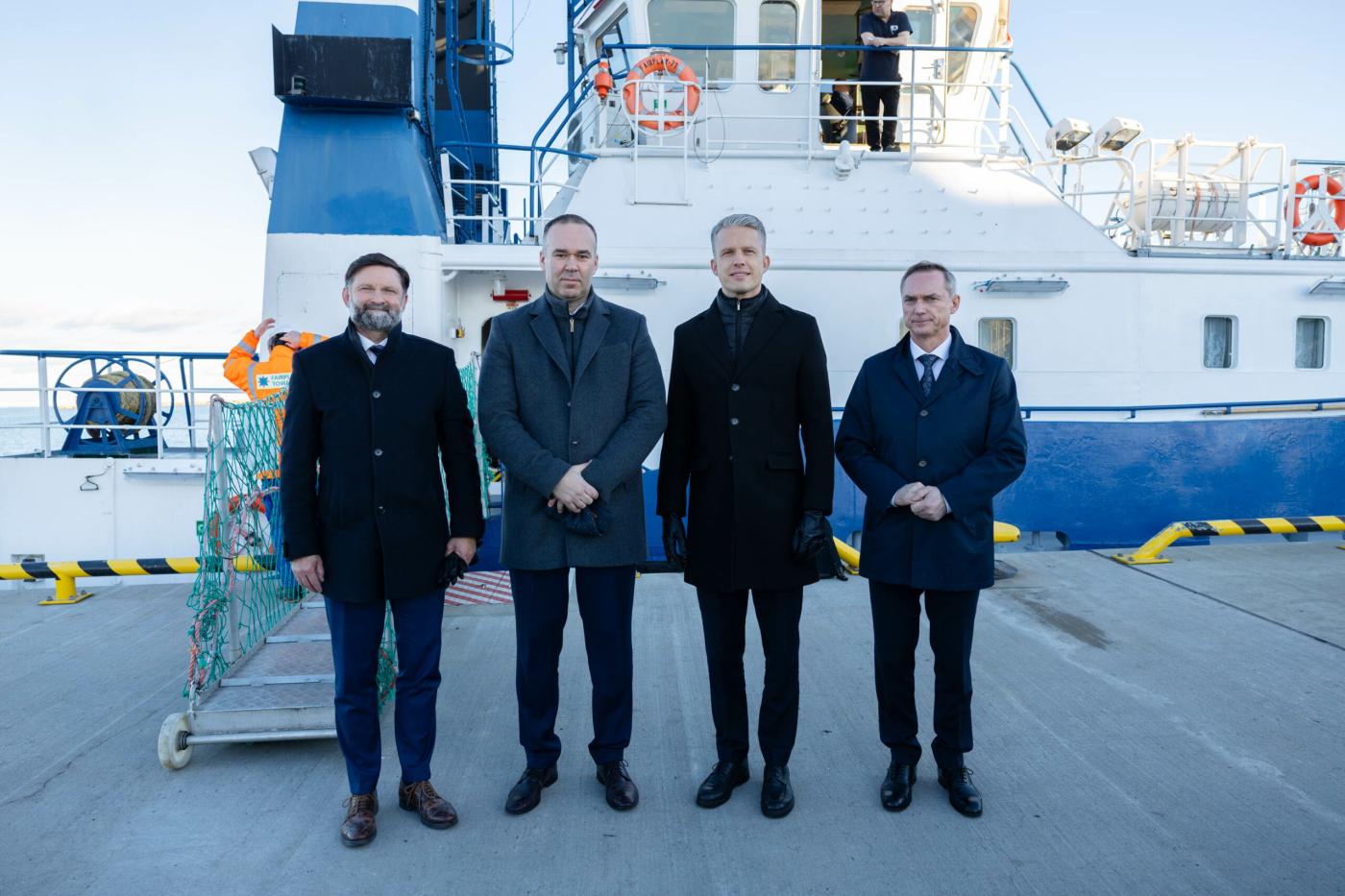
fot. Natalia Kuna / Port Gdynia
Budimex, selected through a tender procedure, will deliver the project under a design-and-build formula, covering the full scope of design documentation, permitting and marine construction works, through to commissioning. The environmental permit has already been secured by the port authority. According to Budimex board member Cezary Łysenko, the project requires advanced technical solutions and precise coordination, as all works will be carried out from the water while the existing terminal remains fully operational. Port president Piotr Gorzeński emphasized that cooperation with an experienced Polish contractor ensures both reliability and a tangible contribution to the national economy.
The investment, valued at PLN 174 million, includes a new loading platform, additional mooring and fendering dolphins, new fire-fighting monitors, a new pump station building and dredging to reach a technical depth of 17 meters. After completion, the modernized berth will be able to service LR2-class tankers of around 300 meters and 170,000 DWT. The terminal’s annual capacity will increase from 3.2 to 6 million tonnes, more than doubling existing throughput.
The project is closely coordinated with PERN’s expansion of the fuel depot in Dębogórze, creating a unified and more resilient national fuel logistics system. The upgraded SPPP will form a natural operational extension of Poland’s largest fuel base, which has recently increased its storage capacity and modernized its rail loading facilities.
The expansion of the fuel terminal is part of a broader modernization program at the Port of Gdynia, which also includes a new intermodal terminal, the development of shore power systems for vessels and an extensive energy-transition programme encompassing photovoltaics, fleet electrification and preparations for energy storage solutions. According to the port authority, these combined investments position Gdynia as a modern, efficient and future-ready hub for regional and international logistics.
Buy us a coffee, and we’ll invest in great maritime journalism! Support Gazeta Morska and help us sail forward – click here!
Kamil Kusier
redaktor naczelny
comments
Add the first comment
see also
Navantia and Fincantieri deepen cooperation on the european patrol corvette programme
Galeon Yachts and Meyer Shank Racing: merging luxury yachts with motorsport expertise
Unmanned systems and naval firepower modules. WB Group showcases integrated capabilities at Enforce Tac 2026
Swedish ports record lowest ship calls in 18 years. Implications for the maritime sector
February in Szczecin’s shiprepair sector. Ice, overhauls and North Sea expansion
Advanced ROV trials conducted at CTO to validate subsea technologies for offshore applications
University of Gdańsk and PGZ Naval Shipyard join forces for innovation and security
Stadt Naval to deliver electric propulsion system for Polish rescue vessel Ratownik
Gdańsk port’s Basen Górniczy to gain modern port infrastructure
First month of Jantar Unity operations. Polsca ferry paves the way for Batory program units
ADVERTISEMENT
ADVERTISEMENT