Poland-South Korea defense partnership gains maritime dimension. Orka submarine program back on the radar
A high-level South Korean delegation led by Kang Hoon-sik, Special Envoy of the President of the Republic of Korea for Strategic Economic Cooperation and Chief of the Presidential Office, held talks in Warsaw with Sławomir Cenckiewicz, Head of Poland’s National Security Bureau (BBN). In parallel, Polish Minister of Defence Władysław Kosiniak-Kamysz met with Korean representatives to discuss industrial cooperation, technology transfer and long-term logistics frameworks for defense equipment.
security worldwide politics defense industry news20 october 2025 | 21:31 | Source: Gazeta Morska | Prepared by: Kamil Kusier | Print
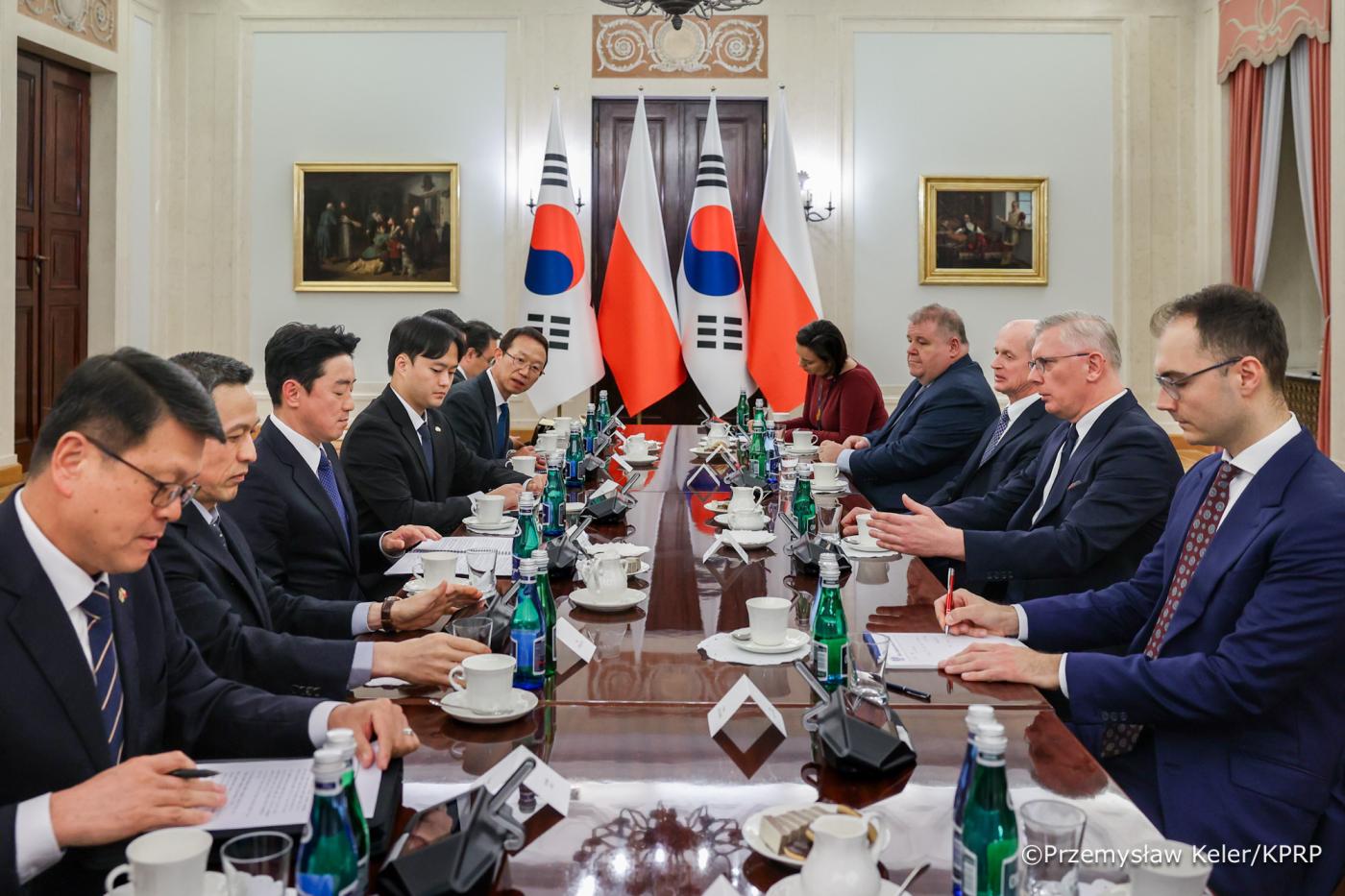
fot. Przemysław Keler / KPRP
Key discussion points included:
- Localization of production and maintenance of South Korean defense systems on Polish territory,
- Establishing a European support and logistics hub for Korean equipment operated by NATO countries,
- Deepening strategic cooperation beyond procurement contracts, towards a structured industrial partnership.
ORKA submarine program – Korean shipyards emerge as a potential strategic partner
In maritime defense circles, attention is increasingly turning to the possibility of South Korean shipbuilders entering the competition for Poland’s long-delayed ORKA submarine acquisition program. Shipyards such as Hanwha Ocean (formerly DSME), with operational experience from the KSS-II and KSS-III submarine classes, are positioning themselves as credible alternatives to traditional European suppliers from Germany and France.
Industry sources point to several potential advantages for Poland:
- Partial construction or outfitting of submarines in Polish shipyards under license,
- Technology transfer in AIP propulsion, combat systems and stealth hull designs,
- Integration of Polish defense companies into the Korean global supply chain, with export potential,
- Establishment of a Baltic support and maintenance base within Polish naval ports, serving both domestic and allied fleets.
Maritime logistics – Polish ports as strategic gateways for allied equipment
The ongoing deliveries of K2 main battle tanks, K9 howitzers and K239 Chunmoo rocket systems to Poland via maritime routes highlight the growing role of Gdynia and Gdańsk as military logistics nodes. The prospect of expanded cooperation suggests:
- Development of dedicated military handling terminals within civilian port infrastructure,
- Creation of dual-use service facilities capable of managing both land systems and future naval assets,
- Positioning Polish ports as primary Atlantic–Baltic transit points for NATO’s eastern flank, with Korean involvement in logistics planning and execution.
Industrial implications – towards a Baltic defense production and service hub
South Korea’s global leadership in naval construction and auxiliary fleet support vessels places it in a strong position to engage with Poland not only as a buyer but as a production and logistics partner. If linked effectively with ORKA and the broader strategic defense framework, this cooperation could give Polish shipyards and maritime infrastructure a defined role in NATO’s Indo-Pacific–Europe supply corridor.
see also
Buy us a coffee, and we’ll invest in great maritime journalism! Support Gazeta Morska and help us sail forward – click here!
Kamil Kusier
redaktor naczelny
comments
Add the first comment
see also
Strait of Hormuz at a strategic crossroads: sinking of IRIS Dena and implications for maritime transport
The submarine contract of the decade? Canada weighs South Korea against Germany
When two powers clash, Poland must be ready to act. Military security must be the priority
Commodore Przemysław Karaś appointed deputy commander of the Maritime Operations Centre - Naval Component Command
Radmor hosts delegation from the Republic of Turkey. Advancing maritime security cooperation
French Navy expands global operations from the Pacific to the Red Sea
"Let everyone know we will prevail". Poland’s armed forces set strategic course for 2026-2039
“Army 500” and strategic transformation: Poland sets the course for long-term deterrence and allied readiness
Medical evacuation from offshore vessel in the Baltic. Rescue 511 helicopter and m/s Huragan deployed
Karol Nawrocki: “The strength of the republic lies in its armed forces”. Security requires national unity
ADVERTISEMENT
ADVERTISEMENT