POLMARFOR. New NATO command for the Baltic Sea. Poland prepares to take over allied duty
Between 14 and 16 October, the Maritime Operations Centre – Naval Component Command (COM-DKM) in Gdynia hosted an international conference dedicated to the establishment of POLMARFOR – Poland’s future multinational maritime formation that will assume responsibility for NATO operations and exercises in the Baltic region.
security navy nato pomerania tricity news16 october 2025 | 14:43 | Source: Gazeta Morska | Prepared by: Kamil Kusier | Print
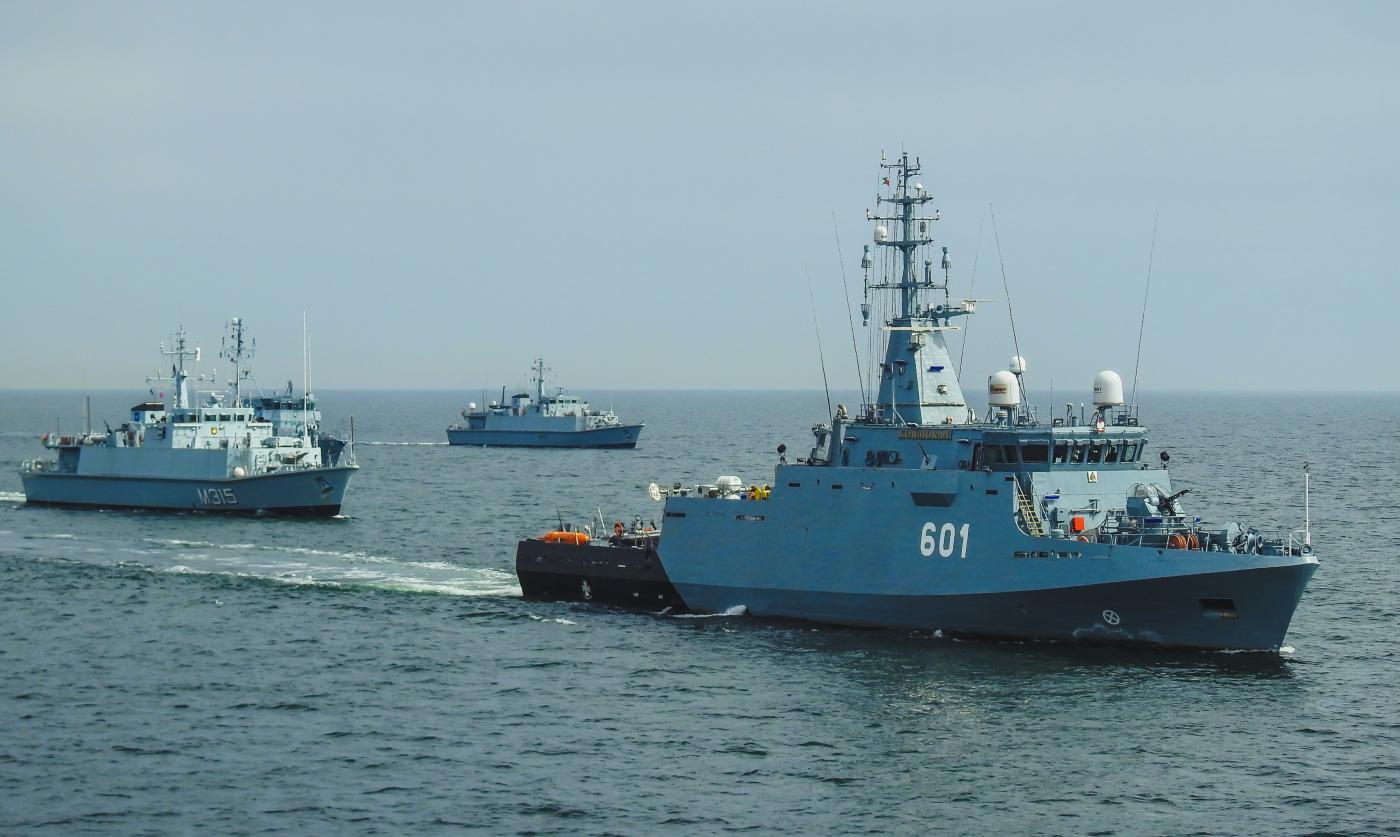
fot. Centrum Operacji Morskich ? Dowództwo Komponentu Morskiego
According to the current schedule, in 2028 POLMARFOR will take over a four-year rotational duty, becoming the Commander Task Force Baltic (CTF Baltic) – a regional Allied command responsible for planning and executing maritime operations and exercises across the Baltic Sea.
Preparing the command structure
The Gdynia conference focused on key issues surrounding the creation of the new command, including personnel contributions by participating nations, organizational structure, and location of command elements.
Participants included representatives of the current CTF Baltic in Rostock, as well as delegations from the navies of Estonia, Finland, Lithuania, Latvia, Germany, Romania, and Sweden. The Polish delegation was led by Lieutenant General Stanisław Czosnek, Deputy Chief of the General Staff of the Polish Armed Forces, Major General Wojciech Marchwica, Chief of Staff of the Operational Command of the Armed Forces, and Vice Admiral Krzysztof Jaworski, Commander of COM-DKM.
From Initiative to operational reality
The concept of rotational Allied command in the Baltic Sea was announced by Deputy Prime Minister and Minister of National Defence Władysław Kosiniak-Kamysz following a NATO Defence Ministers’ meeting in Brussels in June 2024. Shortly thereafter, on 1 October 2024, Polish naval personnel joined the newly established CTF Baltic in Rostock.
The command’s mission includes planning, coordination, and execution of Allied exercises and operations, as well as maintaining continuous maritime situational awareness. CTF Baltic operates under the authority of NATO’s Allied Maritime Command (MARCOM) in Northwood, United Kingdom.
The formation currently includes 160 personnel from 13 nations – Denmark, Estonia, Finland, France, Germany, Lithuania, Latvia, the Netherlands, Norway, Poland, Sweden, the United Kingdom, and Italy – with potential expansion to 240 officers and sailors if required.
Poland contributes staff from COM-DKM and the General Command of the Armed Forces.
- We play an active role in Operation Baltic Sentry, commanding NATO maritime task groups and coordinating ships assigned by member states. Our mission is to monitor the situation in the Baltic Sea and to focus on potential threats to critical infrastructure, explained Rear Admiral Piotr Nieć, Deputy Commander of CTF Baltic, in an interview with Polska Zbrojna.
The Baltic Sea – strategic artery of Northern Europe
The establishment of POLMARFOR marks a significant step towards strengthening regional maritime security and Allied presence in Northern Europe. The Baltic Sea is one of the most economically and strategically important waterways in the region. Every day, nearly 3,000 vessels navigate these waters, supporting international trade, energy transport, and passenger traffic.
In Polish ports alone, annual cargo turnover reaches approximately 140 million tons, including strategic energy resources such as crude oil and liquefied natural gas (LNG). Revenues from customs duties, taxes, and port operations account for up to 10 percent of the national budget, highlighting the growing role of maritime trade in Poland’s economy.
The Baltic’s critical infrastructure – including the LNG terminal, oil terminal, gas pipelines, power and telecommunications cables, and planned offshore wind farms – constitutes the core of Poland’s energy and economic security.
As Vice Admiral Jaworski noted during the conference,
- The Baltic Sea has become a key operational and strategic area for NATO and the European Union alike. The integration of national maritime capabilities under POLMARFOR will ensure that our region remains secure, resilient, and ready for the challenges ahead.
see also
We are on Google News! Join us and follow Gazeta Morska. Get daily updates straight from the sea. Follow us at gazetamorska.pl!
Kamil Kusier
redaktor naczelny
comments
Add the first comment
see also
"Let everyone know we will prevail". Poland’s armed forces set strategic course for 2026-2039
“Army 500” and strategic transformation: Poland sets the course for long-term deterrence and allied readiness
Medical evacuation from offshore vessel in the Baltic. Rescue 511 helicopter and m/s Huragan deployed
Karol Nawrocki: “The strength of the republic lies in its armed forces”. Security requires national unity
Human trafficking, money laundering, millions frozen. Successful operation by border guard and tax administration
Evening SAR operation in the Baltic. Two kitesurfers stranded offshore
Medical evacuation from sailing ship in Gdynia port. 17-year-old safely transported
Medical evacuation from Danish-flagged vessel Skoven off Łeba. Joint SAR operation in the Baltic Sea
Almost 2.5 million travellers cleared in 2025 by the Maritime Border Guard
Frontex officers train with Polish Maritime Border Guard
ADVERTISEMENT
ADVERTISEMENT