Political talks on the waters of the Gdańsk Bay. Meeting of ministers at the Maritime Border Guard Unit
On board the SG-301 General Józef Haller vessel, a meeting took place at the Maritime Border Guard Unit between the Minister of the Interior and Administration, Tomasz Siemoniak, and the European Commissioner for Home Affairs and Migration, Magnus Brunner. Also present were the Minister of Foreign Affairs, Radosław Sikorski, Minister of Justice, Adam Bodnar, Head of the Political Cabinet of the Prime Minister, Paweł Graś, and the Commander-in-Chief of the Border Guard, Major General Robert Bagan.
politics border guard tricity news07 february 2025 | 20:02 | Source: MOSG / Gazeta Morska | Prepared by: Kamil Kusier | Print
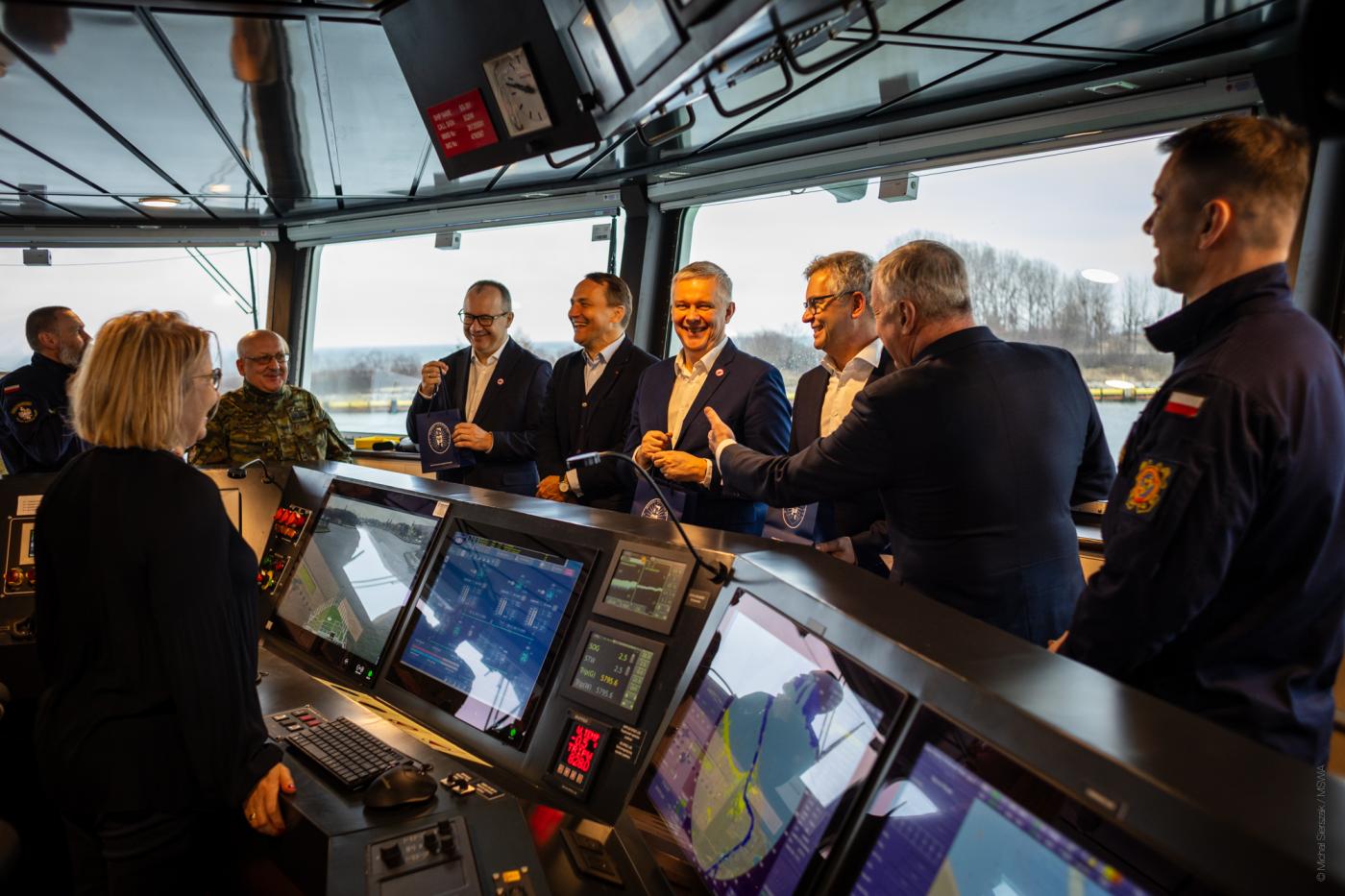
fot. MOSG
The visit began with a report presented to the Minister of the Interior and Administration, followed by the delegation's introduction aboard the SG-301 General Józef Haller by Commander Wojciech Heninborch, Deputy Commander of the Maritime Border Guard Unit.
According to Tadeusz Gruchalla, spokesperson for the Maritime Border Guard Unit, the main topics of discussion were border security and critical infrastructure protection. During a patrol cruise on the Gdańsk Bay, the guests were introduced to the specifics of the Border Guard's operations in securing the maritime state border, which is also an external border of the European Union, as well as Polish maritime areas, with a particular focus on support in protecting critical infrastructure. Additionally, they were presented with the equipment and capabilities of the Border Guard's latest patrol vessel, SG-301 General Józef Haller.
The patrol cruise was conducted with the support of the patrol and intervention vessel SG-215 and officers from the Operations Security Division aboard a high-speed RIB boat.
The offshore patrol vessel (OPV) SG-301 General Józef Haller measures nearly 70 meters in length, 11.5 meters in width, and has a draft of approximately 4.5 meters. It can operate without entering a port for at least 12 days with a crew of 35 people, including 20 permanent crew members. The vessel is equipped with two containers of rescue equipment and two fast boats mounted on the sides for intervention operations. The stern section is designed to accommodate up to 250 shipwreck survivors for up to 24 hours. For medical evacuations, the foredeck features a landing platform for helicopter operations, which can also serve as a drone operating platform.
The primary tasks of the new patrol vessel include detecting illegal attempts to cross the EU's maritime borders, preventing unauthorized migration, and combating the transportation of hazardous waste and harmful chemical substances across maritime borders. The vessel can also participate in rescue and humanitarian operations, Gruchalla stated.
The purchase of the vessel was co-financed by the European Union through the Internal Security Fund.
Kamil Kusier
redaktor naczelny
gallery


comments
Add the first comment
see also
“Army 500” and strategic transformation: Poland sets the course for long-term deterrence and allied readiness
Karol Nawrocki: “The strength of the republic lies in its armed forces”. Security requires national unity
100 years of Gdynia: PGZ Naval Shipyard at the heart of Poland’s Baltic security strategy
Gdynia at 100: ceremonial city council session highlights Poland’s maritime strategy
Poland’s wedding to the sea in Puck: President Karol Nawrocki commemorates 106th anniversary
106 years ago Poland “turned to the sea”. Split celebrations, one goal: a strong maritime Poland
The Maritime Office in Słupsk returns: ministerial plenipotentiary to oversee reestablishment
Poland as Europe’s food hub. Minister Stefan Krajewski on export, security, and global competition
The Polish flag: twenty years of drift and a belated change of course. More than just the white-and-red
Poland’s security in focus. President meets with ministers and heads of special services
ADVERTISEMENT
ADVERTISEMENT