









Polish ports run 24/7 but veterinary checks stop at 3 pm. Fish processors welcome first extra staff
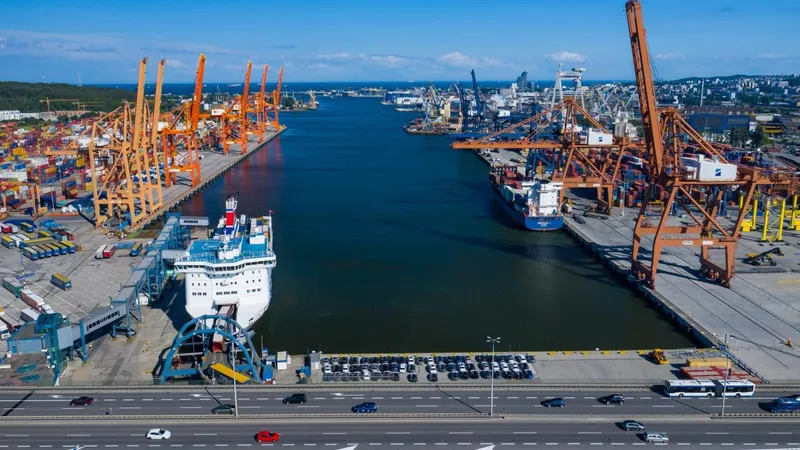
Container terminals in Gdańsk, Gdynia and Szczecin unload boxes around the clock, seven days a week, while border veterinary inspection checks them on working days until 3 pm. The government has taken a first step to change this: in August it funded seven new posts in the border veterinary inspectorates. Twelve-hour inspection shifts in Gdańsk could start at the turn of January and February 2027, although the date has not yet been confirmed. The Polish Fish Processors Association says the direction is right, but more staff are needed to close the gap.
In brief
Border veterinary inspection in Gdańsk, Gdynia and Szczecin checks containers on working days only until 15, although the terminals operate around the clock. The Council of Ministers funded seven new posts on 5 August 2026: three in Gdańsk, three in Gdynia and one in Szczecin, against eighteen requested. Twelve-hour inspection work in Gdańsk may start at the turn of January and February 2027, but the date is not confirmed. Maciej Kisiel of the Polish Association of Fish Processors says such a change requires at least six additional people per border crossing.
Ports work non-stop, the border keeps office hours
A container ship can call at a Polish port at any time, 365 days a year, and terminal crews unload it at night, at weekends and on public holidays. A container of frozen raw material bound for a processing plant can only move on after border checks, however, and these take place during office hours. Release for free circulation requires clearance from four control services.
- The port works continuously, the border keeps office hours. A container unloaded on Friday afternoon waits for inspection at least until Monday, and the whole procedure can take as long as three weeks. The importer pays for every one of those days. This is not a matter of bad will. Border veterinarians are hard-working specialists, there are simply too few of them to staff longer shifts - said Maciej Kisiel, Management Board member of the Polish Fish Processors Association.
Almost ten times more consignments than in 2008
The association first described the problem in October 2014 in a letter to the then Head of the Customs Service: container terminals were operating 24/7, while control services worked on weekdays from 7 am to 3 pm. In November 2025 the industry again warned that the problem was growing.
What has changed above all is scale. In Gdańsk the number of consignments handled by border veterinarians has risen from 600 in 2008 to more than 5,700 a year, driven by the rapid growth of Polish container ports. Staffing has not kept pace and working hours have in practice stayed the same. The call for longer hours now concerns mainly the veterinary inspection.
Seven posts out of eighteen
On 5 August 2026 Poland's Council of Ministers adopted a resolution funding seven new posts in the border veterinary inspectorates: three in Gdańsk, three in Gdynia and one in Szczecin. The industry had asked for eighteen, the same number declared in May 2026 by a representative of the Ministry of Agriculture and Rural Development at the Sejm's Committee on Maritime Economy and Inland Navigation.
- We see this decision as the first, but not the last, step in a matter that stayed at the correspondence stage for more than a decade. Running twelve-hour shifts requires at least six additional people per border crossing. Three people each in Gdańsk and Gdynia and one in Szczecin cannot staff a twelve-hour shift all week. That is why we want the posts filled without delay and further decisions taken faster than the first one - Maciej Kisiel stressed.
Hamburg clears automatically, Polish ports can catch up
Control procedures in Polish ports take from a few days to three weeks, compared with two to five days in Western European ports. Inspection hours are one part of that difference. In Hamburg, once the terminal reports discharge, the import platform automatically confirms the customs declaration filed before the goods arrived, with no human involvement. In Poland confirmation requires an official, so a container unloaded on Saturday waits until Monday.
Every day a reefer container sits idle adds cost, which on thin processing margins ends up in the product price. Unpredictable release times also shape port choice. About a quarter of the sector's consignments now reach Poland via Western European ports, and the association estimates the state budget loses more than PLN 100 million a year as a result. Reversing the trend would mean more cargo and revenue for Gdańsk, Gdynia and Szczecin.
- We are not calling for fewer inspections or lower food safety standards. We are calling for the border to work at the rhythm of the port. Without more staff no procedural improvement will work fully, and every season without change means more containers that importers route to Hamburg or Rotterdam - Maciej Kisiel concluded.
Source: Gazeta Morska · Compiled by: Kamil Kusier
Related articles
 Energy and offshore Equinor takes over Bałtyk 2 and 3 O&M base in Łeba. Port to serve 1.44 GW of offshore wind for 30 years
 Navy and defence Port Gdański Eksploatacja secures NATO NCAGE code. Gdańsk port company lines up for defence tenders
 Shipbuilding industry Ex-Enterprise towed to Mobile under $418.5m contract. Test case for Nimitz-class disposal begins
 Energy and offshore Energa renames Gdańsk gas plant company as foundations for 6,000-tonne turbine and boiler are laid
 Equipment and technology WB Group takes Polish drones from Tokyo to SOFEX in Jordan in a single week
 Ports and logistics PGE books Gdańsk’s T5 terminal for the long haul: Baltica 2 first, then more offshore wind farms
Comments (0)
The discussion is moderated by the editors: a comment appears after review. Your e-mail address is not published.
Nobody has commented on this article yet.