









PERN expands fuel logistics backbone as maritime capacity grows
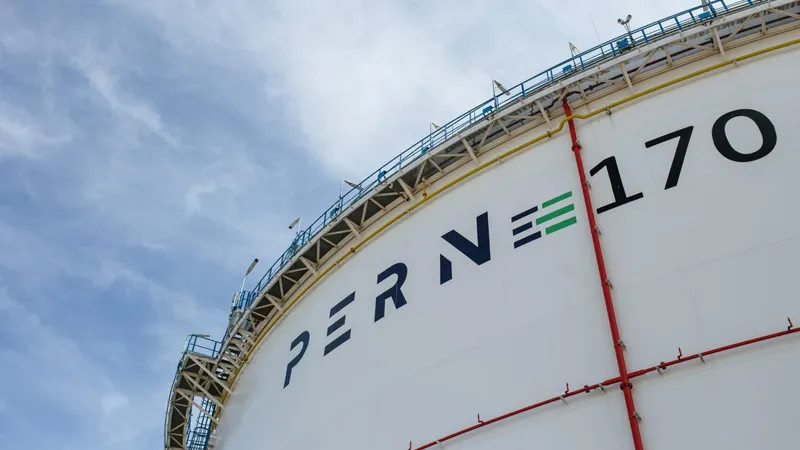
PERN has signed a contract with Aldesa Construcciones Polska Sp. z o.o. for the construction of a new diesel storage tank at Fuel Depot No. 1 in Koluszki, central Poland. The project, valued at nearly PLN 40 million, marks another step in strengthening the country’s fuel logistics system-closely linked to maritime supply chains via Baltic ports.
In brief
PERN signed a contract on 17 March 2026 with Aldesa Construcciones Polska sp. z o.o. for the construction of a diesel oil tank with a capacity of 33 thousand cubic metres at Fuel Depot No. 1 in Koluszki for nearly PLN 40 million. The capacity of the depot will increase from 439 thousand to 472 thousand cubic metres. A sixth handling berth for VLCC class tankers is being built at Naftoport, increasing the terminal's throughput by 9 million tonnes per year, or around 20 percent. PERN plans PLN 416 million for investments and PLN 126 million for repairs in 2026.
Expanding inland storage capacity
The investment includes a 33,000 m³ diesel tank along with supporting infrastructure. Once completed, total storage capacity at the Koluszki depot will increase from 439,000 m³ to 472,000 m³, enhancing operational flexibility and inventory management across PERN’s network.
– The depot is currently operating at full capacity. The new tank will allow us to serve more customers and better leverage the site’s strategic location within Poland’s fuel logistics chain – said Bartłomiej Ziółkowski, Head of the Koluszki Division.
Part of a broader investment programme
The Koluszki project is part of PERN’s long-term infrastructure expansion strategy. Later in 2026, the company plans to launch construction of a 24,000 m³ gasoline tank at the same site. Preparations are also underway for a 33,000 m³ diesel tank in Kawice, southwestern Poland.
– The signed contract represents another stage of our investment programme focused on the systematic expansion of storage and transport infrastructure. These projects enhance supply security and strengthen the resilience of the national fuel system. Increased storage capacity allows us to absorb demand fluctuations, ensure continuity of supply and improve the system’s resistance to external disruptions – said Daniel Świętochowski, President of PERN.
Currently, seven tanks with a combined capacity of nearly 250,000 m³ are in the design phase. In 2026, PERN plans to allocate PLN 416 million to investment and modernization projects, and an additional PLN 126 million to infrastructure maintenance.
– Seven tanks with a total capacity of nearly 250,000 m³ are currently in the design phase across various depots. In 2026 alone, PERN plans to allocate PLN 416 million to investment and modernization projects, along with PLN 126 million for maintenance – added Mateusz Stańczyk, Director of the Technical Division.
Rail upgrades to support inland distribution
Parallel to storage expansion, PERN is enhancing rail logistics. At Fuel Depot No. 2 in Nowa Wieś Wielka, a new rail unloading terminal is in the commissioning phase. The facility features 21 double-sided unloading stations, enabling simultaneous handling of up to 30 rail tank cars, with connections for diesel, gasoline and heating oil.
Maritime segment gains strategic importance
PERN’s inland investments are closely aligned with ongoing expansion in the maritime segment, which remains critical for Poland’s crude and fuel supply security.
At Naftoport in Gdańsk, a sixth crude oil handling berth is under construction. The new infrastructure will accommodate VLCC-class tankers over 300 metres in length and increase the terminal’s throughput by approximately 9 million tonnes per year—around 20%.
At the same time, the Fuel Depot No. 21 in Dębogórze, where three new tanks with a total capacity of 150,000 m³ were commissioned in October 2025, has surpassed 500,000 m³, becoming the largest fuel storage facility in Poland.
Further expansion is also underway at the Port of Gdynia, where PERN is working with the Port Authority to upgrade liquid fuel handling infrastructure. The project will enable the port to accommodate significantly larger tankers than those currently handled in the Baltic Sea.
Strengthening a resilient fuel logistics system
PERN currently operates storage capacities exceeding 4.2 million m³ for crude oil and 2.8 million m³ for fuels. The continued expansion of both inland and maritime infrastructure underlines the company’s strategic role in ensuring supply security and building a more resilient, flexible fuel logistics system for Poland and the wider region.
Source: Gazeta Morska · Compiled by: Kamil Kusier
Related articles
 Energy and offshore Equinor takes over Bałtyk 2 and 3 O&M base in Łeba. Port to serve 1.44 GW of offshore wind for 30 years
 Navy and defence Port Gdański Eksploatacja secures NATO NCAGE code. Gdańsk port company lines up for defence tenders
 Shipbuilding industry Ex-Enterprise towed to Mobile under $418.5m contract. Test case for Nimitz-class disposal begins
 Energy and offshore Energa renames Gdańsk gas plant company as foundations for 6,000-tonne turbine and boiler are laid
 Equipment and technology WB Group takes Polish drones from Tokyo to SOFEX in Jordan in a single week
 Ports and logistics PGE books Gdańsk’s T5 terminal for the long haul: Baltica 2 first, then more offshore wind farms
Comments (0)
The discussion is moderated by the editors: a comment appears after review. Your e-mail address is not published.
Nobody has commented on this article yet.