Hydrogen in focus: PCHET 2025 in Gdynia advances maritime & energy dialogue
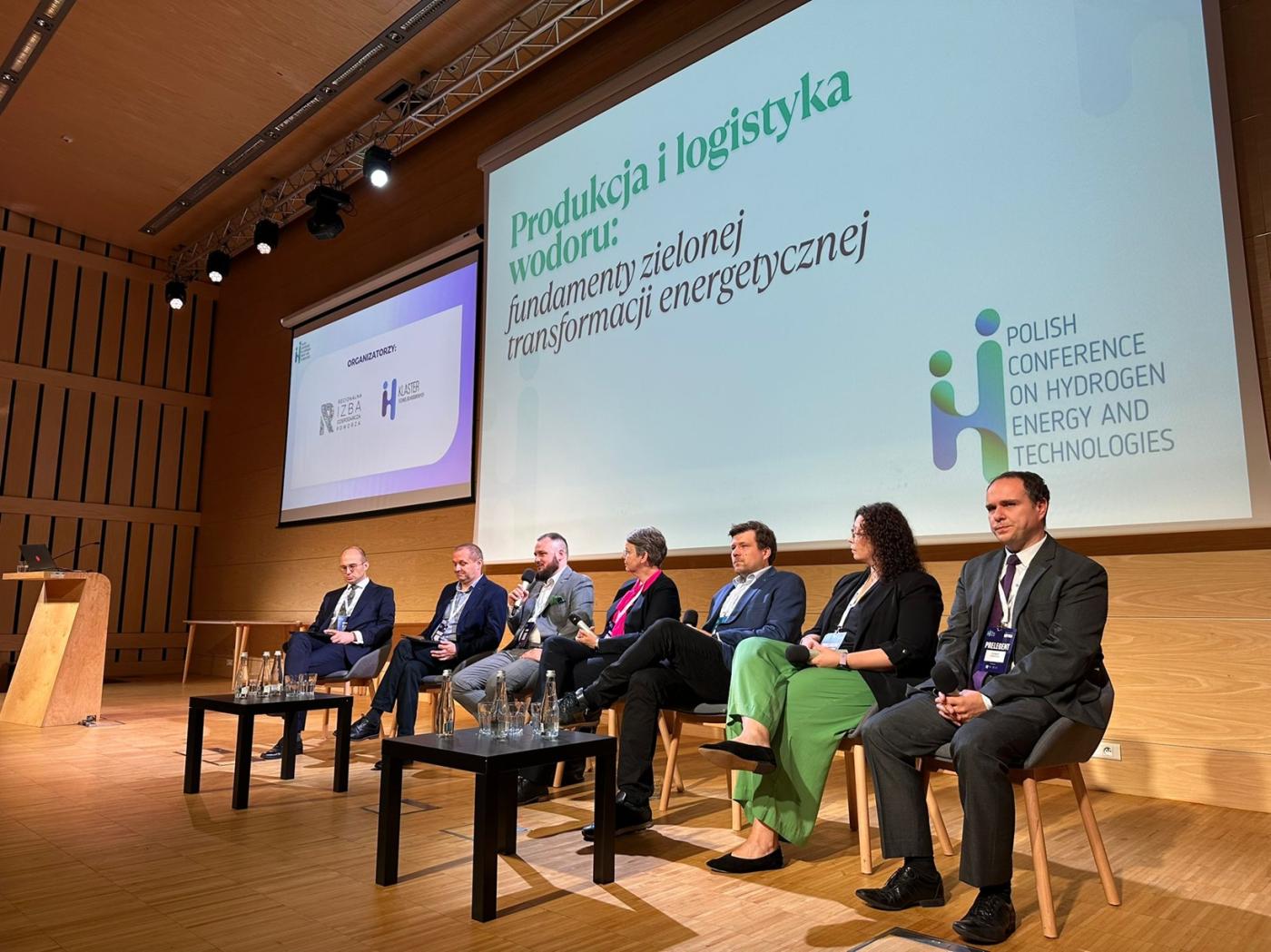
Under the banner “Hydrogen Matters”, the 8th edition of the Polish Conference on Hydrogen Energy and Technology (PCHET 2025) was held on 15–16 October 2025 at the Pomorski Park Naukowo-Technologiczny in Gdynia, cementing its status as Poland’s leading forum for the hydrogen economy, energy transition and green-tech innovation.
our patronage business power engineering investments pomerania news31 october 2025 | 00:49 | Source: Gazeta Morska | Prepared by: Kamil Kusier | Print
fot. Regionalna Izba Gospodarcza Pomorza
Organised by the Regional Chamber of Commerce of Pomerania (RIGP), coordinator of the Hydrogen Technologies Cluster, the event brought together over 250 participants, 50 speakers, 6 exhibitors and 48 partner institutions representing business, science and local government.
From vision to real-world hydrogen deployment
Across 16 thematic sessions covering industrial decarbonisation, hydrogen logistics, nuclear and renewables integration, and skills for the low-carbon economy, PCHET 2025 demonstrated that hydrogen is rapidly moving from concept to implementation.
Opening the event, Damian Mucha, President of RIGP, emphasised that “hydrogen ceases to be a vision of the future – it becomes a real element of Poland’s energy transformation.”
Infrastructure and european integration
The conference opened with a keynote on the “Hydrogen Map of Poland” by Paweł Sęk of GAZ-SYSTEM S.A., outlining national hydrogen-transmission corridors and cross-border links to the European H₂ network. Experts highlighted the importance of coherent infrastructure planning and integration of renewables, nuclear energy and hydrogen technologies as the foundation of Poland’s energy security.
Industry–science–government partnerships
Sessions dedicated to green-hydrogen production and logistics drew significant attention. Representatives from research institutes, technical universities and industrial firms — including ORLEN S.A. — discussed process optimisation, installation safety and the role of science–industry collaboration in developing solid-oxide electrolysis technologies.
A highlight was Marianna Małkowska’s presentation from ORLEN S.A. on flagship projects such as the Amber Hydrogen Valley and HySPARK, supporting hydrogen use in aviation and regional mobility.
Regional energy ecosystems also featured prominently, with municipalities and enterprises such as Wodociągi Słupsk, Port Czystej Energii and the National Chamber of Energy Clusters underlining that success depends on regional integration, flexible cooperation models and bold investment in innovation.
Transport, ports and thermal networks
Hydrogen’s role in land and rail transport was explored in depth. Jakub Lubiński of ORLEN S.A. outlined ongoing investments in hydrogen-fuel production and distribution infrastructure, emphasising collaboration with local governments and development of domestic engineering capabilities. Industry leaders agreed that hydrogen complements, rather than competes with, electrification, supporting the decarbonisation of heavy and rail transport.
In the panel “Heat of the Future”, representatives of OPEC Gdynia, SES Hydrogen and BPR ASE Group discussed the transformation of district-heating systems into intelligent, automated networks integrating heat pumps and hydrogen installations.
The “System Moc 2030+” debate examined the coexistence of nuclear, wind and hydrogen technologies and the socio-economic impact of Poland’s nuclear-energy programme, culminating in an interactive workshop led by the Łukasiewicz Research Network – ITECH.
Skills, education and the maritime dimension
The session “Competences for the Green Economy” addressed the need for workforce development in the hydrogen sector. Ryszard Książek of ORLEN S.A. stressed the importance of practical engineering skills and presented the ORLEN Hydrogen Academy, bridging business and academia through training and certification.
Maritime issues took centre stage during “Decarbonisation of Shipping and Ports – The Role of Hydrogen and its Derivatives”, featuring DNV, PRS, Port of Gdańsk and ENMARO. The discussion covered port infrastructure adaptation for alternative fuels, safety standards and supply chains for methanol and ammonia. Hydrogen and its derivatives were recognised as key enablers of maritime decarbonisation, provided that regulatory stability and investment frameworks follow suit.
Local ecosystem leadership and practical insights
In a technical case study, Dr. Piotr Patrosz of Rockfin presented “Facts and Myths about Alkaline Electrolysers”, sharing practical experience from industrial implementation and underscoring the value of domestic engineering expertise in building Poland’s H₂ sector.
PCHET 2025 was supported by strategic partners – ORLEN, Rockfin and GAZ-SYSTEM, as well as BPR ASE Group, Honeywell, ARP S.A., Swagelok and numerous academic and municipal institutions. Honorary patrons included the Ministry of Energy, Ministry of Climate and Environment, National Fund for Environmental Protection and Water Management, and regional authorities of Pomerania.
A Pomeranian Hydrogen Hub
PCHET 2025 confirmed that Pomerania is emerging as a national leader in hydrogen-economy development. More than a conference, it has evolved into a platform for dialogue, partnerships and tangible project implementation.
For the maritime and port sector, the message is clear: hydrogen is no longer a concept — it is becoming a strategic component of future energy, transport and logistics systems shaping the Baltic region’s economy.
Gazeta Morska and Daily Mare served as the event’s media partners.
Buy us a coffee, and we’ll invest in great maritime journalism! Support Gazeta Morska and help us sail forward – click here!
Kamil Kusier
redaktor naczelny
gallery


comments
Add the first comment
see also
Navantia and Fincantieri deepen cooperation on the european patrol corvette programme
Galeon Yachts and Meyer Shank Racing: merging luxury yachts with motorsport expertise
Unmanned systems and naval firepower modules. WB Group showcases integrated capabilities at Enforce Tac 2026
Swedish ports record lowest ship calls in 18 years. Implications for the maritime sector
February in Szczecin’s shiprepair sector. Ice, overhauls and North Sea expansion
Advanced ROV trials conducted at CTO to validate subsea technologies for offshore applications
University of Gdańsk and PGZ Naval Shipyard join forces for innovation and security
Stadt Naval to deliver electric propulsion system for Polish rescue vessel Ratownik
Gdańsk port’s Basen Górniczy to gain modern port infrastructure
First month of Jantar Unity operations. Polsca ferry paves the way for Batory program units
ADVERTISEMENT
ADVERTISEMENT