









Pakistan commissions first Hangor-class submarine. Advancing undersea capabilities
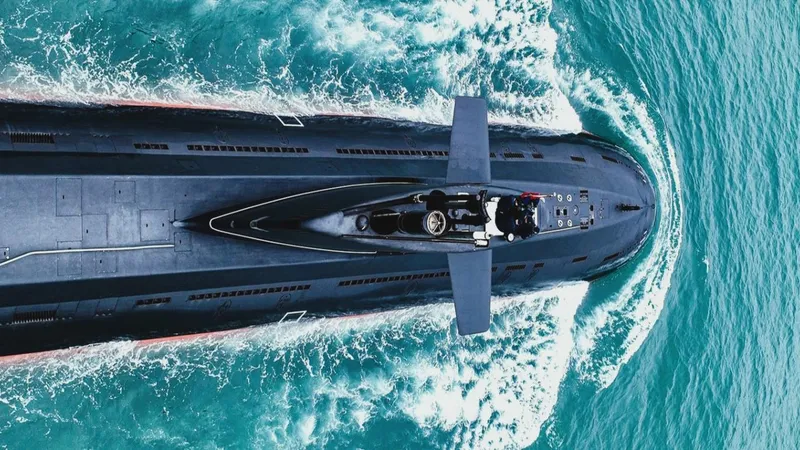
The Pakistan Navy has commissioned its first next-generation Hangor-class submarine, PNS/M Hangor, during a ceremony in Sanya, China. The milestone marks a significant step in Islamabad’s naval modernisation and underscores deepening defence cooperation between the two countries.
In brief
The Pakistan Navy commissioned the first Hangor-class submarine, PNS/M Hangor, during a ceremony in the Chinese port of Sanya. The Hangor programme provides for acquiring a total of eight submarines, built partly in China and partly at a shipyard in Karachi, and is based on the Chinese Type 039B design with AIP air-independent propulsion. The Pakistan Navy spokesman, Rear Admiral (lower half) Ahmed Hussain, indicated that the vessels are to deter threats and protect sea lines of communication in the Arabian Sea and the Indian Ocean. The name refers to the submarine that sank an enemy vessel in 1971.
The induction represents a tangible enhancement of Pakistan’s undersea warfare capabilities amid evolving security dynamics across the Arabian Sea and the wider Indian Ocean.
According to Rear Admiral Ahmed Hussain, Director General Public Relations (Navy), the programme is intended to strengthen deterrence and safeguard critical maritime interests.
- Disruptions at key maritime choke points are increasingly affecting global trade and energy security. Maintaining a stable, rules-based maritime order requires technologically advanced naval forces, Ahmed Hussain stated.
Advanced conventional submarine platform
The Hangor-class is based on China’s Type 039B (Yuan-class) design, widely regarded as one of the most capable conventional submarine platforms available for export. A defining feature is its air-independent propulsion (AIP) system, which enables extended submerged operations without the need to surface for battery recharging.
This significantly enhances stealth, endurance and operational flexibility, allowing for prolonged deployments in strategically sensitive waters.
- Equipped with advanced weapons, modern sensors and AIP technology, Hangor-class submarines will play a key role in maintaining maritime stability in the region, the spokesperson noted.
While detailed specifications remain limited, the class is expected to field heavyweight torpedoes and anti-ship missiles, reinforcing its role as a credible sea-denial asset.
Strategic fleet expansion
The Hangor programme envisages a total of eight submarines, with construction split between Chinese shipyards and domestic facilities in Karachi. This approach supports both accelerated delivery and the development of indigenous shipbuilding capabilities.
As one of the largest defence procurement programmes in Pakistan’s history, it reflects a long-term commitment to strengthening maritime security and operational autonomy.
- These platforms will be instrumental in deterring aggression and ensuring the security of vital sea lines of communication across the Arabian Sea and the broader Indian Ocean region, Ahmed Hussain added.
Sea lines of communication (SLOCs) in this region remain critical to global trade and the transport of energy resources between Asia, the Middle East and Europe.
Regional security context
The commissioning comes amid intensifying naval competition in the Indian Ocean. Pakistan’s submarine modernisation is widely seen as part of a broader effort to maintain strategic balance with India, which is also expanding its undersea capabilities.
At the same time, the programme highlights the growing strategic alignment between Pakistan and China, extending beyond procurement to include technology transfer and industrial cooperation.
Eight Hangor-class submarines for Pakistan
The commissioning of the lead unit marks the beginning of a broader capability development cycle. Under the current programme, Pakistan is set to acquire a total of eight Hangor-class submarines, significantly expanding its undersea fleet over the coming years.
As additional units enter service, the Pakistan Navy will increase its operational reach and persistence beneath the surface, reinforcing its position in the evolving maritime security environment of the Indian Ocean.
From a global perspective, continued investment in undersea capabilities across the region will remain a key factor shaping maritime stability, trade security and strategic competition in the decades ahead.
Source: Gazeta Morska · Compiled by: Kamil Kusier
Related articles
 Energy and offshore Equinor takes over Bałtyk 2 and 3 O&M base in Łeba. Port to serve 1.44 GW of offshore wind for 30 years
 Navy and defence Port Gdański Eksploatacja secures NATO NCAGE code. Gdańsk port company lines up for defence tenders
 Shipbuilding industry Ex-Enterprise towed to Mobile under $418.5m contract. Test case for Nimitz-class disposal begins
 Energy and offshore Energa renames Gdańsk gas plant company as foundations for 6,000-tonne turbine and boiler are laid
 Equipment and technology WB Group takes Polish drones from Tokyo to SOFEX in Jordan in a single week
 Ports and logistics PGE books Gdańsk’s T5 terminal for the long haul: Baltica 2 first, then more offshore wind farms
Comments (0)
The discussion is moderated by the editors: a comment appears after review. Your e-mail address is not published.
Nobody has commented on this article yet.