









ORLEN starts production from Eirin field on the Norwegian Continental Shelf
ORLEN Upstream Norway, in partnership with Equinor, has commenced production from the new Eirin gas field located in the North Sea. The extracted natural gas is already being delivered to Poland, strengthening ORLEN’s supply security position in Central Europe.
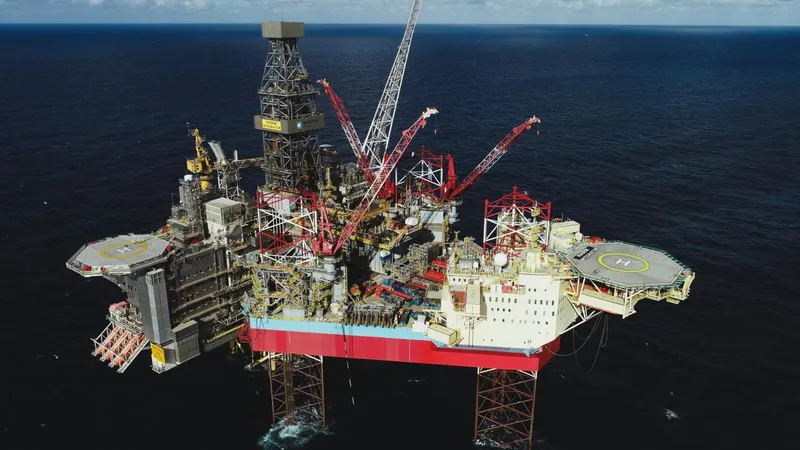
In brief
ORLEN Upstream Norway and Equinor have started natural gas production from the Eirin field in the North Sea, and the gas is already reaching Poland. Peak output should reach about 270 million m³ of gas a year in the volume contracted for ORLEN, with total resources estimated at 3 billion m³ of gas and 27.6 million barrels of oil equivalent and an ORLEN Upstream Norway stake of 41.3%. Production via the Gina Krog platform should extend its life by about seven years, with emissions of about 3 kg of CO₂ per barrel of oil equivalent. Gas from Eirin flows via the Sleipner platform to Nybro and through Baltic Pipe to Poland.
At peak production, the field is expected to supply around 270 million cubic meters of gas annually allocated to ORLEN. Total recoverable resources are estimated at 3 billion cubic meters of natural gas and 27.6 million barrels of oil equivalent. ORLEN Upstream Norway holds a 41.3% stake in the project, while Equinor acts as operator.
The development is considered strategically important for long-term energy security in Poland and the broader European market.
- The gas produced on the Norwegian Continental Shelf is a cornerstone of supply stability. The launch of Eirin strengthens our regional position and confirms our execution capabilities in developing upstream assets, said Ireneusz Fąfara, CEO of ORLEN.
Eirin is developed as a subsea tie-back to the existing Gina Krog platform, enabling lower CAPEX, faster deployment, and improved field economics. The project is also expected to extend the production life of Gina Krog by approximately seven years and unlock additional recoverable volumes.
The electrified production system is powered from shore via subsea cable, with electricity largely generated from renewable sources in Norway, predominantly hydropower and wind energy. As a result, emissions intensity is estimated at around 3 kg CO₂ per barrel of oil equivalent, significantly below both the Norwegian Continental Shelf and global averages.
Gas from Eirin is transported via Gina Krog and Sleipner infrastructure to Nybro in Denmark, where it enters the Baltic Pipe system and is delivered onward to Poland.
Source: Gazeta Morska · Compiled by: Kamil Kusier
Related articles
 Energy and offshore Equinor takes over Bałtyk 2 and 3 O&M base in Łeba. Port to serve 1.44 GW of offshore wind for 30 years
 Navy and defence Port Gdański Eksploatacja secures NATO NCAGE code. Gdańsk port company lines up for defence tenders
 Shipbuilding industry Ex-Enterprise towed to Mobile under $418.5m contract. Test case for Nimitz-class disposal begins
 Energy and offshore Energa renames Gdańsk gas plant company as foundations for 6,000-tonne turbine and boiler are laid
 Equipment and technology WB Group takes Polish drones from Tokyo to SOFEX in Jordan in a single week
 Ports and logistics PGE books Gdańsk’s T5 terminal for the long haul: Baltica 2 first, then more offshore wind farms
Comments (0)
The discussion is moderated by the editors: a comment appears after review. Your e-mail address is not published.
Nobody has commented on this article yet.